| No. | Part No. | Elements | I.D.(mm) | L(mm) | O.D.(mm) | A(mm) | Inner-core Color |
| G1 | GSM9-12 | 12 | 9.3 | 146 | 12.5 | 3 | White/Yellow |
| G2 | GSM9-14 | 14 | 9.3 | 164 | 12.5 | 3 | Blue/Yellow |
| G3 | GSM9-16 | 16 | 9.3 | 183 | 12.5 | 3 | White/Blue |
| G4 | GSM9-20 | 20 | 9.3 | 220 | 12.5 | 3 | Blue/Red |


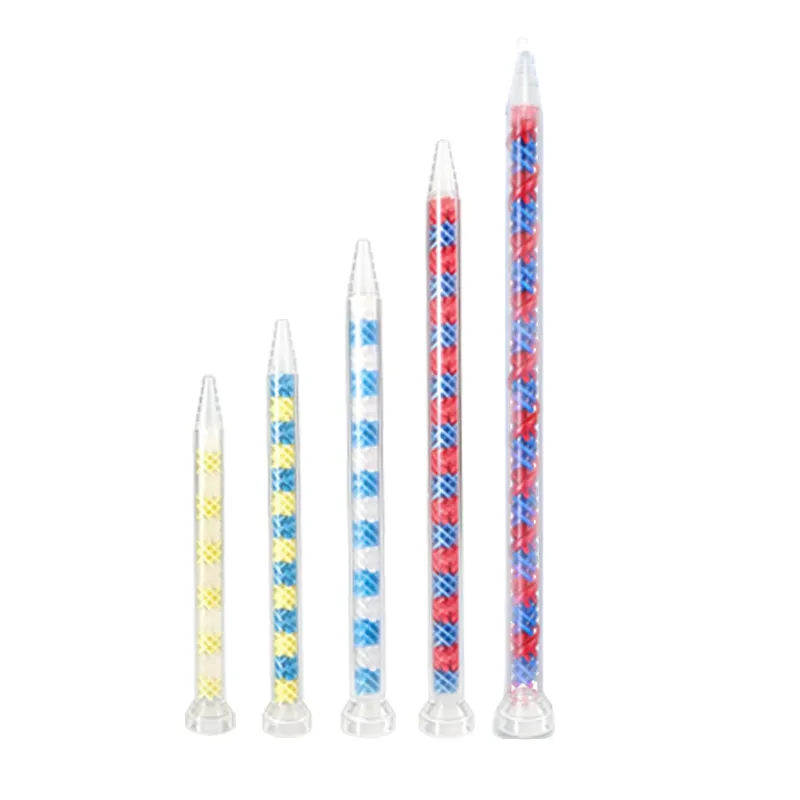


Industrial fluid dispensing often requires a cross-grid mixing nozzle when standard helical or square geometries fail to reliably manage wide viscosity ratios or highly filled resins. The primary advantages of utilizing an X-grid mixing nozzle include:
Engineered for Wide Viscosity Ratios: The internal X-grid static mixer path repeatedly divides and redirects components, facilitating thorough blending even when one side of the two-component adhesive is significantly thicker or more filled.
High Shear Force for Filled Materials: The cross-grid mixing nozzle is ideally suited for processing thermal pastes, filled epoxies, and abrasive compounds that require efficient mixing with controlled flow resistance.
Reduction in Material Waste: The compact design of the X-grid mixing nozzle lowers the retained mixed material volume within the tube, effectively reducing waste during every dispensing cycle.
Robust Industrial Construction: Featuring a durable PP housing and internal elements, the cross-grid mixing nozzle is compatible with polyurethanes, silicones, MMAs, and structural adhesives.
Btektech maintains a comprehensive catalog of Cross-grid Mixing Nozzle configurations to support diverse flow rates and reach requirements.Our technical specifications include:
| No. | Part No. | Elements | I.D.(mm) | L(mm) | O.D.(mm) | A(mm) | Inner-core Color |
| G1 | GSM9-12 | 12 | 9.3 | 146 | 12.5 | 3 | White/Yellow |
| G2 | GSM9-14 | 14 | 9.3 | 164 | 12.5 | 3 | Blue/Yellow |
| G3 | GSM9-16 | 16 | 9.3 | 183 | 12.5 | 3 | White/Blue |
| G4 | GSM9-20 | 20 | 9.3 | 220 | 12.5 | 3 | Blue/Red |
Btektech offers a comprehensive suite of OEM and ODM services, providing industrial partners with the flexibility to customize every technical aspect of the Cross-grid Mixing Nozzle—from precision-engineered internal structures and geometries to specialized private-label branding and packaging solutions.

Provide full-scale OEM production for any cross-grid mixing nozzle based on your technical drawings. We can manufacture the product according to your precise blueprints, specifying exact nozzle body dimensions, internal diameters, and element counts.

Offer ODM development to optimize X-grid mixing nozzle geometry for challenging or highly filled material formulations. We can evaluate your specific viscosity ratio and homogeneity requirements to develop a tailored X-grid mixing nozzle geometry.

Adjust the element stack, body length, or the specific bell-mouth inlet geometry of your cross-grid mixing nozzle to match specialized equipment standards.

Support your private-label distribution with custom color-coding, labeling, and specialized packaging for your wholesale X-grid mixing nozzle orders.
The Cross-grid Mixing Nozzle provides superior control in continuous-cycle industrial environments where wide viscosity ratios and particle-filled formulations are standard.

Transformers, power supplies, and control modules require large-volume potting with consistent mix ratios throughout the full pour. Two-component encapsulants with different viscosities between resin and hardener are difficult to fully homogenize under continuous flow, often creating uncured zones in deep cavities that cause electrical failure. The cross-grid mixing nozzle—designed specifically for wide viscosity ratio materials—maintains mix consistency across extended dispensing cycles. Utilizing an X-grid mixing nozzle ensures uniform material activation in deep-fill applications where standard static mixers often fail to provide the necessary homogeneity for critical insulation.

RTM, VARTM, and vacuum-assisted resin infusion require complete blending of resin and catalyst under continuous flow into fiber preforms. When these components have different viscosities, standard helical elements can leave unmixed zones near the housing wall, producing structural weak points in the laminate. The cross-grid mixing nozzle geometry effectively prevents this wall-zone separation, supporting more uniform mixing throughout the stream. By implementing an X-grid mixing nozzle, manufacturers can maintain stable performance at the higher flow rates that large-scale composite infusion runs require. This specialized nozzle architecture ensures that the structural integrity of the composite is never compromised by catalyst-rich or resin-rich bands.

Chemical anchor injection for heavy fasteners in concrete requires consistent ratio delivery under the high back-pressure of confined drilled holes. Many chemical anchor systems use components with different viscosities, making thorough mixing harder to achieve in standard nozzles under pressure. The cross-grid mixing nozzle handles these difficult viscosity ratio conditions more reliably than traditional designs. Integrating an X-grid mixing nozzle supports stable ratio delivery through the full anchor injection cycle, ensuring the safety of rebar and threaded rods. The nozzle is the preferred choice for demanding construction environments where consistent chemical activation is mandatory for structural bonding.
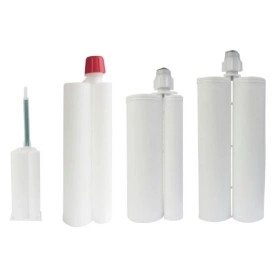


Our blog is designed to help you deepen your knowledge of fluid dispensing processes, optimize your production line, and select the best components for your specific challenges. Explore articles that connect industry insights with practical solutions.
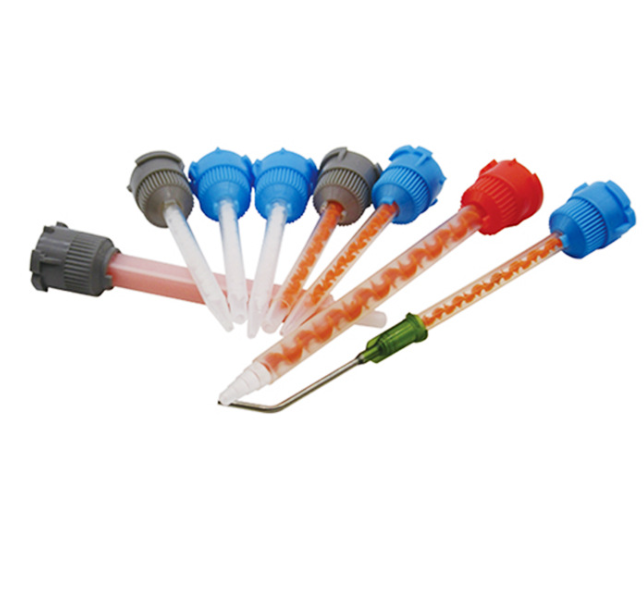
It'll be a simple process to use epoxy mixing nozzle after you read this step-by-step guide: Step 1: Make the Surface Clean.
Read More →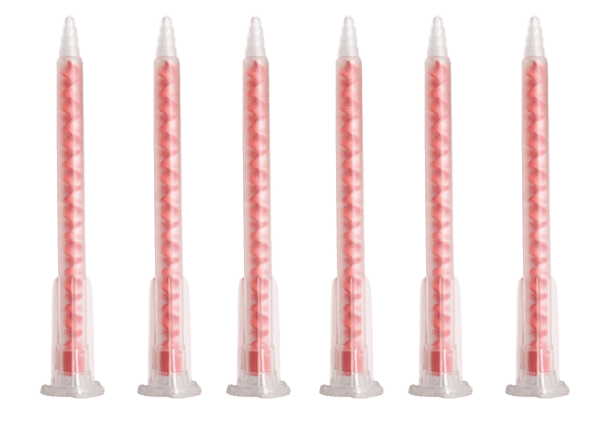
One of the most common mistakes when using epoxy mixing nozzles is using the wrong size nozzle for the job.
Read More →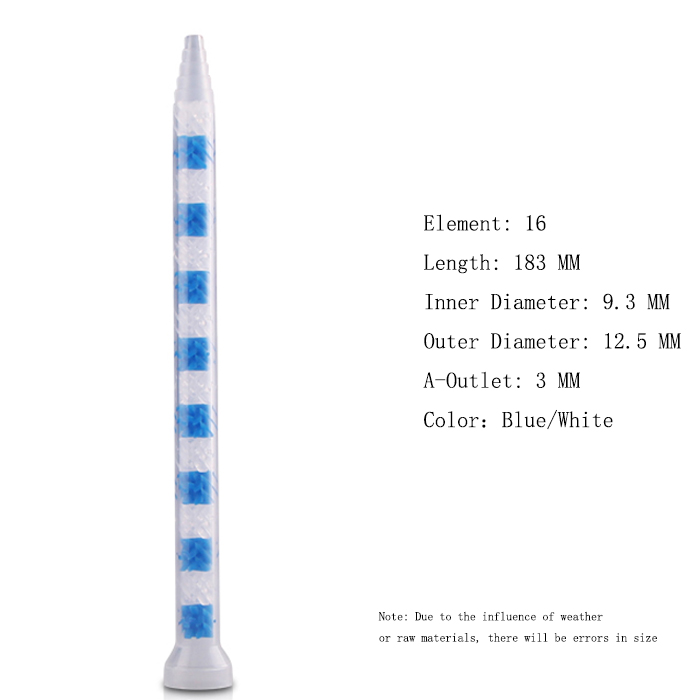
Covers structures of mixing nozzle including element types, interface, and outlet forms. Explains how each structural dimension is classified.
Read More →