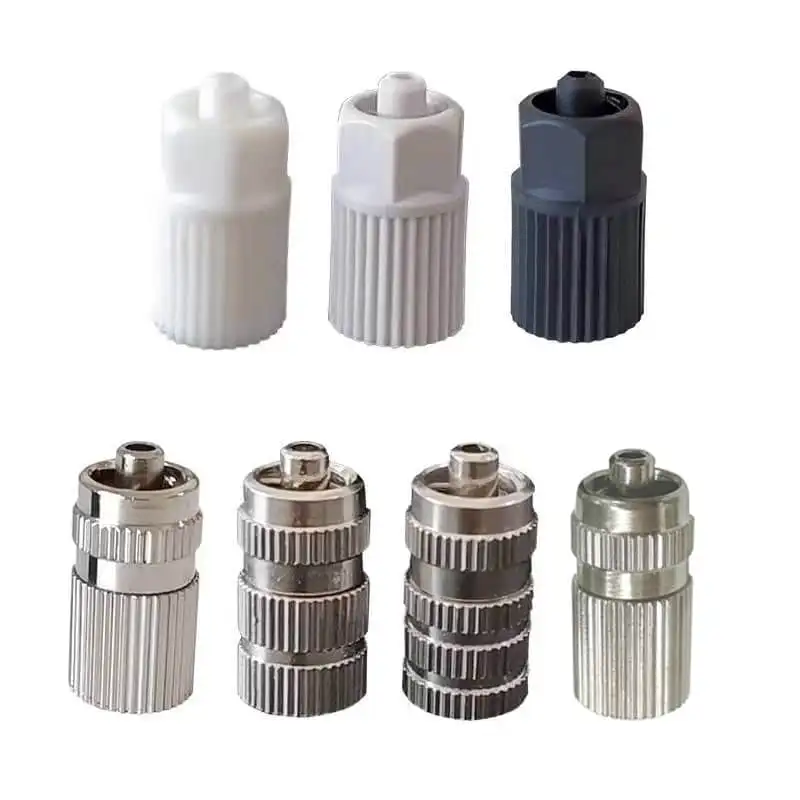
Static Mixer Luer Lock Adapter
A static mixer Luer Lock adapter converts a mixing tube outlet into a Luer Lock connection for compatible dispensing tips or needles.
Learn More
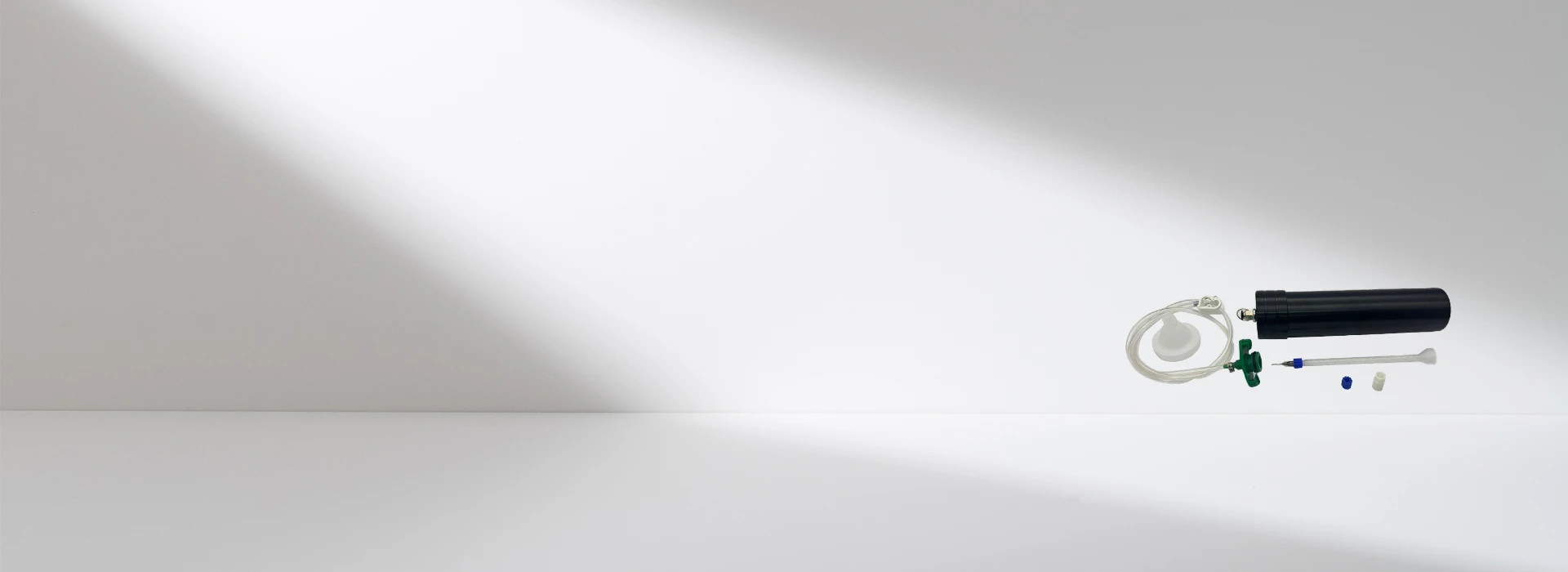
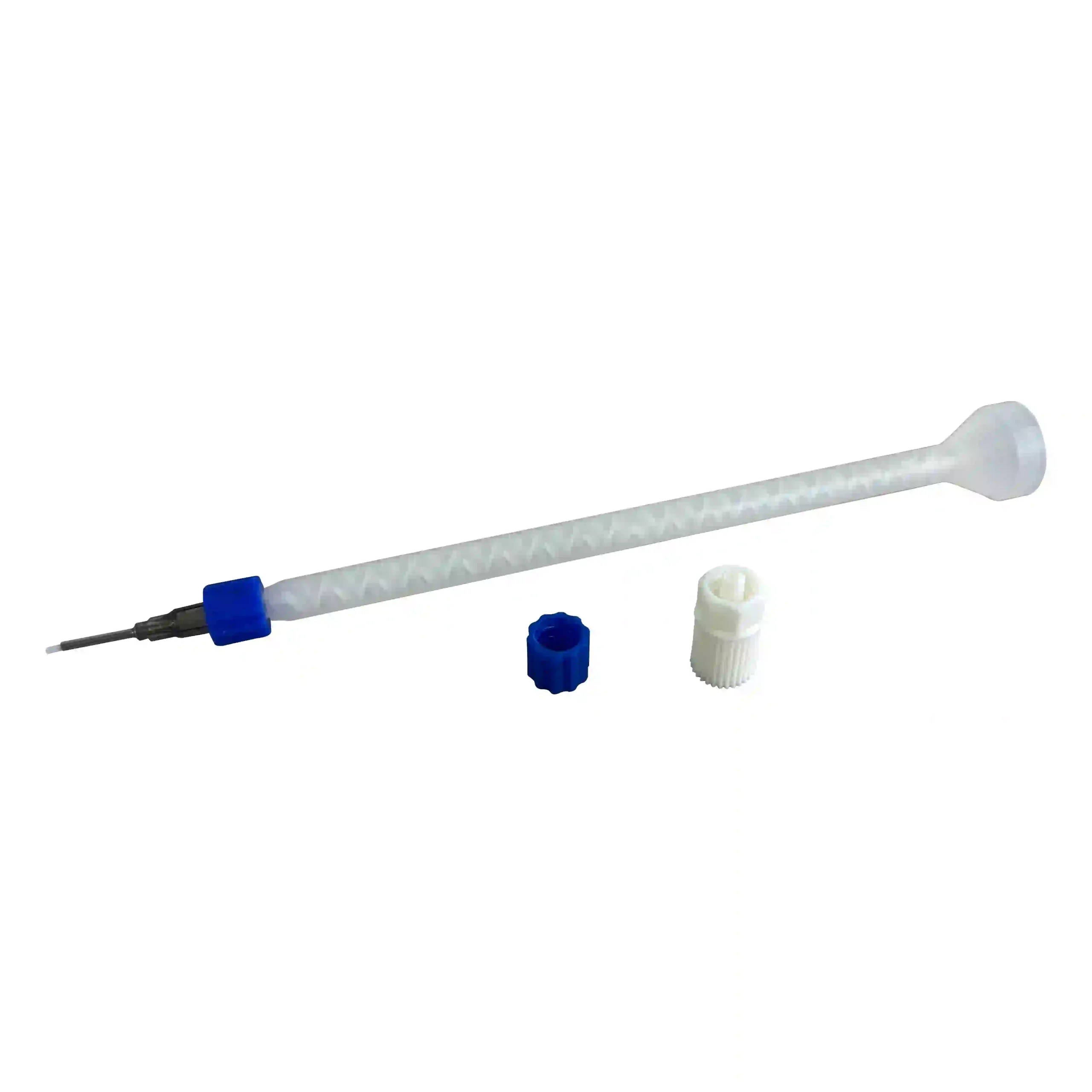


A static mixer Luer Lock adapter converts a mixing tube outlet into a Luer Lock connection for compatible dispensing tips or needles.
Learn More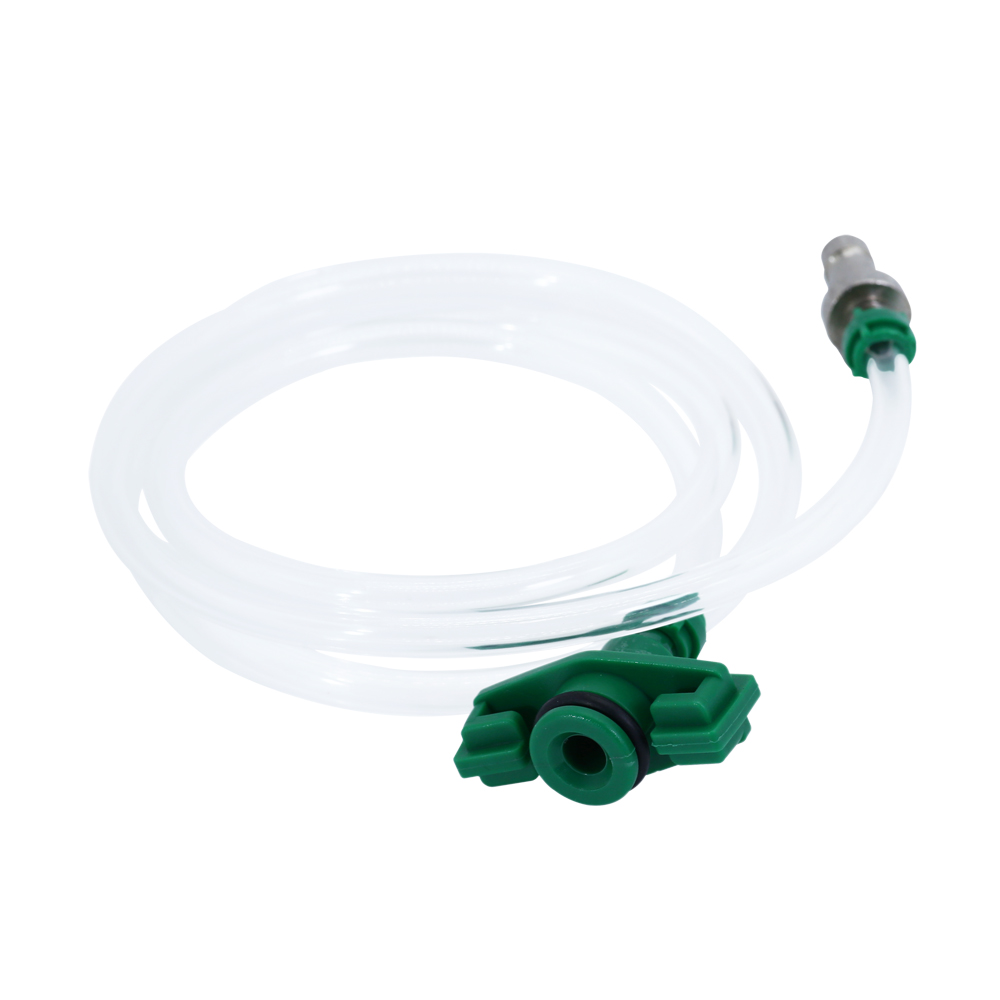
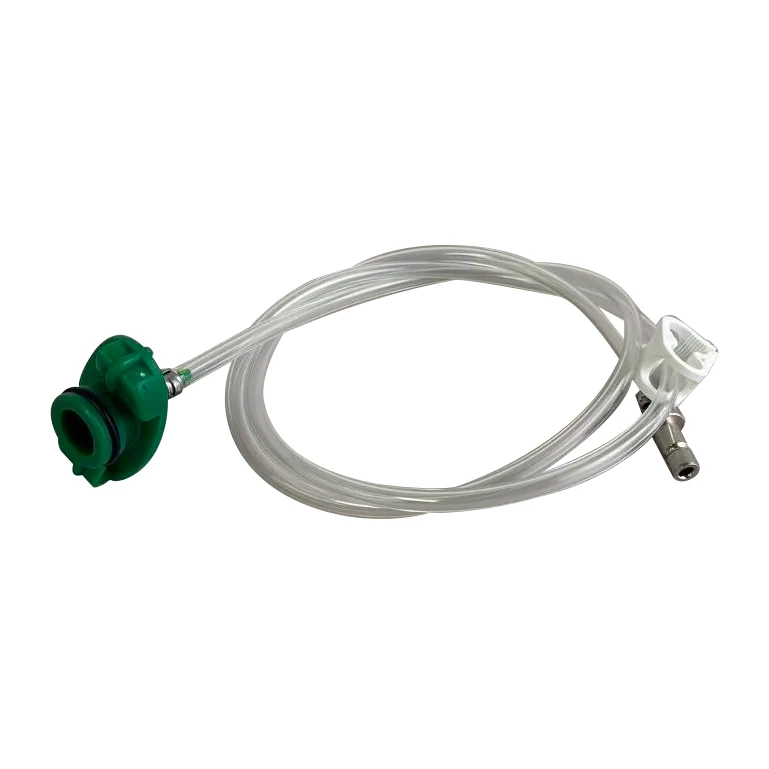
A syringe barrel adapter connects a time-pressure dispensing controller to a syringe barrel and transfers compressed air through a hose and quick-connect fitting.
Learn MoreA dispensing adapter must maintain the required connection function according to its system position, including component alignment, pressure transfer, sealing contact, or outlet conversion. Incorrect retention or interface geometry can cause air leakage, loose connections, outlet misalignment, or unstable material delivery.

Matched body, cap, and holder geometry keeps your cartridge or barrel from shifting during pressurized dispensing.
Pneumatic connection assemblies reduce avoidable pressure loss caused by loose hoses or mismatched fittings.

Correct thread pitch, concentricity, and sealing contact keep connected components aligned during operation.

Luer Lock and threaded adapters allow tip or nozzle changes without replacing the upstream mixer or dispensing gun.
Btektech inspects critical diameters, thread engagement, concentricity, hose retention, and sealing fit according to the inspection requirements of each adapter type. For aluminum and steel-and-aluminum cartridge retainers, Btektech verifies body-to-cap engagement, cartridge fit, and alignment before shipment.
Incoming metal and polymer material batches are recorded before production, while gauges or sample assemblies verify interface dimensions at defined inspection intervals. Where required, batch numbers, part numbers, and production dates can be added to packaging to support process control and traceability.
Model-specific tolerances, inspection methods, and documentation requirements can be confirmed during technical review or quotation according to the selected adapter configuration.


Btektech supports OEM and ODM projects for standard and custom dispensing adapters, adapter fittings, and related components based on drawings, samples, product photos, or equipment information.
Provide the accessory type and the connected cartridge, barrel, mixer, or gun model. Include thread dimensions, hose outer diameter, quick-connect fitting type, operating pressure, fluid type, viscosity, required quantity, and branding requirements.
Our engineers review interface geometry, sealing contact, air-path connection, and component retention before recommending the suitable configuration. For non-standard interfaces, drawing review or physical sample verification is recommended before volume production.
Review available cartridge retainers, static mixer adapters, syringe barrel adapter assemblies, and sausage gun nozzle adapters.
View Btektech adhesive dispensing components, including mixing nozzles, cartridges, syringe barrels, dispensing guns, dispensing tips, and system accessories.
Learn how to identify connected components, verify adapter interfaces, diagnose pressure loss, and select dispensing accessories for industrial adhesive systems.
The following application examples show how Btektech dispensing adapters support common connection requirements in industrial adhesive dispensing systems. Final compatibility depends on the actual component models, interface dimensions, and operating conditions.

Application: A time-pressure dispensing controller supplies compressed air to a syringe barrel for controlled adhesive application in bench-top, semi-automatic, or automated dispensing processes.
Connection Requirement: The adapter assembly must connect the controller outlet to the syringe barrel while maintaining hose retention, sealing contact, and consistent air transfer.
Adapter Selection: A syringe barrel adapter is selected according to barrel capacity, hose outer diameter, quick-connect fitting type, and controller connection requirements.
Process Consideration: Before production use, verify hose insertion, quick-connect engagement, barrel sealing contact, and air leakage performance to maintain consistent dispensing results.

Application: A static mixer requires a replaceable Luer Lock outlet for controlled dot dispensing, narrow bead application, or connection with precision dispensing tips.
Connection Requirement: The adapter must convert the mixer outlet into a compatible Luer Lock connection without restricting adhesive flow or affecting the dispensing path.
Adapter Selection: A static mixer Luer Lock adapter is selected according to mixer outlet geometry, Luer Lock interface type, dispensing tip size, and required bead pattern.
Process Consideration: Before production use, verify mixer outlet alignment, adapter engagement, dispensing tip fit, and material compatibility through sample testing.


Static and dynamic epoxy mixing nozzles and adhesive mixing tubes for two-component epoxy, polyurethane and sealant dispensing.
Check Now →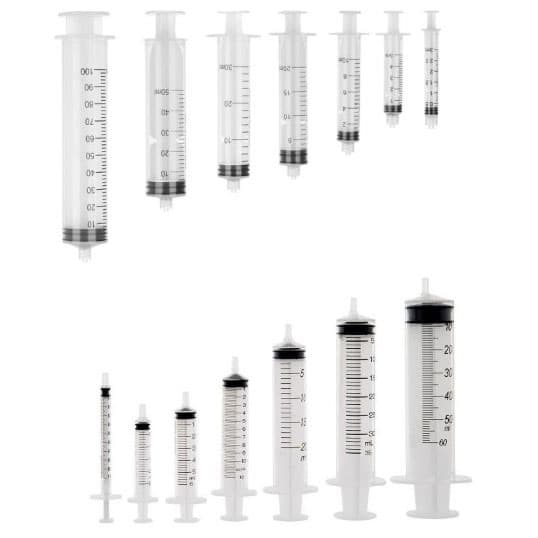
Adhesive syringe barrels and dispensing cartridges for fluid storage and controlled delivery in industrial adhesive dispensing systems.
Check Now →
Manual, pneumatic and cordless dispensing guns for single-component and two-component cartridge adhesive dispensing.
Check Now →Adhesive dispensing adapters and accessories connect, retain, seal, or convert components inside an industrial adhesive dispensing system. The correct selection depends on the two components being connected and the connection function that must be maintained, including pressure transfer, alignment, sealing, or outlet conversion.
This category includes four product types: cartridge retainers, static mixer Luer Lock adapters, syringe barrel adapter assemblies, and sausage gun nozzle adapters. Each product occupies a different position within the dispensing system, and these configurations are not interchangeable.
Your dispensing system may include a controller, syringe barrel & cartridge, dispensing gun, mixing nozzle, hose, dispensing tip, or threaded nozzle. Adapters and fittings complete the mechanical or pneumatic connection between these components.
A cartridge retainer holds the cartridge inside a rigid body and maintains a sealed air path to the cartridge piston. A syringe barrel adapter links a time-pressure controller to a syringe barrel and transfers air through a hose and quick-connect fitting.
A static mixer Luer Lock adapter converts a mixing tube outlet so you can install a compatible Luer Lock dispensing tip or needle. This type of mixer-outlet converter is also described as a dispensing needle adapter in some catalogs. A sausage gun nozzle adapter converts the gun outlet into a threaded connection for compatible straight, angled, or extended nozzles.
Depending on the system position, an incorrect adapter can cause air leakage, incomplete thread engagement, outlet misalignment, or restricted material flow.
Each adapter uses a different structure because it operates in a different part of the dispensing system.
Cartridge retainers depend on body fit, cap thread engagement, cartridge alignment, and an air inlet fitting. Btektech cartridge retainers use aluminum or steel-and-aluminum construction according to the selected configuration.
Syringe barrel adapter assemblies use a barrel-side sealing interface, an air hose, and a quick-connect fitting to transfer pneumatic pressure from the controller to the syringe barrel. Static mixer adapters use a mixer-side connection paired with a Luer Lock outlet for compatible dispensing tips.
Sausage gun adapters use threaded connections between the gun outlet and dispensing nozzle. Depending on the application, these assemblies may combine polymer bodies, hoses, fittings, and sealing components.
Material selection depends on whether the adapter contacts compressed air, adhesive, or both. Confirm each model’s material against the actual contact medium, operating pressure, temperature, and cleaning method, since a material suitable for one adapter type may not suit another.
Start by identifying the two components you need to connect and the function required from the adapter. Record the product model, interface shape, and visible markings on the connected parts.
Next, confirm the connection dimensions:
The required information depends on the connected components and adapter type.
For pneumatic adapters, confirm the controller outlet and operating air pressure. For fluid-contact adapters, provide the fluid type and viscosity. Higher-viscosity adhesives increase flow resistance and backpressure, which may require a larger internal bore or a sealing structure rated for higher pressure.
Also confirm which cartridge, barrel, mixer, gun, or nozzle format you are using in the final system.
When dimensions are uncertain, provide a drawing, product photo, or physical sample. This avoids selecting an adapter that appears similar but uses a different thread pitch, sealing surface, or engagement depth.
Air leakage usually comes from loose hose connections, incorrect quick-connect fittings, damaged sealing contact, or unmatched barrel interfaces.
A thread mismatch can allow two parts to engage partially while leaving the connection unstable. Misalignment can restrict material flow and create uneven loading on connected components.
On fluid-contact adapters, cured or residual adhesive can interfere with threads, sealing surfaces, and outlet alignment over time.
Inspect the connection before reuse and replace adapters with damaged threads, cracked hoses, deformed seals, loose retention features, or outlet misalignment.
Confirm compatibility by product model, dimensions, thread type, connection geometry, operating pressure, and fluid conditions. Similar appearance alone does not guarantee interchangeable fit.
How do I choose the correct dispensing accessory for my system?
Choose the accessory by identifying the two components that must connect and the function required from the connection. Confirm product models, interface geometry, thread dimensions, hose size, operating pressure, fluid type, and required outlet. Use a drawing, product photo, or sample when dimensions are uncertain. Compatibility should be verified before production use, especially for non-standard pneumatic or threaded connections.
What information is required to confirm adapter compatibility?
Provide the connected component models, interface dimensions, thread type, hose outer diameter, quick-connector type, and operating conditions. For pneumatic accessories, also provide controller information and operating air pressure. For fluid-contact adapters, provide fluid type and viscosity. Photos or drawings should clearly show the mating surfaces because similar-looking components may use different threads, sealing positions, or engagement depths.
Are adhesive dispensing adapters universally compatible?
No. Adhesive dispensing adapters are not universally compatible. Fit depends on the product model, dimensions, thread type, sealing surface, connection geometry, operating pressure, and fluid conditions. Two adapters may appear similar but use different thread pitches or engagement depths. Compatibility should be confirmed from drawings, measurements, product photos, or physical samples before ordering.
What is the difference between a cartridge retainer and a syringe barrel adapter?
A cartridge retainer holds a disposable adhesive cartridge and transfers pneumatic pressure to the cartridge piston. A syringe barrel adapter connects a time-pressure controller to a syringe barrel through a hose and quick connector. Both products support pneumatic dispensing, but they retain and connect different material packages and should not be treated as interchangeable components.
Why does a syringe barrel adapter leak air pressure?
A syringe barrel adapter usually leaks because the hose, quick connector, barrel seal, or adapter geometry does not match correctly. Check whether the hose is fully inserted, the quick connector is locked, and the barrel contact surface is clean and undamaged. Confirm barrel size and operating pressure. Replace damaged sealing or hose components rather than increasing pressure to compensate for leakage.
Can a static mixer adapter connect to different dispensing tips?
A static mixer Luer Lock adapter can connect to different Luer Lock dispensing tips when the adapter and tip interfaces match. The adapter does not make every dispensing tip suitable for every adhesive. Tip outlet size, length, material, fluid viscosity, and required bead geometry should still be evaluated. Verify the mixer outlet, adapter engagement, and tip connection under the intended flow resistance.
Can Btektech develop custom dispensing adapters or OEM accessories?
Btektech can evaluate custom dispensing adapters and OEM accessories based on drawings, samples, product photos, and equipment information. Provide the accessory type, connected components, thread dimensions, hose size, quick connector, operating pressure, fluid conditions, quantity, and branding requirements. Development feasibility and the final configuration should be confirmed through engineering review and sample verification.
When should a cartridge retainer or dispensing adapter be replaced?
Replace the accessory when threads are damaged, retention becomes loose, air leakage develops, hoses crack, sealing contacts deform, or the outlet becomes misaligned. Replacement timing depends on product type, operating pressure, assembly frequency, cleaning method, and working conditions. Do not continue using a damaged component by applying additional pressure or tightening force.