
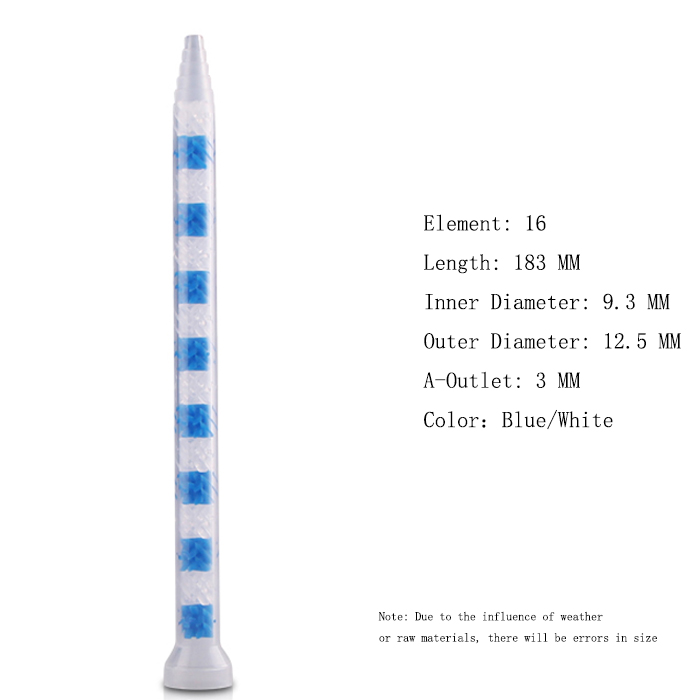
Covers structures of mixing nozzle including element types, interface, and outlet forms. Explains how each structural dimension is classified.
Read More →
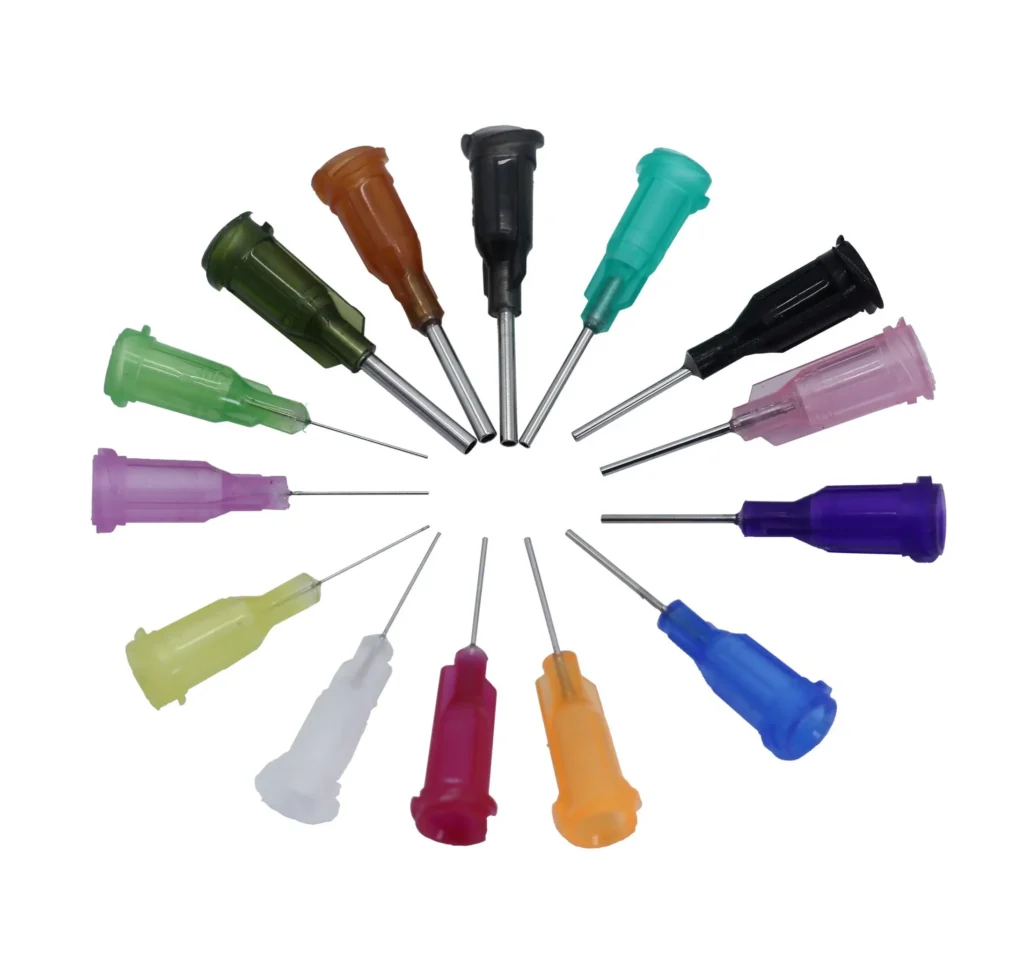
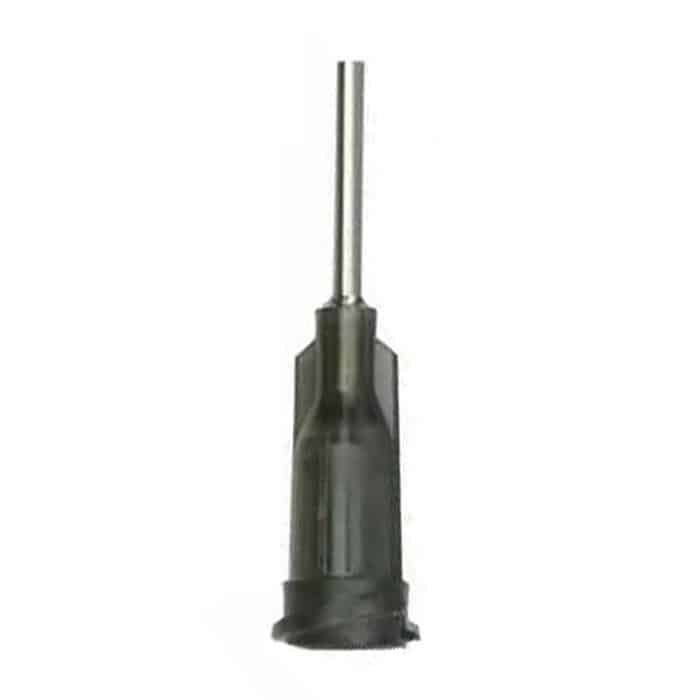
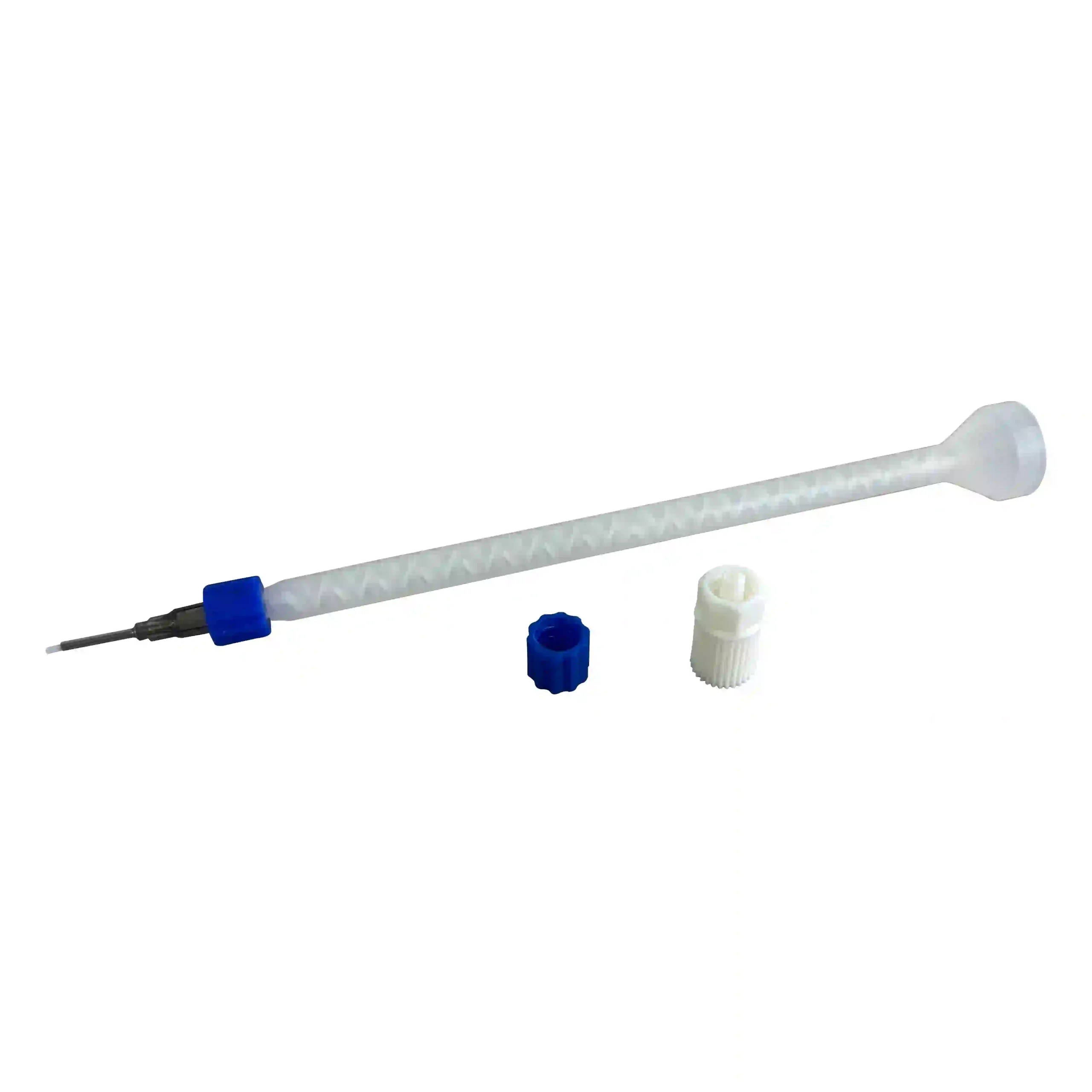
The Luer Lock interface gives you tip-level control that a mixer’s stock outlet cannot provide on its own.
Precision Tip Control: A smaller compatible tip bore narrows the bead or dot beyond the stock mixer outlet without changing the upstream mixing process.
Tip Changes During Dispensing: Change compatible tip sizes without removing the mixer while the adhesive remains within its working time and has not gelled inside the flow path.
Metal or Polymer Body: Nickel-plated brass provides a rigid interface for frequent mechanical assembly, while polymer reduces component weight.
Outlet Range Coverage: Listed configurations support 5.4–6.3 mm, 6–8 mm, and 10 mm mixer outlets, while connection geometry and engagement depth must also match.
Tip Alignment During Dispensing: A fully seated Luer Lock connection helps maintain tip alignment and reduces movement at the mixer-to-tip interface.
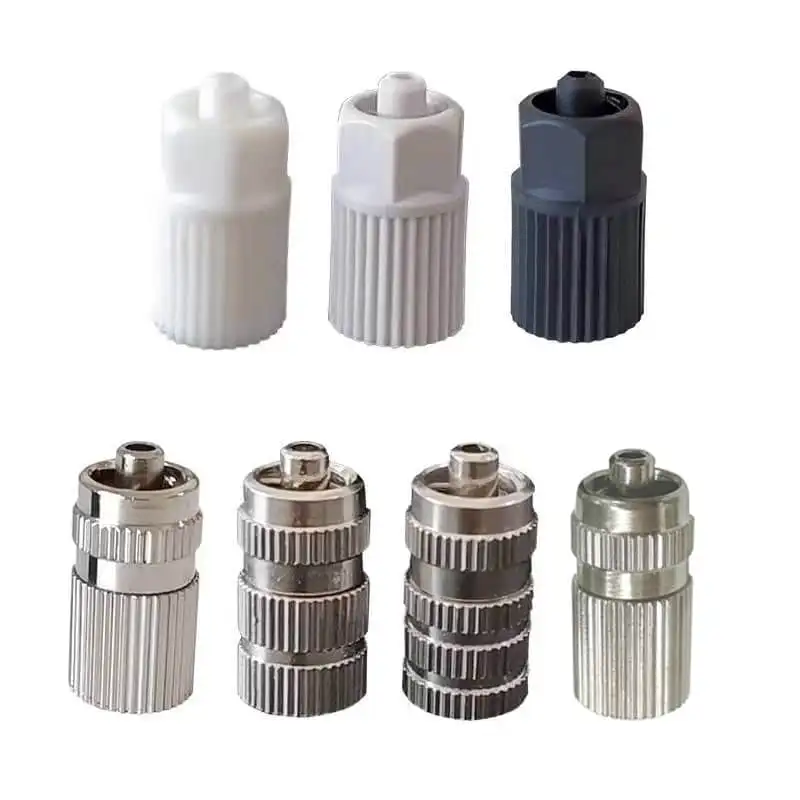
These static mixer outlet adapters and fittings support 5.4–6.3 mm, 6–8 mm, and 10 mm mixer outlet ranges in nickel-plated brass or polymer bodies. Metal models provide a rigid interface for frequent mechanical assembly, while polymer models reduce component weight. Select by outlet diameter, connection geometry, engagement depth, and dispensing conditions.
| Part No. | Adapter Interface I.D. | Compatible Mixer Outlet I.D. | Length | Material | Color |
| JT-03 | 5 mm | 5.4–6.3 mm | 22.5 mm | nickel-plated brass | Silver |
| JT-02 | 6 mm | 6–8 mm | 22.5 mm | nickel-plated brass | Silver |
| JT-01 | 7 mm | 10 mm | 22.5 mm | nickel-plated brass | Silver |
| Part No. | Adapter Interface I.D. | Compatible Mixer Outlet I.D. | Length | Material | Color |
| JT-03S | 5 mm | 5.4–6.3 mm | 22.5 mm | Polymer | White |
| JT-02S | 6 mm | 6–8 mm | 22.5 mm | Polymer | Gray |
| JT-01S | 7 mm | 10 mm | 22.5 mm | Polymer | Black |
JT-11 and JT-11S are designed for selected RM12-16, RM12-26, and RM17-26 dynamic mixer outlets. Confirm the mixer model, outlet geometry, and connection dimensions before selection.
| Part No. | Adapter Interface I.D. | Compatible Mixer Models | Length | Material | Color |
| JT-11 | 9 mm | RM12-16, RM12-26, RM17-26 | 22.5 mm | Nickel-plated Brass | Silver |
| JT-11S | 9 mm | RM12-16, RM12-26, RM17-26 | 22.5 mm | Polymer | Black |
Standard interface sizes do not cover every mixer series or project requirement. Btektech develops adapter variants around your mixer outlet, thread structure, and tip interface.
Send a mixer outlet drawing or sample; Btektech manufactures the adapter body and bore according to your specified dimensions.
Provide the mixer and tip requirements; Btektech develops the interface geometry around the required fit and adhesive flow path.
Interface I.D., engagement length, and internal bore can be evaluated for non-standard outlets or specific flow-resistance requirements.
Specify adapter color, part marking, and packaging for OEM identification or distributor-specific labeling requirements.
Static mixer Luer Lock adapters support precision dispensing wherever a mixer's stock outlet is too wide for the required bead or dot size. Three industries rely on this outlet conversion in different ways.
PCB, sensor, and optoelectronic assembly lines often dispense small adhesive dots or narrow beads around components with limited clearance. When the stock mixer outlet is too wide, the adapter accepts a compatible fine-bore Luer Lock tip. For automated integration, verify tip alignment, flow resistance, and connection retention through equipment-level sample testing.
Medical device assembly often bonds small components where excess adhesive can interfere with function or appearance. The adapter accepts a compatible fine-bore tip that produces a controlled bead or dot for close-tolerance bonding. You can change the tip between component types without removing the upstream mixer while the adhesive remains within its working time. Microscope-guided or fixture-based processes benefit from controlled placement in restricted areas.
Automotive sensor, connector, and small-component assemblies often require localized dots or narrow beads rather than high-volume joint filling. The adapter accepts a Luer Lock tip matched to the target geometry while leaving the two-component mixing process upstream unchanged. When the mixer-side interface seats fully, a rigid metal-body adapter helps reduce movement at the outlet connection during localized adhesive dispensing. Robotic integration requires sample testing under the actual dispensing speed, adhesive viscosity, and equipment motion profile.
The adapter usually leaks when its mixer-side interface diameter, engagement depth, or mating geometry does not match the mixer outlet. Worn contact surfaces or cured adhesive residue can also prevent full sealing contact when the nominal diameter appears correct. Remove any residue, inspect both mating surfaces, reseat the adapter fully, and verify engagement depth before restarting the dispensing process.
Our blog is designed to help you deepen your knowledge of fluid dispensing processes, optimize your production line, and select the best components for your specific challenges. Explore articles that connect industry insights with practical solutions.
Covers structures of mixing nozzle including element types, interface, and outlet forms. Explains how each structural dimension is classified.
Read More →
The material of the dispensing needle is a critical consideration, as it affects compatibility with various types of adhesives.
Read More →
While epoxy mixing nozzles provide a solid foundation for adhesive precision, the incorporation of dispensing tips takes the process to the next level.
Read More →