

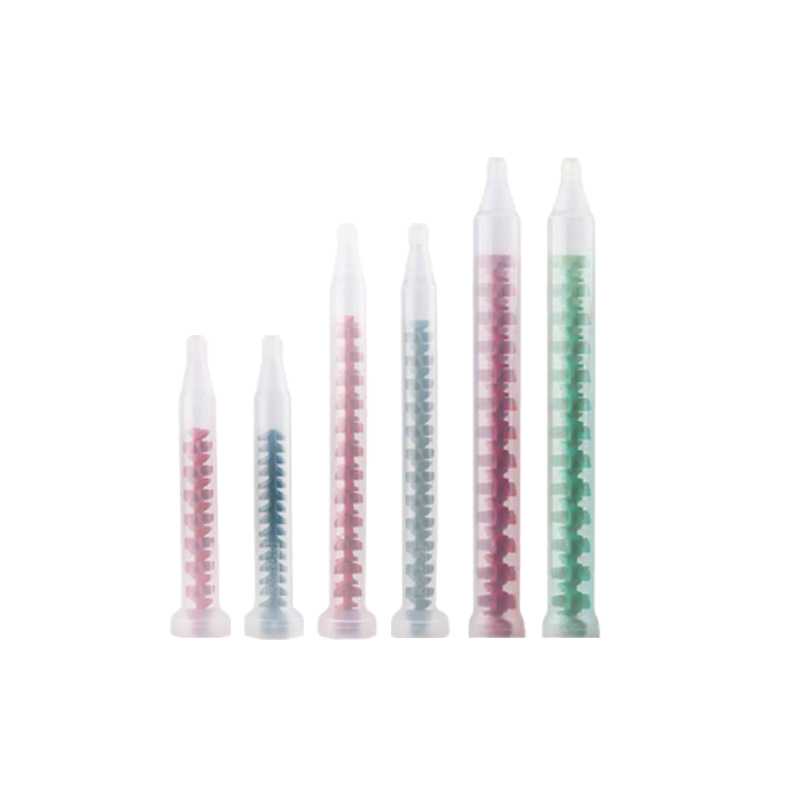

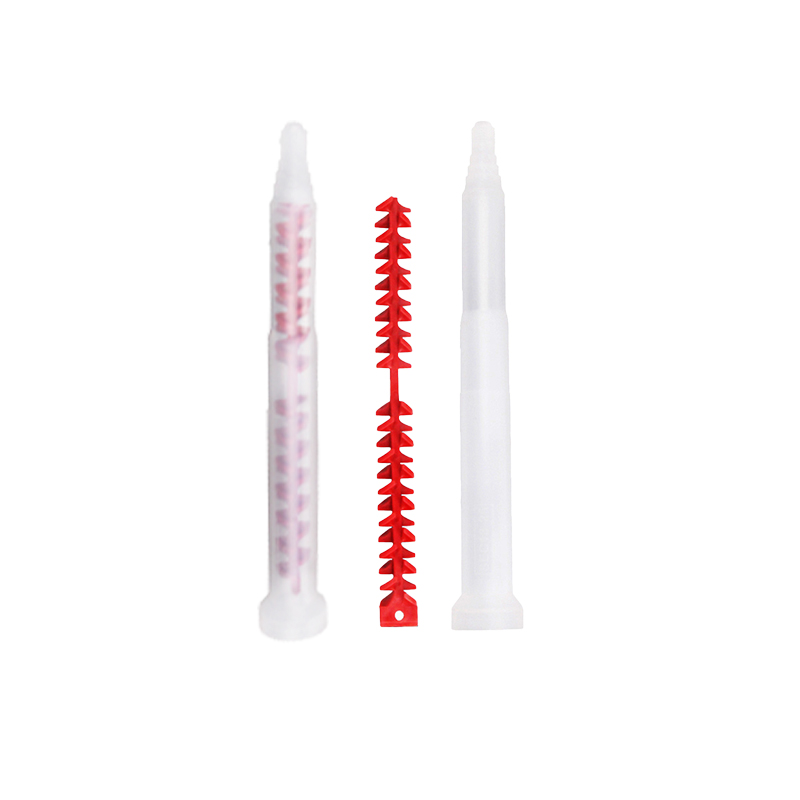
Implementing a Btektech dynamic mixing nozzle into your production line ensures reliable chemical activation and unmatched process stability. The primary technical advantages of using dynamic mixing nozzles include:
Active Mixing Technology: High-speed rotating blades within the dynamic mixing nozzle create multi-directional shear, allowing materials to thin during the blending process for faster, more uniform dispersion.
Compact Design for Reduced Waste: The short mixing path of the dynamic mixer nozzle improves handling convenience and significantly limits the amount of retained material, reducing mess and cleanup compared to hand mixing.
Multiple-Viscosity Compatibility: The high-shear internal structure of the dynamic mixing nozzle reduces channeling, supporting full contact between components in systems with high mixing ratios or significant viscosity differences.
Reliable Industrial Performance: Designed for industrial/occupational use, these dynamic mixing nozzles provide precision mixing every time, ensuring trouble-free application for adhesives, sealants, fillers, and glazes.
Btektech offers a diverse range of bulk dynamic mixing nozzles, including the RM, RS, and SEC series, to match specific equipment interfaces and flow requirements:

For Solar Photovoltaic Applications Btektech provides the SEC13-25 Dynamic Mixing Nozzle as a high-performance solution for motor-driven, two-component automated dispensing in the renewable energy sector. As a manufacturer and wholesale dynamic mixer supplier, our nozzle technology serves as a cost-effective, industrial-grade alternative specifically designed for high-throughput automated meter-mix-dispense systems.Optimized for large-scale solar photovoltaic production, the SEC13-25 dynamic nozzle features a compact internal architecture that reduces flow resistance and significantly limits the material volume retained within the tube for maximum process efficiency.
Learn More
For Automated Meter-Mix-Dispense (MMD) SystemsRM Series resin dynamic mixing nozzle employs a motor-driven high-speed rotating spiral element to deliver efficient and consistent blending of low-viscosity two-component adhesives within automated MMD systems, promoting exceptional homogeneity, and enhanced dispensing efficiency.
Learn More
Automated Meter-Mix-Dispense (MMD) SystemsRS Series dynamic mixing nozzle features external motor-driven rotating spiral elements that support consistent blending of two-component fluids in automated MMD systems. Its compact interface and controlled flow help maintain uniform mixing and steady material dispensing.
Learn MoreAs a specialized wholesale dynamic mixer supplier, Btektech provides the manufacturing capacity to support bulk nozzles orders with flexible OEM/ODM services tailored to your unique chemical environment.
Btektech provides tailored dynamic mixing nozzle solutions to optimize complex automated dispensing lines. As an OEM customized dynamic mixer factory, we ensure homogeneous mixing for 2-part adhesives, offering a fully compatible alternative for industrial polyurethane sealants and epoxy resins.

Each dynamic mixing nozzle is made per customer’s technical drawings, with precise OD, ID and inlet sizes. It fits existing motor-driven industrial equipment seamlessly without adjustment, ensuring stable production.

To solve uneven output and streaking, the internal structure of nozzles is optimized. Blade count and tube length are adjusted to handle tough glue viscosity ratios and reduce material waste.

Custom nozzles with special inlet structures are available for special chemical environments. The factory can mass-produce reinforced nozzles for aerospace and semiconductor industries with abrasive fillers.

Private-label branding and custom packaging are offered for all orders. Bulk nozzles can be printed with customers’ logos to support their seamless distribution and market competitiveness.
The dynamic mixing nozzle range is engineered to deliver high-shear agitation and uniform consistency for dense, particle-filled materials. Our dynamic mixing nozzles provide a reliable, industrial-grade solution for complex high-volume dispensing cycles where traditional static mixers fail to prevent material settling or channeling.

Solar PV manufacturing depends on the dynamic mixing nozzle for junction box potting and frame sealing. Since polyurethane sealants often contain heavy fillers that settle, our product utilize rotating blade action to keep particles suspended. This industrial nozzle ensures homogeneous mixing throughout the automated dispensing line, delivering consistent bond quality. Btektech can engineer every dynamic mixer nozzle for high-volume solar production, providing a reliable, cost-effective, and fully compatible alternative for global energy manufacturers.

Aerospace honeycomb panel bonding and composite repair require a dynamic mixing nozzle capable of processing abrasive, dense formulations. These nozzles effectively manage 2-part adhesives and epoxy resins loaded with carbon fiber or aluminum powder. By integrating a dynamic mixer nozzle, manufacturers optimize the blending process to prevent structural weaknesses. We fabricate every dynamic mixing nozzle to withstand ceramic-particle sealants, ensuring performance. This specific unit serves as a fully compatible alternative for high-throughput aerospace structural assembly lines.

In semiconductor packaging, the dynamic mixing nozzle is essential for heat sink bonding and chip underfill applications. These nozzles continuously agitate dense formulations—including alumina and silver-filled adhesives—to maintain uniform filler distribution. By implementing a dynamic mixer nozzle, engineers ensure high viscosity materials achieve homogeneous mixing throughout the automated dispensing line. We customize every nozzle to handle high-volume PCB assembly, offering a fully compatible alternative that delivers consistent quality for industrial thermal management


Our blog is designed to help you deepen your knowledge of fluid dispensing processes, optimize your production line, and select the best components for your specific challenges. Explore articles that connect industry insights with practical solutions.
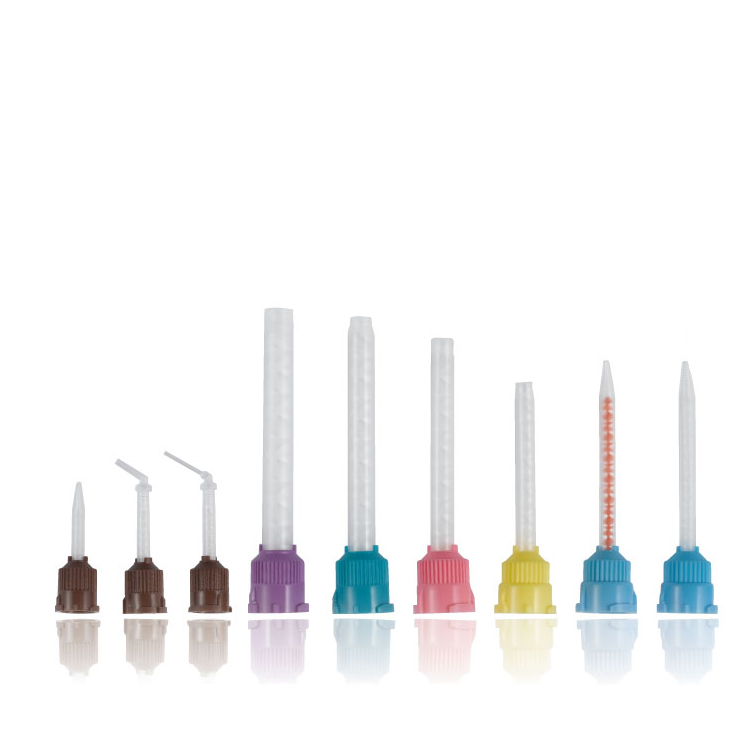
Choosing the most suitable type of mixer is not as simple as it sounds. Key criteria include the characteristics of the liquid to be mixed – such as viscosity and material density…
Read More →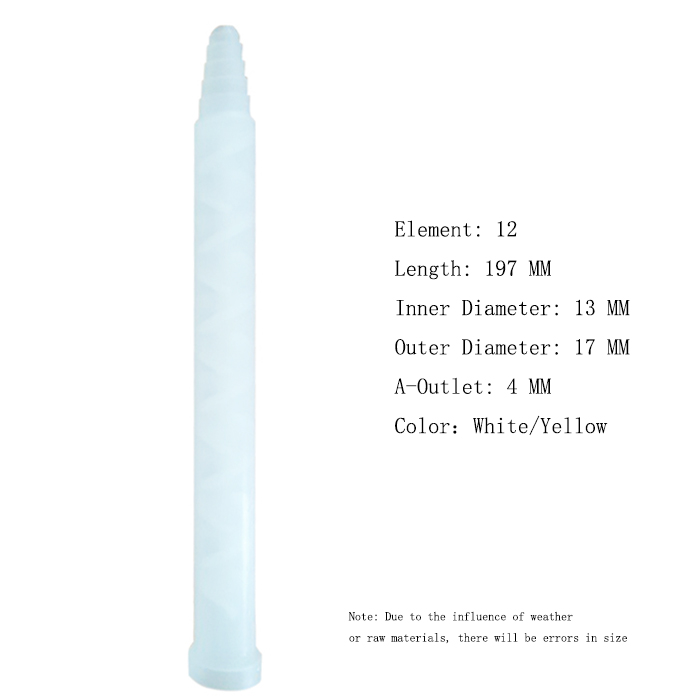
Cleaning epoxy mixing nozzles is essential to prolong their lifespan and ensure that they work effectively. The following steps outline how to clean epoxy mixing nozzles:
Read More →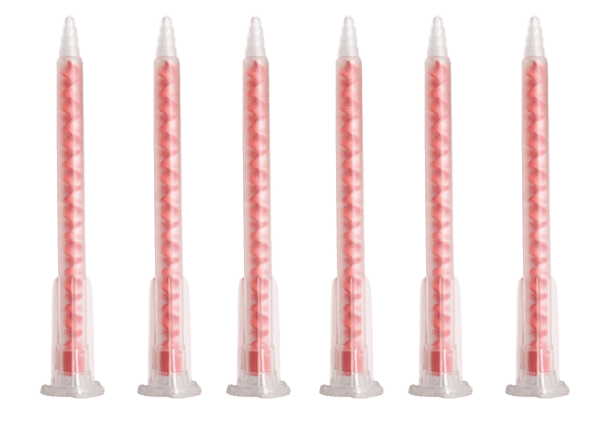
One of the most common mistakes when using epoxy mixing nozzles is using the wrong size nozzle for the job.
Read More →