| No. | Part No. | Elements | I.D(mm) | L(mm) | O.D(mm) | A(mm) | Inner color |
| D13 | SEC13-25 | 23 | 13 | 178 | 18 | 4.5 | Red |
Unsure if the SEC13-25 fits your automated dispensing valve? Contact our engineers.

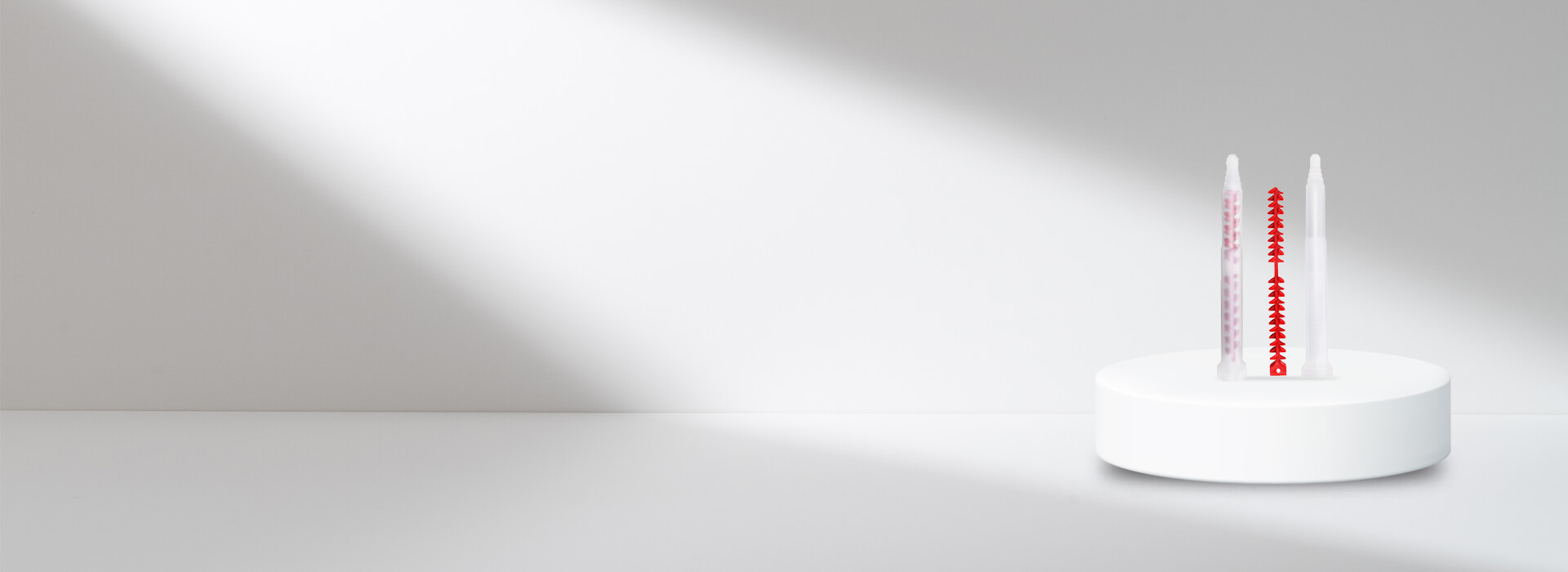
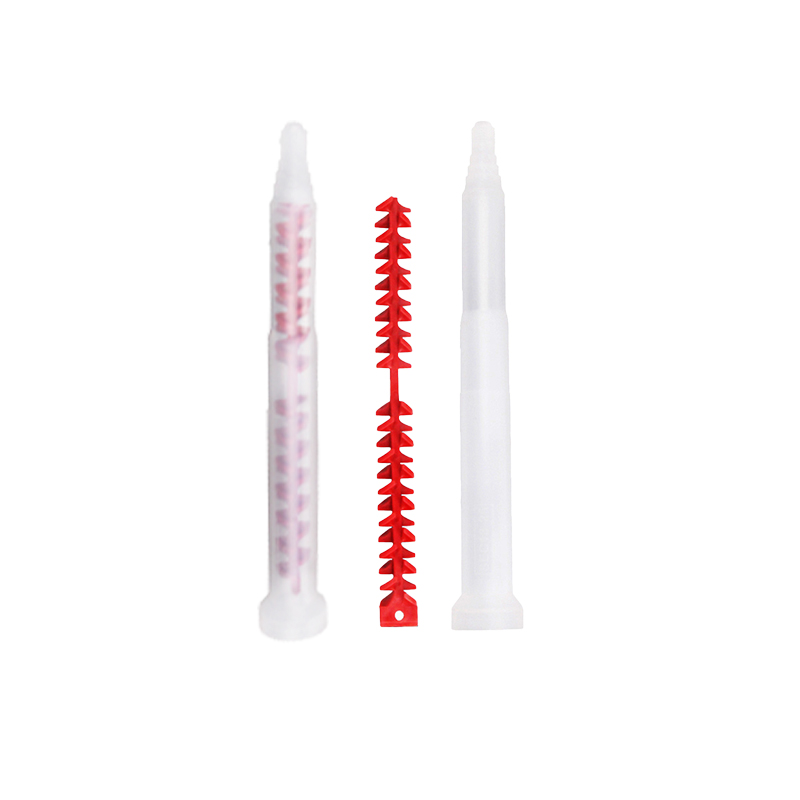


The SEC13-25 Dynamic Mixing Nozzle is specifically designed to meet the rigorous demands of continuous solar panel encapsulation. The primary technical advantages of using dynamic mixing nozzles include:
Superior Mixing Uniformity: Equipped with a 23-element hollow-joint spiral core, the SEC13-25 Dynamic Mixer Nozzle optimizes fluid contact and active shear, eliminating uncured “soft spots” in solar encapsulation materials.
Durable Material for Continuous Use: Fabricated from high-grade PP/POM, this rotary mixing nozzle SEC13-25 offers exceptional chemical resistance and mechanical durability, ensuring consistent throughput during 24/7 manufacturing operations.
Leak-Free System Integration: The SEC13-25 dynamic nozzle incorporates a secure threaded outlet and a 13mm wide-bore bell connection, preventing air entrapment and ensuring a pressure-stable interface with dispensing valves.
Low Flow Resistance: The internal geometry of the SEC13-25 Dynamic Mixing Nozzle is optimized to maintain a consistent bead even with fast-reacting silicones or polyurethanes.
The dimensions of the Btektech SEC13-25 are optimized to fit most automated solar PV potting fixtures.To assist in technical selection and compatibility verification, the standard SEC13-25 Dynamic Mixing Nozzle specifications are detailed below:
| No. | Part No. | Elements | I.D(mm) | L(mm) | O.D(mm) | A(mm) | Inner color |
| D13 | SEC13-25 | 23 | 13 | 178 | 18 | 4.5 | Red |
Unsure if the SEC13-25 fits your automated dispensing valve? Contact our engineers.
Btektech provides professional OEM/ODM services to adapt the SEC13-25 Dynamic Mixing Nozzle to your proprietary equipment or unique chemical environments.

SEC13-25 dynamic mixing nozzles are manufactured in strict accordance with approved technical drawings. Modifications covering outer diameter, internal component structures and dedicated inlet interface dimensions are available to match non-standard MMD systems.

Custom configurations of the nozzles are developed based on application demands. Adjustments to internal blade quantity and overall tube length are supported to deliver optimized mixing performance for PV module assembly materials of varying viscosities.

Custom material grades and alternative inlet interface styles are supplied for applications with harsh chemical exposure. The tailored SEC13-25 dynamic mixing nozzle construction delivers leak-proof service and extended service life, compatible with custom polyurethane and silicone compound formulas.

Private marking services and customized packaging are available for bulk SEC13-25 dynamic mixing nozzle shipments for worldwide distribution channels. High-performance mixing nozzles can be seamlessly incorporated into independent product portfolios via the supporting branding packages.
The SEC13-25 Dynamic Mixing Nozzle is engineered for high-precision industrial applications where material homogeneity is non-negotiable for long-term product reliability. Implementing the nozzles within your automated dispensing line ensures consistent chemical activation, which is critical for ensuring PV module durability under extreme UV and temperature fluctuations. As a fully compatible alternative for high-volume solar production, the nozzle is designed to provide reliable, streak-free output for complex 2K formulations.

The SEC13-25 Dynamic Mixing Nozzle dispenses two-part silicone and polyurethane at junction box cable ports and internal terminals. Its 23-element internal structure fully blends medium-viscosity sensitive materials inside narrow confined spaces, eliminating incomplete curing risks on conductive components. Precision tight-tolerance manufacturing delivers uniform high-shear mixing for reliable electrical insulation, perfectly matching uninterrupted high-volume PV junction box assembly lines.

Built for fast-cure high-viscosity frame adhesives, the SEC13-25 Dynamic Mixing Nozzle’s wide-bore design cuts flow resistance to deliver stable extrusion for corner filling and even linear adhesive beads. Customizable dimensional parameters fit all robotic automation fixtures, while robust PP/POM construction resists recurring mechanical strain during mass PV framing and maintains consistent adhesive coverage across all bonding surfaces.

The SEC13-25 Dynamic Mixing Nozzle delivers pinpoint adhesive deposition on flexible backsheet and cable anchor substrates to avoid under-cured weak bonding zones. Custom inlet configurations enable leak-free pairing with proprietary dispensing hardware, sustaining stable mixing quality against harsh UV and temperature swings and securing long-term outdoor structural integrity of PV cable strain relief bonds.


Our blog is designed to help you deepen your knowledge of fluid dispensing processes, optimize your production line, and select the best components for your specific challenges. Explore articles that connect industry insights with practical solutions.
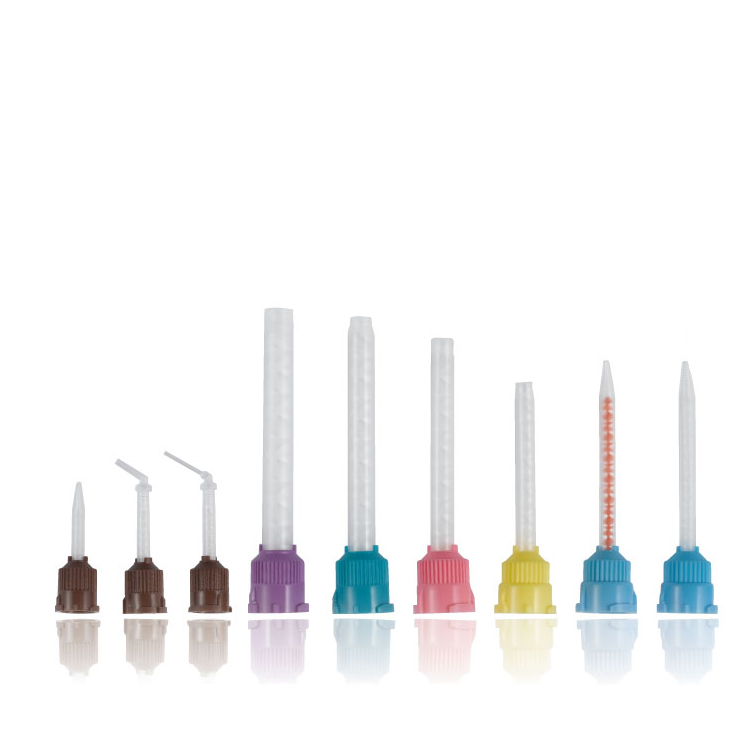
Choosing the most suitable type of mixer is not as simple as it sounds. Key criteria include the characteristics of the liquid to be mixed – such as viscosity and material density…
Read More →
Cleaning epoxy mixing nozzles is essential to prolong their lifespan and ensure that they work effectively. The following steps outline how to clean epoxy mixing nozzles:
Read More →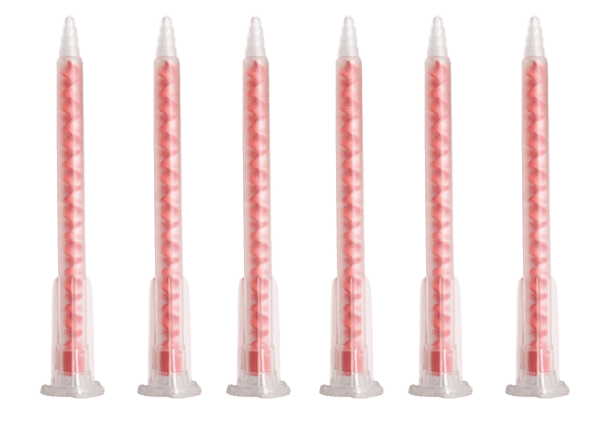
One of the most common mistakes when using epoxy mixing nozzles is using the wrong size nozzle for the job.
Read More →