
home / Dispensing Tips / PTFE Tips
PTFE Tips

PTFE Tips

Prevent outlet curing in low-viscosity reactive fluid dispensing

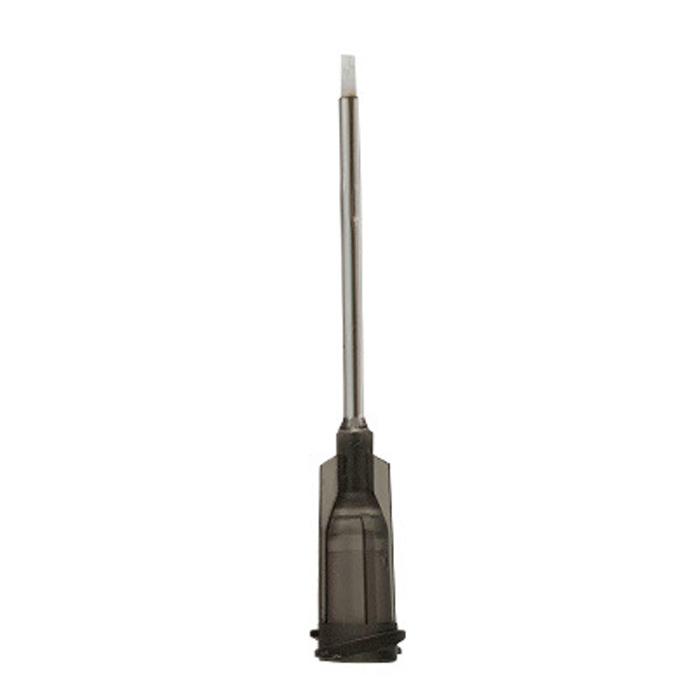
PTFE tips are PTFE-lined dispensing tips used where reactive low-viscosity fluids can cure, build residue, or block flow inside a standard metal path. They combine a stainless steel outer cannula with a non-stick PTFE inner liner for cyanoacrylates, anaerobics, activators, and similar reactive fluids.

Get a Quick Quote

Key Advantages of PTFE Tips

PTFE tips help you control reactive low-viscosity fluids when outlet curing, residue buildup, or chemical exposure disrupt shot consistency.
  • Reduce outlet curing: The PTFE liner extends around 3 mm beyond the stainless steel cannula. This reduces metal contact at the outlet, where cyanoacrylates and anaerobics often start curing during and between dispense cycles.
  • Maintain a cleaner flow path: Low-viscosity fluids can leave a thin residue film inside a standard metal path, which causes retention and pulsing over time. The smooth PTFE interior gives fluid less surface to cling to, which reduces buildup and helps maintain shot-to-shot consistency in continuous dispensing.
  • Resist chemical attack: The PTFE lining tolerates many reactive and solvent-based fluids better than an unlined wetted path. This reduces mid-run replacement when chemical exposure shortens the usable life of a standard tip.
Request For Our Latest Price

Available PTFE Tips Configurations

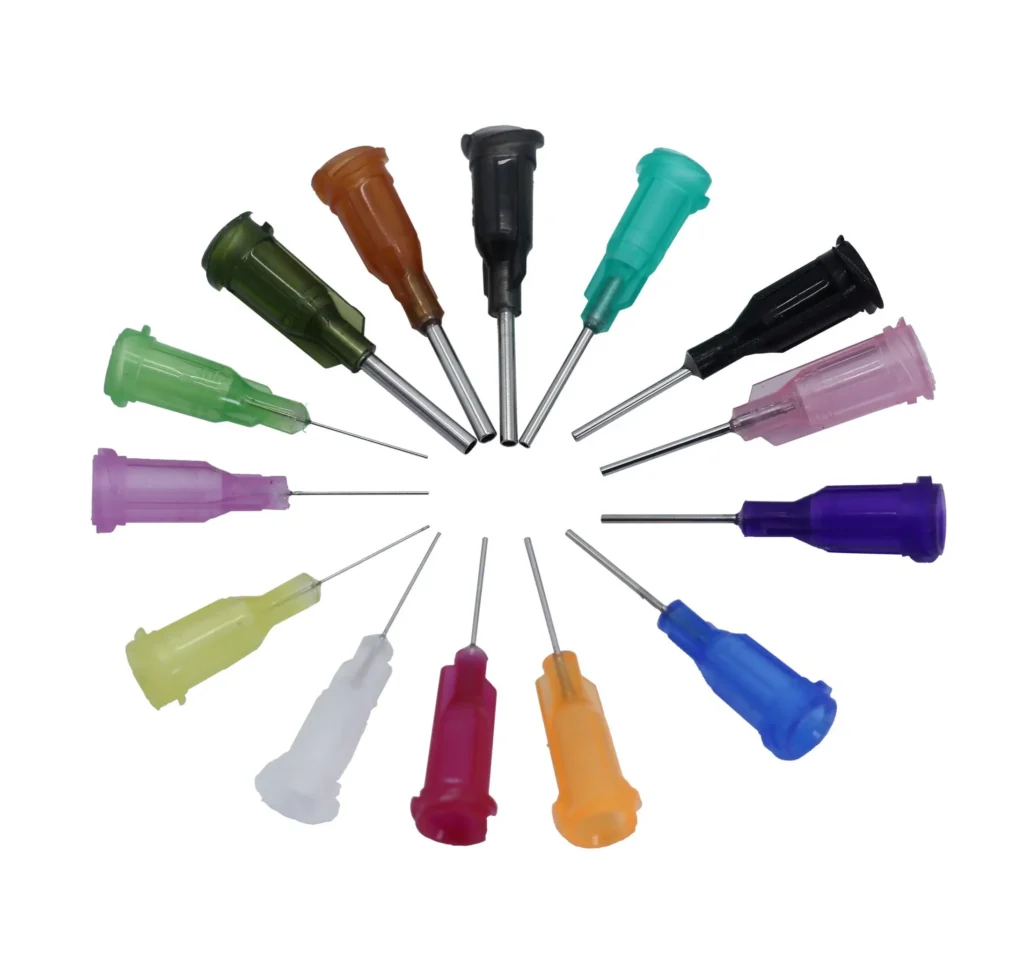
PTFE tips cover 20, 25, and 27 gauge in 12.7 mm and 25.4 mm lengths. Larger IDs move more fluid with less flow resistance; smaller IDs control finer dots and narrower beads. Start with deposit size to select gauge, then evaluate length based on target zone depth and clearance.

Gauge Color ID(mm) OD(mm) 12.7mm(1/2″) 25.4mm(1″)
20 Grey 0.6 1.1 PT 20050 PT 20100
25 Pink 0.3 0.78 PT 25050 PT 25100
27 Red 0.2 0.55 PT 27050 PT 27100

How to Choose the Right PTFE Tips

  • Fluid Reactivity: Choose PTFE-lined dispensing tips when cyanoacrylates, anaerobics, activators, or similar low-viscosity reactive fluids can cure or leave residue inside a standard metal path.
  • Gauge Size: Start with deposit size. 20 gauge supports higher flow, 25 gauge fits smaller deposits, and 27 gauge is better for fine dots and narrow beads.
  • Tip Length: Use 12.7 mm for shorter, stiffer outlet control in open-access zones. Use 25.4 mm when recessed geometry blocks direct access to the target area.
  • Selection Boundary: If the fluid is non-reactive and pressure resistance matters more than anti-stick behavior, stainless steel tips are typically the better choice.

Customization Options for PTFE Tips

Standard gauge and length configurations cover most reactive adhesive dispensing applications, but specific orifice geometry, outlet behavior, connection interface, or pack format requirements sometimes fall outside the standard range.

OEM Build

OEM Build

Manufacture to your drawing with specified gauge, liner protrusion, cannula length, and hub geometry.

ODM Layout

ODM Layout

Develop tip geometry based on fluid reactivity, cycle timing, outlet position, and clog-risk profile.

Structure and Interface

Structure and Interface

Adjust gauge, length, hub format, or liner extension distance to match existing syringe barrels or valve interfaces.

Branding and Packaging

Branding and Packaging

Add custom labels, hub colors, or pack quantities for product identification and catalog consistency.

Excellent Performance in Industrial Applications

PTFE tips fit production lines that run reactive low-viscosity fluids and cannot tolerate frequent outlet curing, residue buildup, or unstable micro-dosing between cycles.

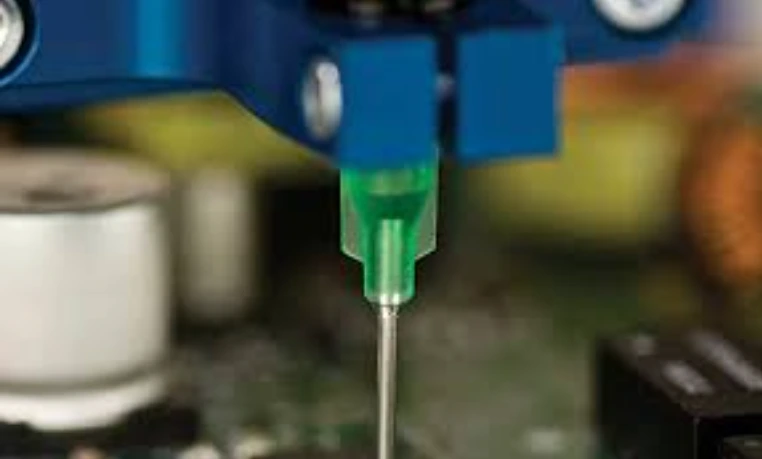
Robotic dispensing nozzle precisely applying adhesive or potting compound onto populated electronic circuit board

PCB Assembly and Micro-Dot Adhesive Dispensing

High-density PCB layouts need precise micro-dot placement near solder joints and fine-pitch components. A standard metal outlet can collect residue and start curing at the tip edge, which causes inconsistent dots or mid-run blockage. The PTFE outlet zone reduces this metal-contact failure point and helps maintain more repeatable dot size across short, repeated cycles.

Send Inquiry Now
Industrial robot dispensing structural adhesive on vehicle body-in-white – btektech automated solutions

Automotive Sensor and Connector Bonding

Sensors, connectors, and trim assemblies often require adhesive or sealant application under steady cycle timing. If reactive fluid cures at the outlet during short pauses, cleanup time and line stoppage rise quickly. Solvent exposure can also shorten the life of an unlined wetted path. The PTFE liner reduces outlet curing and helps maintain a usable flow path across longer production runs.

Send Inquiry Now
Close-up of automated dispensing system delivering a perfect micro-dot of adhesive

Anaerobic Adhesive Dispensing in Repetitive Assembly

Anaerobic adhesives cure on contact with metal surfaces in low-oxygen conditions, which makes an unlined metal tip prone to blockage during short dispense pauses. The PTFE-lined dispensing tips reduces metal-fluid contact inside the tip, and the extended outlet zone reduces exposure at the exit point. This helps keep the tip usable through shift changeovers with less mid-cycle cleaning and less operator intervention.

Send Inquiry Now

Frequently Asked Questions About PTFE Tips

What are PTFE tips?

PTFE tips are PTFE-lined dispensing tips designed for reactive low-viscosity fluids that can cure, stick, or build residue inside a standard metal path. They use a stainless steel outer cannula with a non-stick PTFE inner liner to reduce outlet curing, residue buildup, and flow interruption. PTFE tips are commonly used for cyanoacrylates, anaerobic adhesives, activators, and similar fluids where a standard stainless steel tip may clog or lose shot consistency during repeated cycles.

What fluids are PTFE tips designed for, and when are they not the right choice?

+

How does the PTFE liner extension prevent clogging?

+

Which PTFE tip gauge should I choose for my dispensing process?

+

When should I choose PTFE tips instead of stainless steel tips?

+

Learn More About PTFE Tips

Our blog is designed to help you deepen your knowledge of fluid dispensing processes, optimize your production line, and select the best components for your specific challenges. Explore articles that connect industry insights with practical solutions.

View Related Blog →