
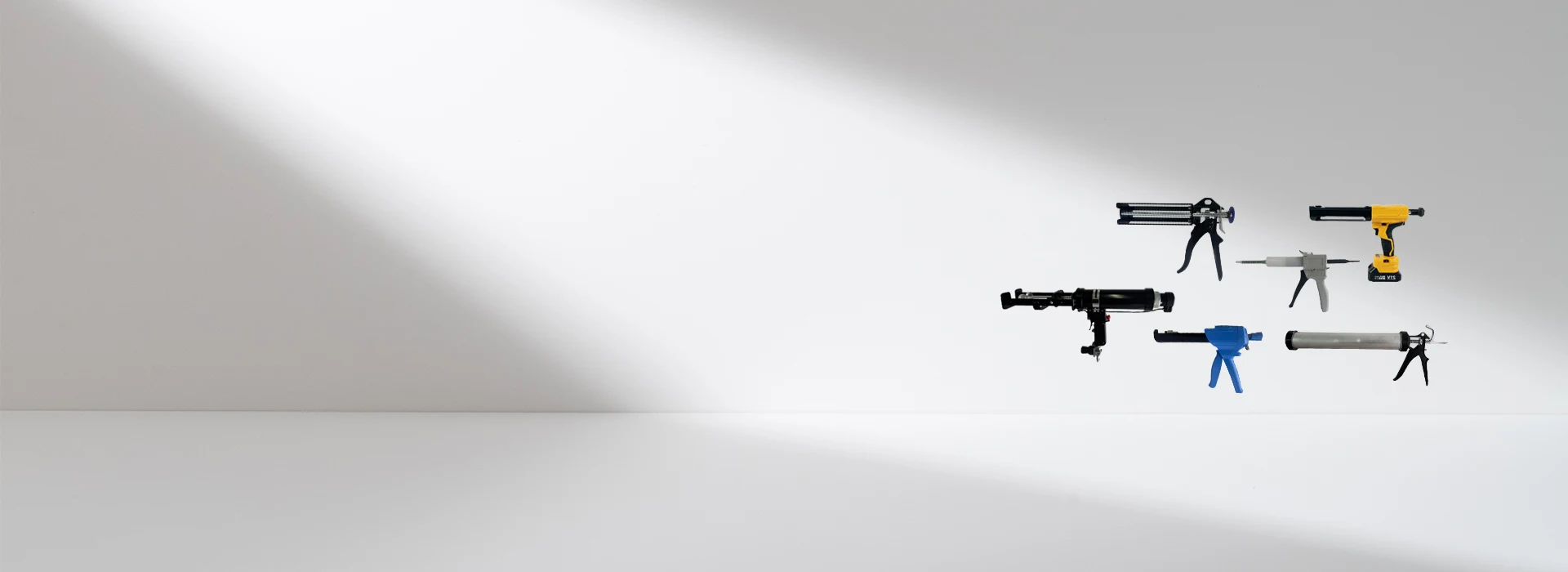


Industrial adhesive dispensing applications are usually selected by three factors: how the gun is driven, what adhesive package it must fit, and which material will be dispensed. Use the sections below to compare common types of caulk guns and dispensing guns by drive method, then confirm cartridge, dual cartridge, sausage pack or syringe barrel compatibility.
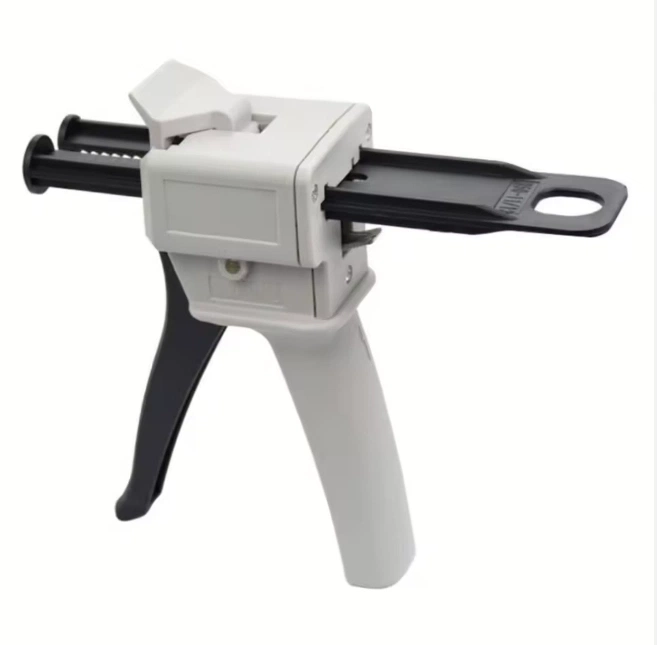
Manual guns are suitable for syringe barrels, low-volume adhesive dispensing and applications where no air or power source is required. They are commonly used for small-volume adhesive, fluid and precision dispensing work.
Pneumatic guns use compressed air to provide stable output for silicone, sealants, mastic and industrial adhesive applications. They are suitable for repeated dispensing, high-viscosity materials and production environments.
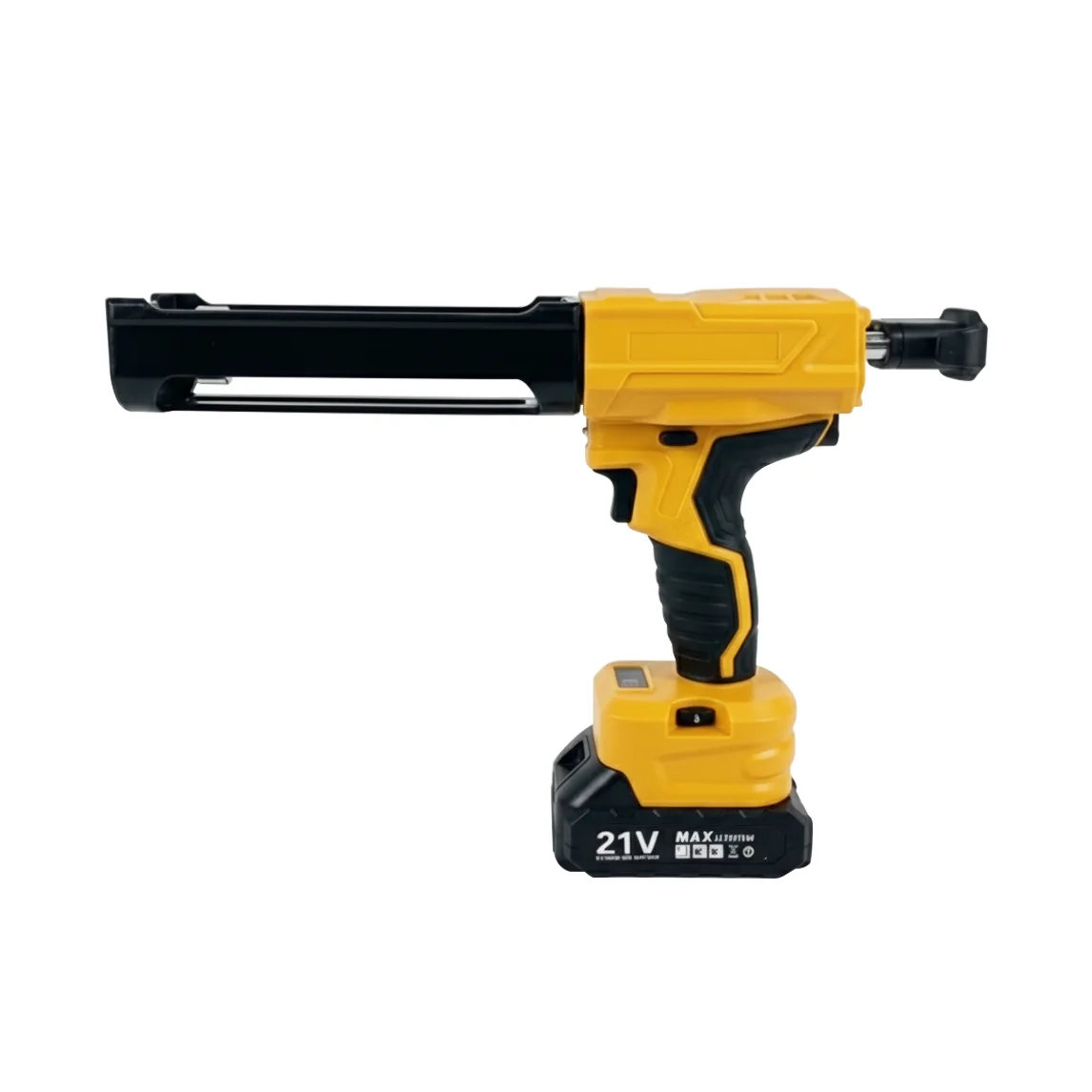
Cordless guns are battery-powered dispensing tools designed for mobile work, field installation and repeated sealant applications without a compressed air source. Suitable for on-site construction and assembly tasks.
For standard single-component cartridges used with silicone, PU sealants, construction adhesives and general caulking applications, available in 300ml–600ml with single- or dual-thrust options.
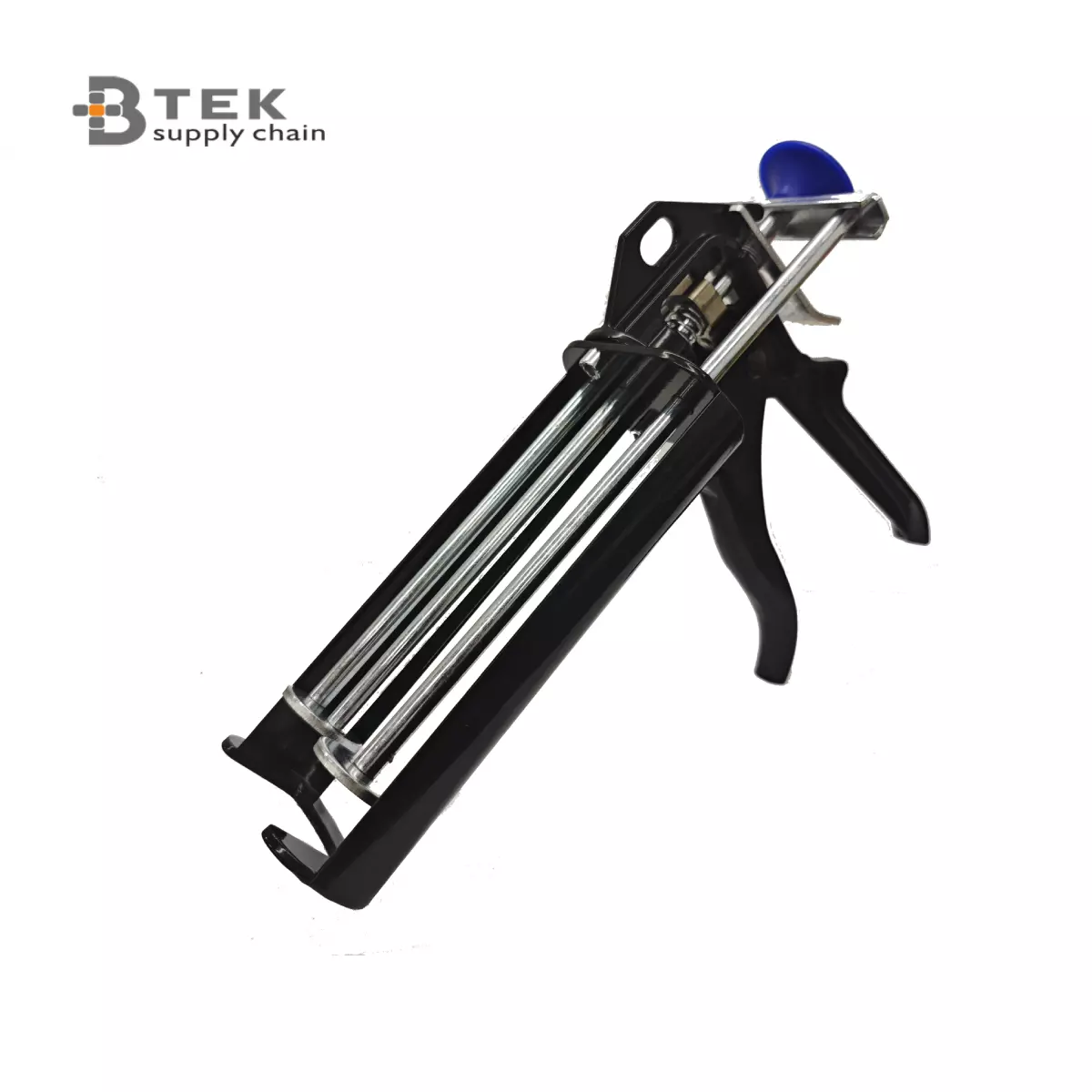
For two-component adhesives, epoxy, AB glue and 2K cartridges that require controlled dispensing and compatible static mixing nozzles. Supports 1:1, 2:1, 4:1 and 10:1 mix ratios.
For sausage packs and foil packs in 300ml and 600ml formats, especially high-volume or high-viscosity sealant applications in construction and industrial assembly.
For syringe barrels used in small-volume, controlled adhesive or fluid dispensing applications. Compatible with 10cc, 30cc and 55cc syringe barrel formats for precision dispensing.
Dispensing guns are available for adhesive cartridges, dual cartridges, syringe barrels and sausage packs, covering common industrial adhesive package formats. Choose a product category below or contact us to confirm model compatibility with your cartridge size, foil pack volume, plunger design and material viscosity.

For standard cartridges used with silicone, PU sealants, construction adhesives and other single-component materials.
Learn More
For 2K adhesives, epoxy, AB glue and dual cartridges requiring controlled mix ratios such as 1:1, 2:1, 4:1 or 10:1.
Learn More
For syringe barrels such as 10cc, 30cc and 55cc used in small-volume adhesive or fluid dispensing.
Learn More
Air-powered guns for continuous output with silicone, mastic, sealants and selected industrial adhesive applications.
Learn More
Battery-powered dispensing guns for mobile work, field installation and repeated sealant applications.
Learn More
For sausage packs and foil packs such as 300ml and 600ml, especially high-viscosity sealants and construction materials.
Learn MoreDispensing stability depends on how thrust delivery, cartridge fit, and pressure release behave together inside the tool during each trigger cycle.

Dispensing guns with different thrust levels are available to reduce bead stutter, excess bead formation, and trigger overload.

Maintain synchronized plunger travel in 2-part systems to prevent off-ratio mixing and cure failure.

Control residual pressure better so you reduce dripping after trigger release and keep bead edges cleaner.

Match syringe, cartridge, or foil pack geometry correctly so you prevent misfit, blowout, and uneven loading.
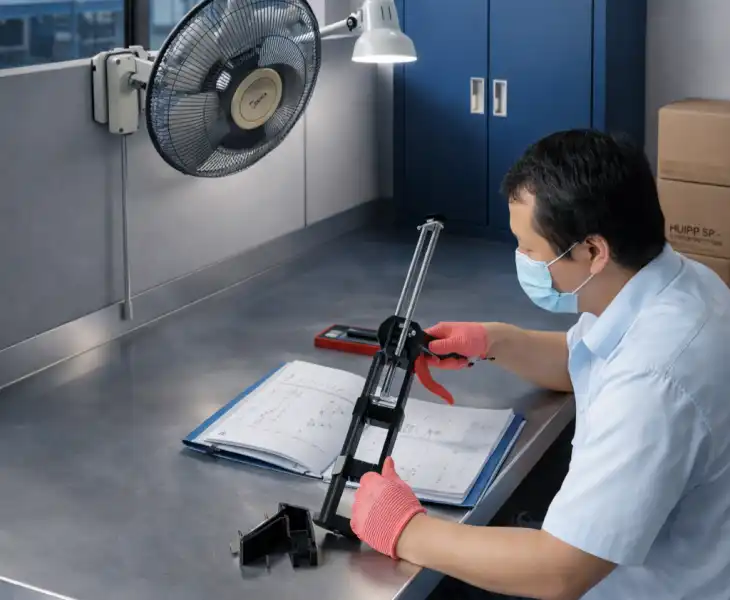
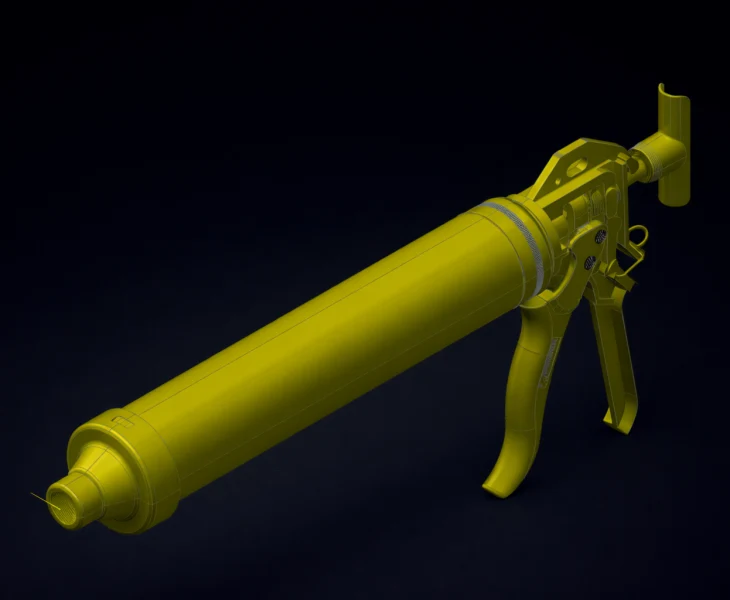
Btektech supports OEM, ODM, distributor and bulk dispensing gun projects based on customer drawings, cartridge formats, and application data. Customization may include frame geometry, handle design, thrust ratio selection, cartridge holder matching, pack holder structure, color identification, logo marking, and private label packaging. For project evaluation, provide material type, material viscosity, cartridge size or foil pack volume, mix ratio, required thrust force, drive type, daily cycle count, and branding requirements. Customization scope depends on project specifications — submit details for engineering review before confirming production direction.
Review manual, pneumatic, cordless, dual cartridge, and foil pack dispensing gun configurations, cartridge compatibility, and general specifications.
View Btektech’s adhesive dispensing components, including dispensing guns, mixing nozzles, syringe barrels, dispensing tips, cartridges, and accessories.
Learn how to select industrial dispensing guns, compare manual vs pneumatic vs cordless options, and improve dispensing process stability.
Dispensing guns show their value when the same adhesive must run repeatedly while maintaining bead shape, ratio alignment, and operator rhythm across daily production work.
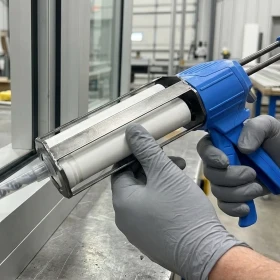
A manufacturer operating a multi-shift bonding line began noticing inconsistent curing in assemblies using two-component cartridge adhesives. Uneven plunger advance inside the dispensing gun gradually pushed the adhesive ratio outside the specified range. After switching to a dispensing gun matched to the cartridge ratio and thrust requirement, the line maintained synchronized output during continuous production runs.

During an infrastructure maintenance project, technicians applied high-viscosity sealant while working from ladders and narrow service access points. These conditions reduced tool stability and made sustained trigger force difficult with manual guns. After switching to cordless dispensing guns, bead formation remained steadier and operator fatigue decreased during repeated sealing cycles.
In an adhesive dispensing system, the dispensing gun controls the force that drives material from the cartridge or foil pack toward the nozzle or mixer. When material viscosity or outlet resistance creates excessive back pressure, the gun must supply sufficient thrust to maintain stable flow — insufficient thrust causes pulsed output, uneven bead width and inconsistent surface coverage.
In two-component adhesive systems, the dispensing gun also maintains volumetric ratio. Dual cartridge dispensing guns handle cartridge ratios from 1:1 up to 10:1, and the gun must move both plungers at the correct displacement throughout the dispensing cycle. A mismatch between the gun and cartridge design cannot be corrected at the mixer stage and may result in incomplete curing.
Manual dispensing guns control piston movement through a trigger and leverage mechanism, suited for syringe barrels and moderate-viscosity materials at limited daily cycle counts. Pneumatic caulking guns generate push force through compressed air — typically at 6–8 bar — maintaining steady plunger advancement even as extrusion resistance increases; some models support pressure adjustment for different viscosity conditions.
In field installation or maintenance work where compressed air is not available, cordless caulking guns use an internal motor and gearbox to drive the plunger forward, maintaining controlled extrusion during mobile bonding and sealing tasks across a range of material viscosities.
Start selection with the material system and packaging format rather than tool appearance.
Package format and cartridge volume strongly affect the tool structure. Smaller packages such as 10–55 cc syringes normally work with manual syringe guns. Larger cartridges, dual cartridges, or foil packs generate higher extrusion resistance, requiring sufficient frame stiffness and thrust capacity to maintain stable bead output. Confirm cartridge size, foil pack volume, material viscosity and required dispensing force before selecting a model.
For two-component adhesive systems, the dispensing gun must match the cartridge ratio. A mismatch between the dual cartridge gun and the cartridge ratio changes the component proportion before mixing, which may lead to incomplete curing, weak bond strength, or surface tackiness in the final application.
Work position, daily cycle count, and available energy source — compressed air, battery, or manual — determine whether a pneumatic caulking gun, cordless caulking gun, or manual dispensing gun is more appropriate for your application.
How do I choose the right dispensing gun for my adhesive?
Select the dispensing gun based on adhesive package, viscosity, and output requirements. Standard cartridges typically use Single Component Caulking Guns, dual cartridges require Dual Cartridge Guns, and sausage packs may use Sausage Caulking Guns. For syringe barrels, choose Manual Syringe Guns. Then pick the drive type: manual, pneumatic, or cordless depending on production volume and operating environment.
Which gun should I use for epoxy or 2K adhesives?
For epoxy, AB glue, or 2K adhesives, use Dual Cartridge Guns to maintain proper mix ratios. Compatible Static Mixing Nozzles ensure accurate two-component dispensing. The gun must match cartridge capacity and viscosity, whether manual, pneumatic, or cordless, to achieve controlled output and high-strength adhesive bonding in industrial applications.
Which gun is suitable for silicone, PU sealants, or mastic?
For silicone or PU in standard cartridges, use Single Component Caulking Guns. For sausage or foil packs, select Sausage Caulking Guns. High-viscosity mastic may require Pneumatic Guns, while field work without air favors Cordless Guns. Always match the gun to material viscosity and package type for stable dispensing.
Do dispensing guns need matching cartridges, tips, or static mixing nozzles?
Yes. Dispensing guns must match cartridge size, plunger type, and accessory compatibility. Dual cartridges need compatible Static Mixing Nozzles. Syringe barrels require Dispensing Tips. Correct matching ensures consistent output, controlled adhesive flow, and optimal results for industrial sealants, PU, epoxy, silicone, or mastic applications.
Can I use a dispensing gun for adhesive cartridges in different sizes?
Dispensing guns for adhesive cartridges are available in configurations matched to standard single-component cartridges, dual cartridges, sausage packs, foil packs, and syringe barrels. Each format requires a compatible gun frame and plunger configuration — confirm cartridge volume, format and component count before selecting a model. These products are sometimes referred to as dispenser guns or dispense guns in industrial purchasing contexts.
What happens if a dual cartridge gun ratio does not match the cartridge?
A Dual Cartridge Gun must match the cartridge mix ratio, such as 1:1, 2:1, or 4:1. Incorrect ratio can cause incomplete curing, reduced bond strength, or tacky surfaces. Always confirm cartridge ratio and Static Mixing Nozzle compatibility before dispensing two-component epoxy, AB glue, or other 2K adhesives.
What is the difference between manual, pneumatic, and cordless dispensing guns?
Manual guns are hand-operated, ideal for small-volume syringe barrels. Pneumatic guns use compressed air, providing stable output for high-viscosity adhesives and continuous production. Cordless guns are battery-powered for mobile or field installation work. Choose the drive type based on adhesive material, package size, and work environment to ensure controlled dispensing and consistent output.
Can Btektech provide OEM or private label dispensing guns?
Yes. Btektech supports OEM and private label programs for industrial adhesive dispensing guns. Customization options include color, branding, packaging, and configuration for standard cartridges, dual cartridges, sausage packs, or syringe barrels. This enables adhesive manufacturers, distributors, and contract packers to source tailored dispensing solutions.
What information is needed for a custom dispensing gun or OEM project?
Provide adhesive type and viscosity, cartridge or sausage pack size, single- or dual-component system, mix ratio, required thrust, drive type, daily cycle count, working position, and branding requirements. Btektech evaluates these details to recommend a custom industrial adhesive dispensing gun configuration for OEM, private label, or distributor projects.
What causes dripping or unstable bead flow when using a dispensing gun?
Dripping after trigger release is usually caused by residual pressure in the cartridge, nozzle, or mixer — common with small outlet diameters, low-viscosity adhesives, or excessive trigger force. Unstable bead flow occurs when the gun cannot overcome material resistance: high-viscosity adhesives, large foil packs, filled epoxies, or undersized nozzle outlets may cause pulsed dispensing. For both issues, verify that nozzle size, outlet diameter and dispensing gun thrust capacity match the adhesive material and package format.