home / Dispensing Tips / Tapered Tips
Tapered Tips

Tapered Tips

Controlled Dispensing for Thick and Particle-Filled Fluids

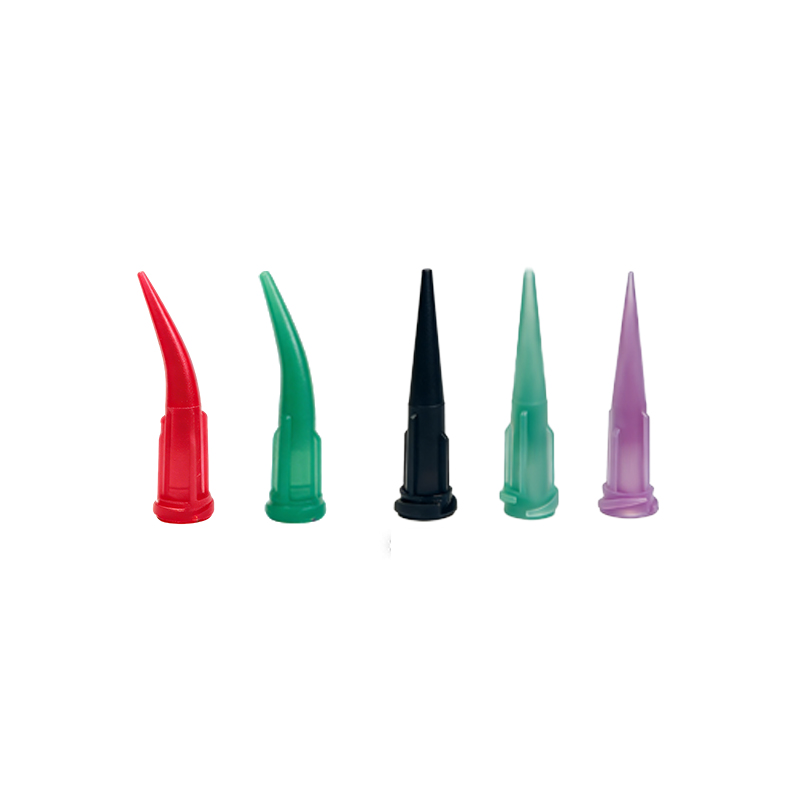
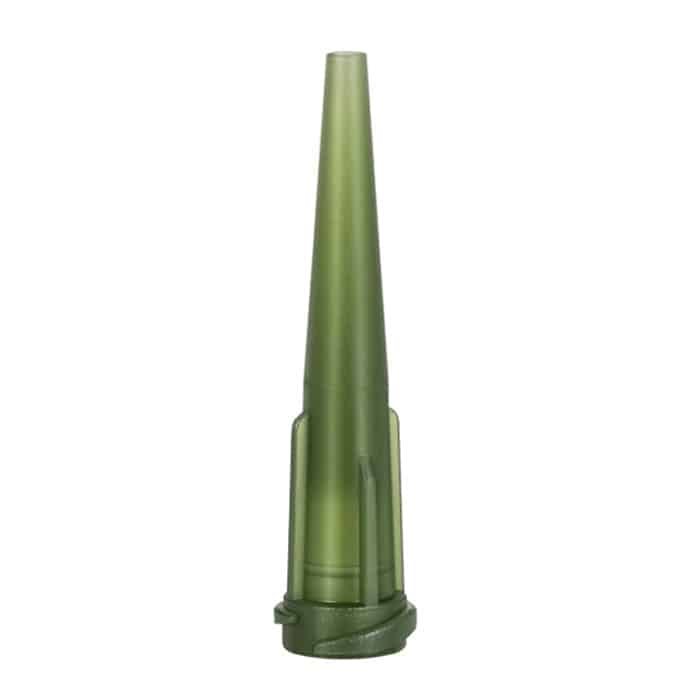
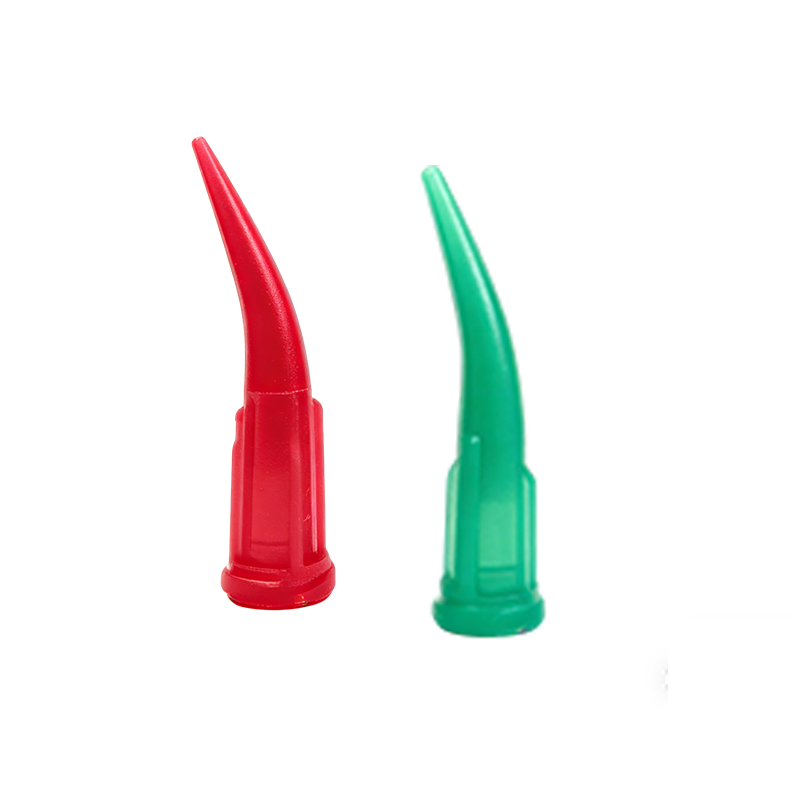
Tapered Dispensing Tips feature a narrowing internal flow path that helps reduce backpressure before material reaches the outlet. Available in straight and 35° bent versions, including UV-blocking and anti-static options, they are well suited to medium- to high-viscosity adhesives, sealants, and particle-filled coatings.

Get a Quick Quote

Key Advantages of Tapered Tips

The internal geometry of Tapered Dispensing Tips helps keep flow more stable with high-viscosity and filled materials, making it easier to maintain bead continuity and reduce clogging.
  • Reduced backpressure: When viscosity is high, narrow straight-bore outlets tend to drive pressure up quickly. The wider internal channel of a tapered tip helps reduce that pressure rise, making flow more stable.
  • Two configurations for varied access: Straight versions work well for open-surface dispensing. The 35° bent version is better when the syringe has to reach around housing walls, fixture edges, or offset dispense points.
  • Material options for sensitive processes: Standard PP construction suits many common adhesive and sealant processes. UV-blocking tapered tips help reduce premature curing with light-sensitive materials, while anti-static tapered tips are used in ESD-sensitive environments.
Request For Our Latest Price

Available Tapered Tips Configurations

Btektech's Tapered Dispensing Tips range covers gauges from 10 to 30, with a typical length of 31.6 mm. As gauge number increases, inner diameter becomes smaller. Straight versions are used for most open-surface applications, while bent versions are preferred when access is partially obstructed.

Gauge Color Length(mm) ID(mm)
10 Light Green 31.6 2.9
11 Light Orange 31.6 2.3
13 Light Blue 31.6 1.8
14 Olive 31.6 1.55
15 Amber 31.6 1.4
16 Grey 31.6 1.35/1.2
18 Green 31.6 0.84
20 Pink 31.6 0.6
22 Blue 31.6 0.41
25 Red 31.6 0.3
27 Clear 31.6 0.2
30 Lavender 31.6 0.16

How to Choose the Right Tapered Tips

●  Viscosity Level: High-viscosity materials need a large enough internal flow path to maintain stable output. If the outlet ID is too small, backpressure rises quickly and flow becomes harder to control.
●  Target Bead Width: Higher gauge numbers produce finer beads, but the smaller inner diameter also increases flow resistance. Finer bead control should always be balanced against material flowability.
●  Dispensing Access: Use a bent Tapered Dispensing Tip when the dispense point is blocked by housings, fixture edges, or angled access paths. Bent versions help maintain a more practical approach angle in restricted spaces.
●  Material Option: UV-blocking tapered tips are commonly used with UV-curable adhesives, while anti-static tapered tips are preferred in ESD-sensitive dispensing environments.

Customization Options for Tapered Tips

As a professional manufacturer of dispensing accessories, we can provide customized services based on manufacturing, development, branding, and functional design requirements.

OEM Manufacturing

OEM Manufacturing

We support OEM production based on your drawings, material specifications, and tolerance requirements for stable quality in volume supply.

ODM Development

ODM Development

We develop custom tapered tip structures when standard designs cannot meet your process, flow, or application-specific dispensing requirements.

Custom Dimensions Options

Custom Dimensions Options

Customization can include length, bend angle, orifice size, and material variants for specific bead, access, filler, or process needs.

Private Label Options

Private Label Options

Private label services include custom colors, packaging, labeling, and selected identification features to support your branding and distribution requirements.

Tapered Tips in Industrial Applications

Tapered Dispensing Tips are most effective when thick or particle-filled materials must be dispensed with stable flow, controlled bead shape, and minimal interruption from clogging or overflow.

Tapered Dispensing Tip for Edge Bonding Application

Electronics Assembly and PCB Bonding

In PCB assembly and electronics manufacturing, conductive epoxies, UV adhesives, and filled underfills are often applied to compact, closely spaced components. The tapered flow path helps reduce backpressure and improve deposit control around tight bond lines. For applications near static-sensitive components, anti-static variants can help reduce ESD-related risk.

Send Inquiry Now
Tapered Dispensing Tip for Precision PCB Dispensing

LED and Optical Module Sealing

Potting, lens edge sealing, and small bonding paths in LED and optical assemblies require consistent bead placement and clean cutoff. The tapered outlet helps reduce residual tails with high-viscosity encapsulants, while bent versions are useful when fixtures or lens housings block a straight approach.

Send Inquiry Now
Tapered Dispensing Tip for Sealant Dispensing Application

Industrial Sealants and Filled Coatings

RTV silicone, polyurethane sealants, and particle-filled coatings place particular demand on tip geometry. A larger internal channel helps maintain flow at lower pressure, which reduces clogging, tip changes, and line stops during longer batch runs. Tapered tips are a practical choice when bead consistency matters more than ultra-fine micro-dispensing.

Send Inquiry Now

Frequently Asked Questions About Tapered Tips

What are tapered dispensing tips?

Tapered Dispensing Tips are plastic dispensing tips designed for medium- to high-viscosity adhesives, sealants, and particle-filled materials. Their tapered internal flow path helps reduce backpressure, improve flow stability, and lower the risk of clogging during dispensing.

Are tapered tips better for high-viscosity adhesives?

+

Can Tapered Dispensing Tips be used with UV-curable adhesives?

+

When should I use a bent Tapered Dispensing Tip instead of a straight one?

+

Do Tapered Dispensing Tips support custom dimensions or special material variants?

+

Learn More About Tapered Tips

Our blog is designed to help you deepen your knowledge of fluid dispensing processes, optimize your production line, and select the best components for your specific challenges. Explore articles that connect industry insights with practical solutions.

View Related Blog →