
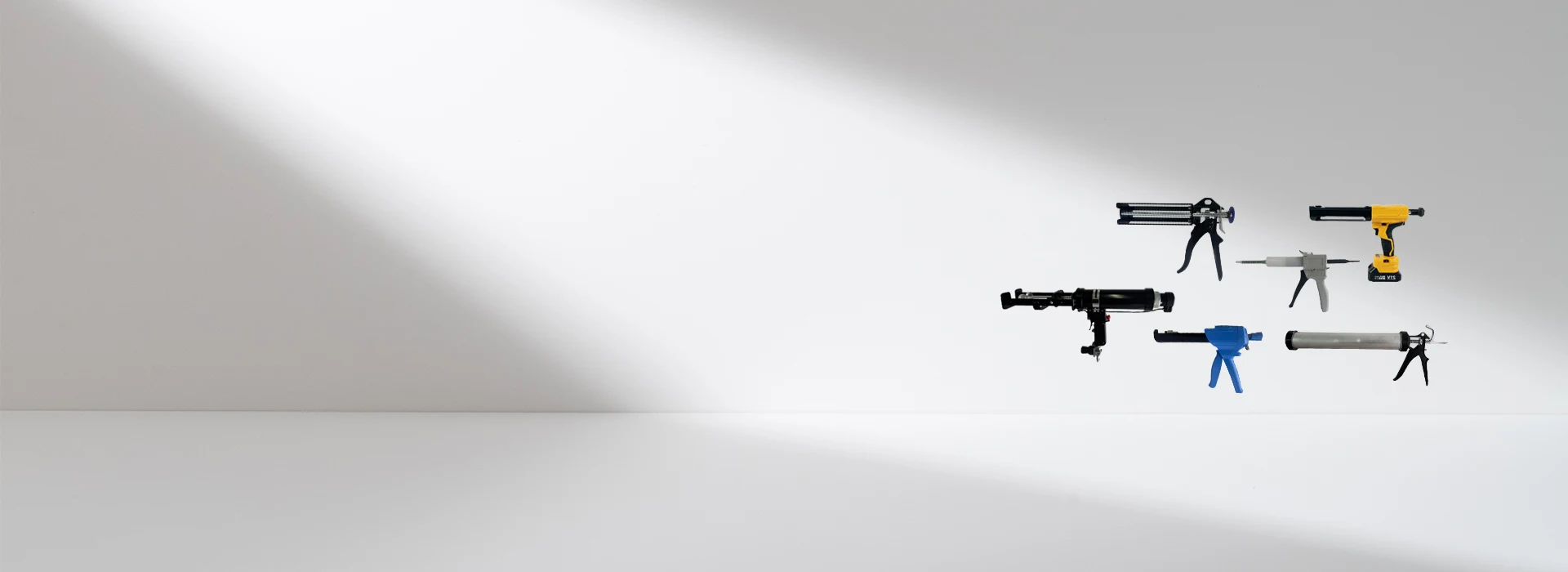
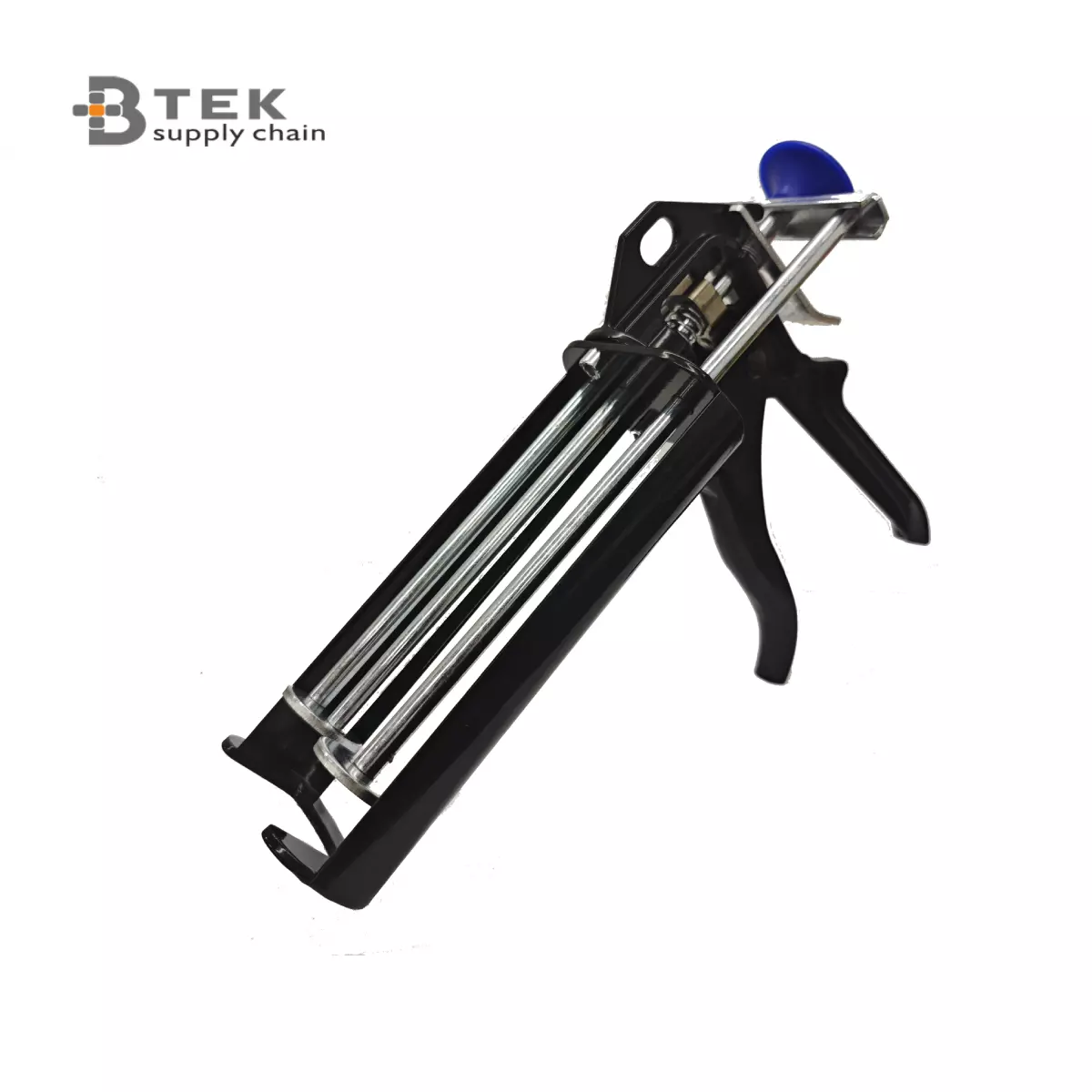
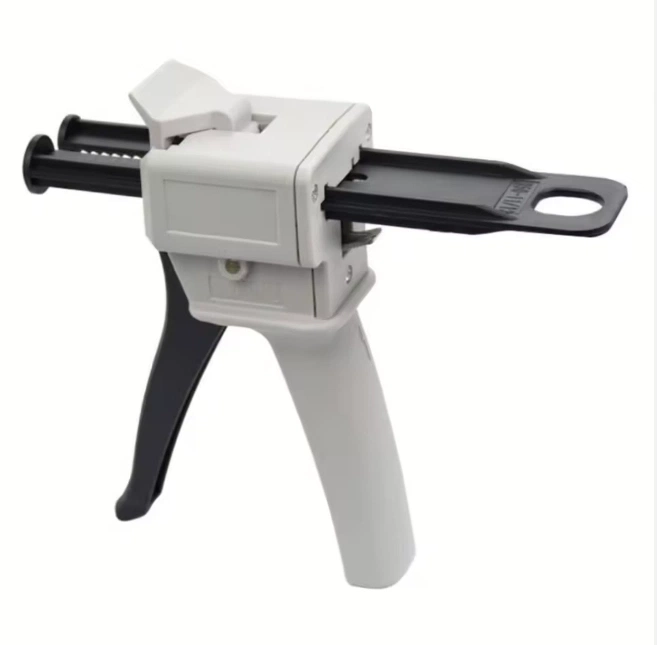


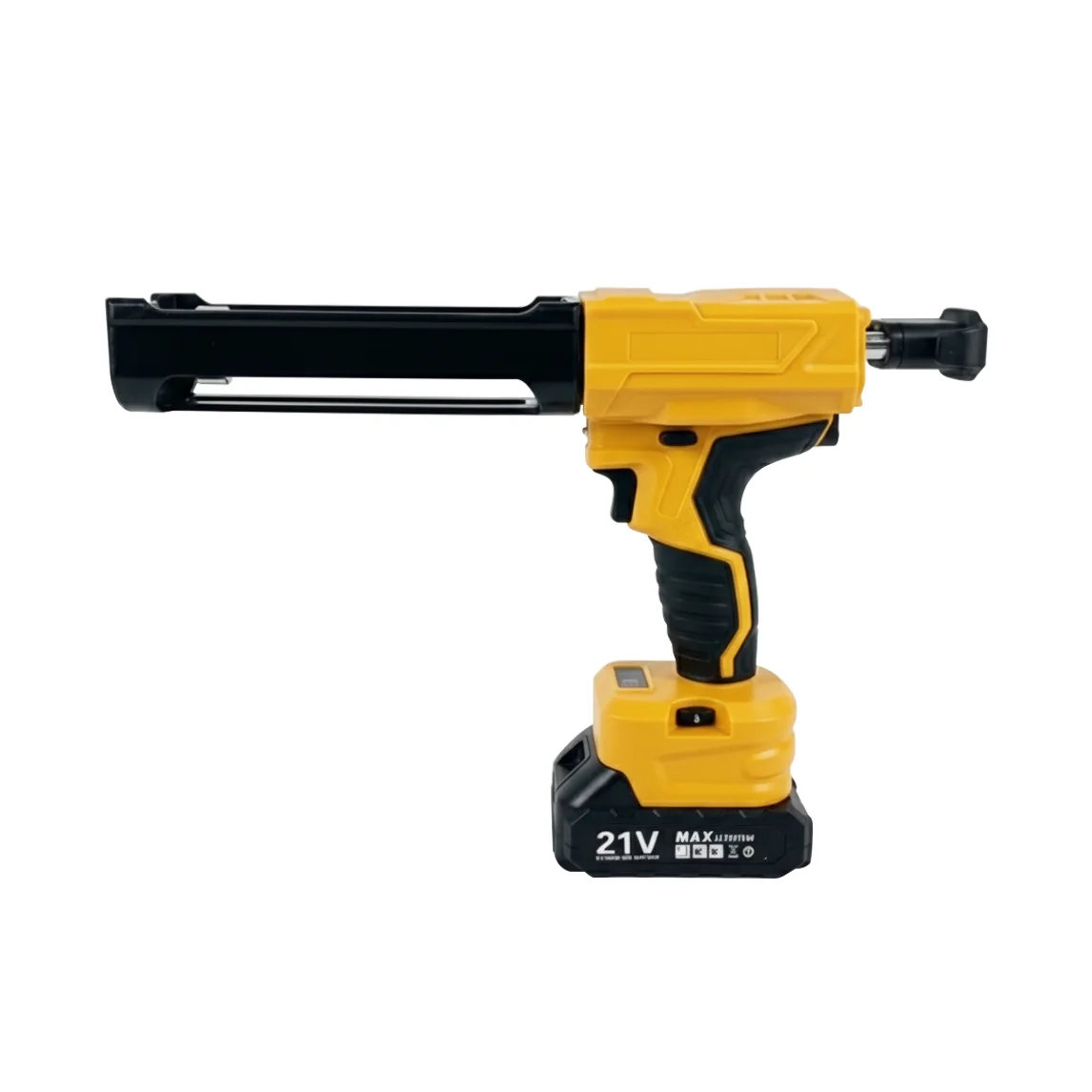
The dispensing gun category covers hand-operated, air-powered, and battery-powered tools for syringes, standard cartridges, dual cartridges, and foil packs. You should choose the format by material viscosity, package type, work position, and daily cycle count.


Dispensing stability depends on how thrust delivery, cartridge fit, and pressure release behave together inside the tool during each trigger cycle.

Dispensing guns with different thrust levels are available to reduce bead stutter, excess bead formation, and trigger overload.

Maintain synchronized plunger travel in 2-part systems to prevent off-ratio mixing and cure failure.

Control residual pressure better so you reduce dripping after trigger release and keep bead edges cleaner.

Match syringe, cartridge, or foil pack geometry correctly so you prevent misfit, blowout, and uneven loading.
Quality control for dispensing guns focuses on structural fit, trigger movement, and stable thrust output during repeated dispensing cycles. Different dispensing gun types require different functional checks depending on their mechanism and application. Our factory performs tests such as thrust force verification and spring elasticity checks on selected models to confirm that trigger force and push performance remain within the intended operating range. If needed, we also provide label batch numbers, part numbers, and production dates to enhance process control and traceability.
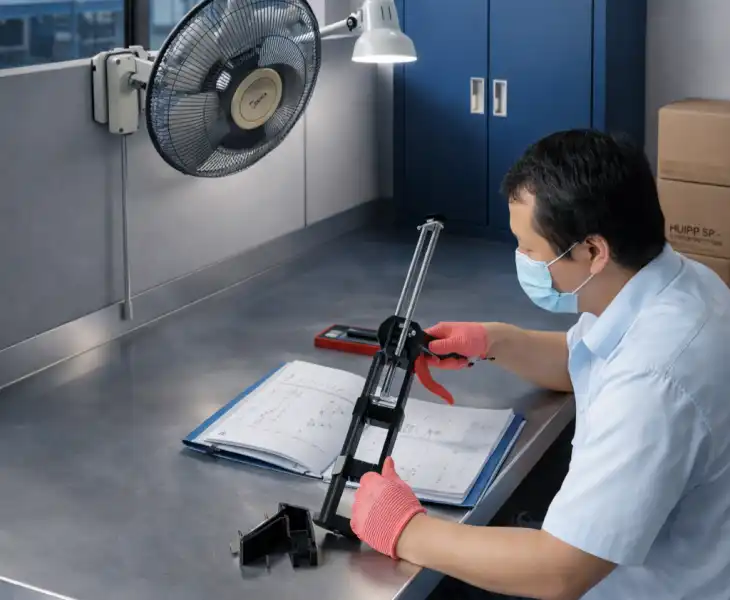
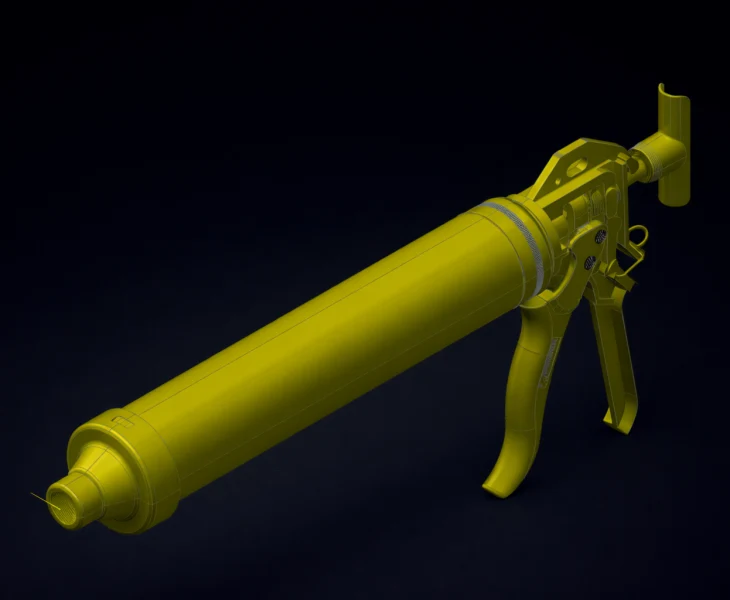
We support OEM production based on customer drawings, allowing the dispensing gun structure to match specific cartridge formats, mounting interfaces, and branding requirements. Customization may include frame dimensions, thrust ratio selection, handle geometry, surface finish, color identification, and logo marking to align with your existing product line. For ODM projects, our engineering team can evaluate the dispensing application, including cartridge type, material viscosity behavior, and required dispensing force. Based on this evaluation, we may suggest structural adjustments in leverage design, frame reinforcement, or holder configuration to improve dispensing stability and operator control.
Detailed specifications, dimensional references, and configuration options for all dispensing gun models available here.
DownloadComplete range of dispensing components, covering tips, mixing nozzles, cartridges, guns, and system accessories.
DownloadTechnical articles covering dispensing principles, selection guidance, and process considerations for stable performance.
DownloadDispensing guns show their value when the same adhesive must run repeatedly while maintaining bead shape, ratio alignment, and operator rhythm across daily production work.
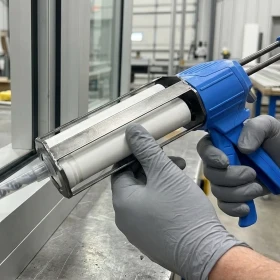
A manufacturer operating a multi-shift bonding line began noticing inconsistent curing in assemblies using two-component cartridge adhesives. Uneven plunger advance inside the dispensing gun gradually pushed the adhesive ratio outside the specified range. After switching to a dispensing gun matched to the cartridge ratio and thrust requirement, the line maintained synchronized output during continuous production runs.

During an infrastructure maintenance project, technicians applied high-viscosity sealant while working from ladders and narrow service access points. These conditions reduced tool stability and made sustained trigger force difficult with manual guns. After switching to cordless dispensing guns, bead formation remained steadier and operator fatigue decreased during repeated sealing cycles.

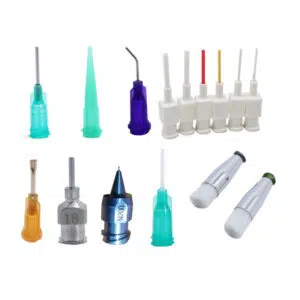

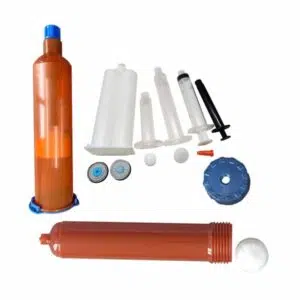
Yes, a dispensing gun or adhesive dispensing gun is normally required to apply adhesives or sealants packaged in cartridges or foil packs because these materials require controlled extrusion force. Cartridge systems rely on a piston to push viscous material through a nozzle or mixer, and manual squeezing rarely generates sufficient pressure. Structural adhesives used in cartridges often fall within the tens-of-thousands to several-hundred-thousand cps range, which manual pressure cannot overcome consistently during extrusion. Manual squeezing may still work for very low-viscosity materials below roughly a few hundred cps, but above this range bead width quickly becomes difficult to control.
A dispensing gun may continue dripping after trigger release when residual pressure remains in the cartridge or nozzle. This usually occurs when nozzle diameter is small or the material viscosity is low. The pressure stored in the dispensing path keeps pushing material forward even after the trigger stops. To reduce dripping, use a nozzle with appropriate outlet size and avoid excessive trigger force during application. Residual pressure may take a short time to dissipate at room temperature depending on material viscosity and outlet restriction. Triggering the gun again before the pressure stabilizes often makes the trailing bead worse.
Unstable bead flow usually occurs when the dispensing gun cannot generate enough thrust for the material resistance. High-viscosity adhesives, filled epoxies, or small mixer outlets increase back pressure inside the cartridge. When thrust capacity is insufficient, the material exits the nozzle in pulses instead of a steady stream. If the instability is caused by high material viscosity, a dispensing gun with higher thrust capacity is usually required. When the resistance mainly comes from the mixer or nozzle, checking the outlet diameter or reducing flow restriction is often the first step before changing the gun.
A dispensing gun must match the cartridge ratio, otherwise the mixed adhesive will not cure correctly. Dual-component cartridges often require ratios such as 1:1, 2:1, 4:1, or up to 10:1. If the gun drives both plungers with incorrect displacement, the components enter the mixer in the wrong proportion. This imbalance may cause incomplete curing, weak bond strength, or surface tackiness in the final application.
A dispensing gun must match both the cartridge size and the force required to extrude the material. Larger cartridges or foil packs usually generate higher extrusion resistance, which means the gun must provide sufficient thrust to maintain stable flow. When the gun capacity is too low for the cartridge, the first sign is often a sharp increase in trigger force while the dispensing rate remains almost unchanged. In this situation, adjusting operator technique rarely solves the problem; the gun specification usually needs to be upgraded to a higher-thrust model.