Banner

Dual Cartridge

Two-Component Adhesive Packaging Solution

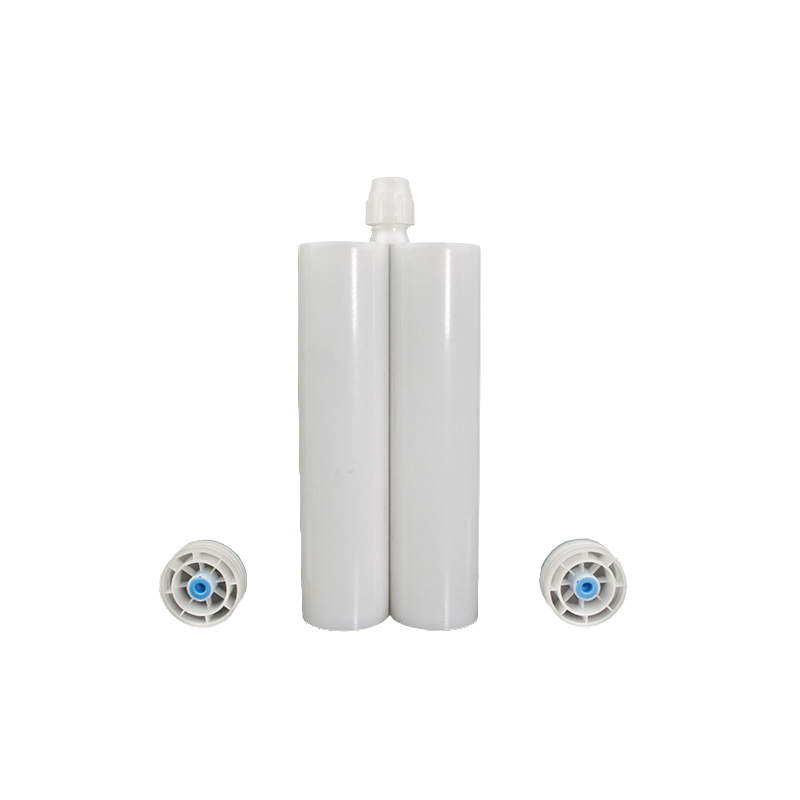
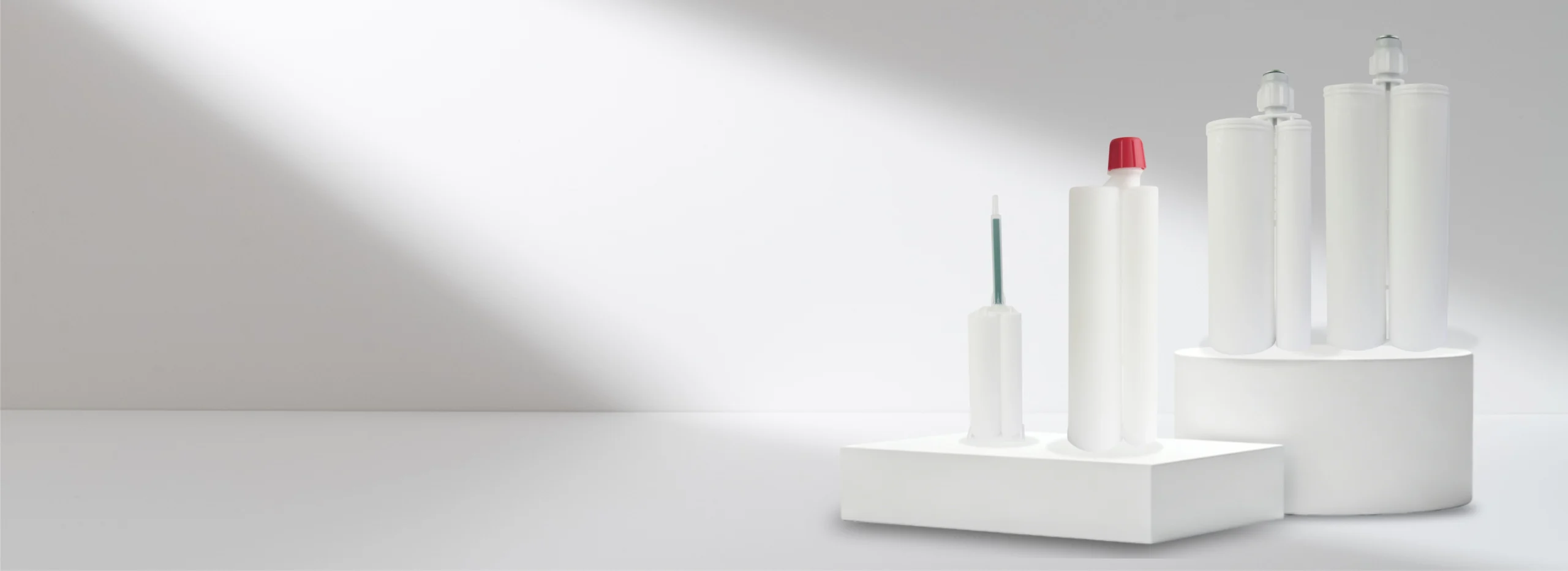
When you are dispensing two-component adhesives, the cartridge is not just packaging, it plays a critical role in maintaining ratio integrity, pressure balance, As a specialized dispensing system manufacturer, Btektech.com produces side-by-side dual cartridges for manual, pneumatic, and electric systems, with capacities from 50ml to 1500ml and ratios from 1:1 to 10:1.

Product Advantages & Technical Features

Thumb
Thumb
Thumb
Thumb
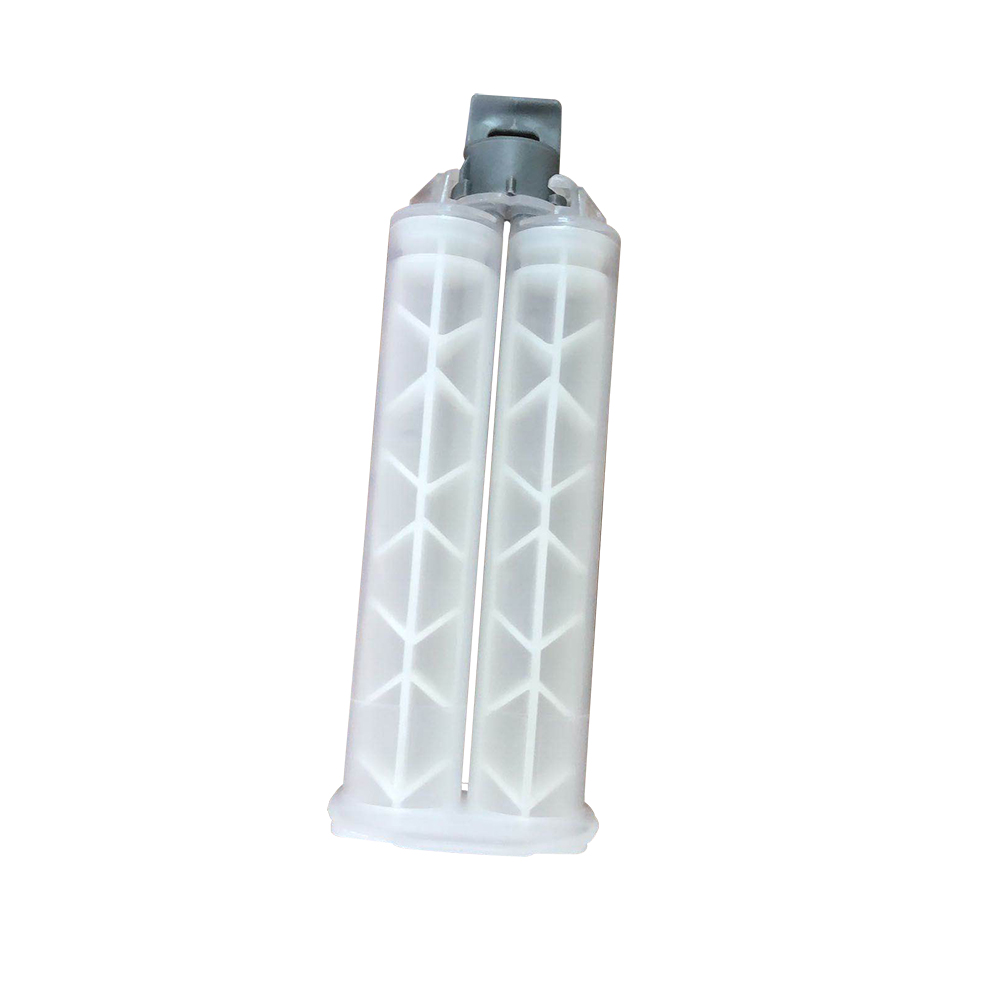
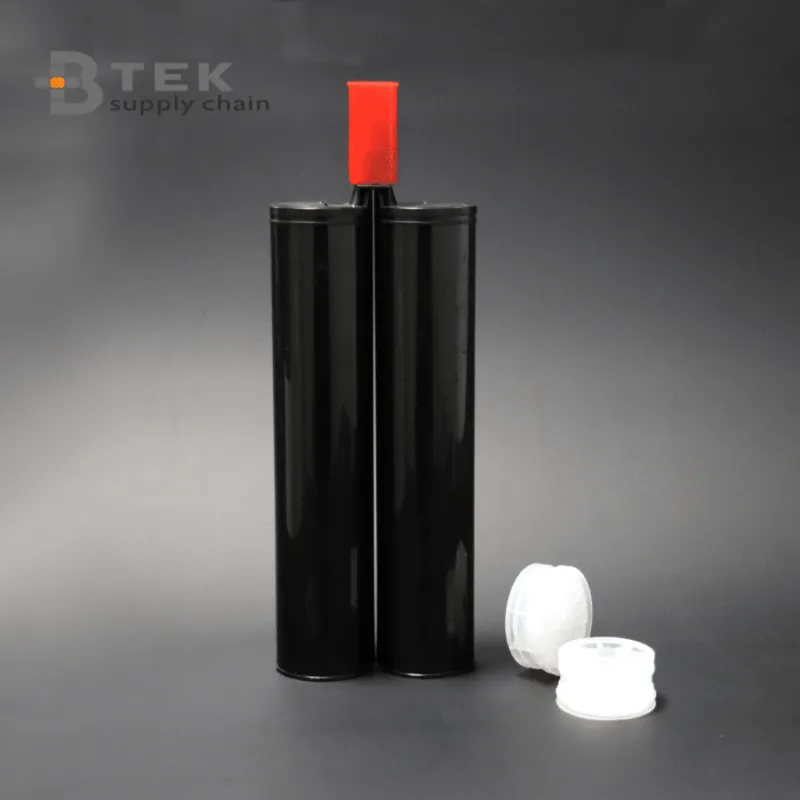
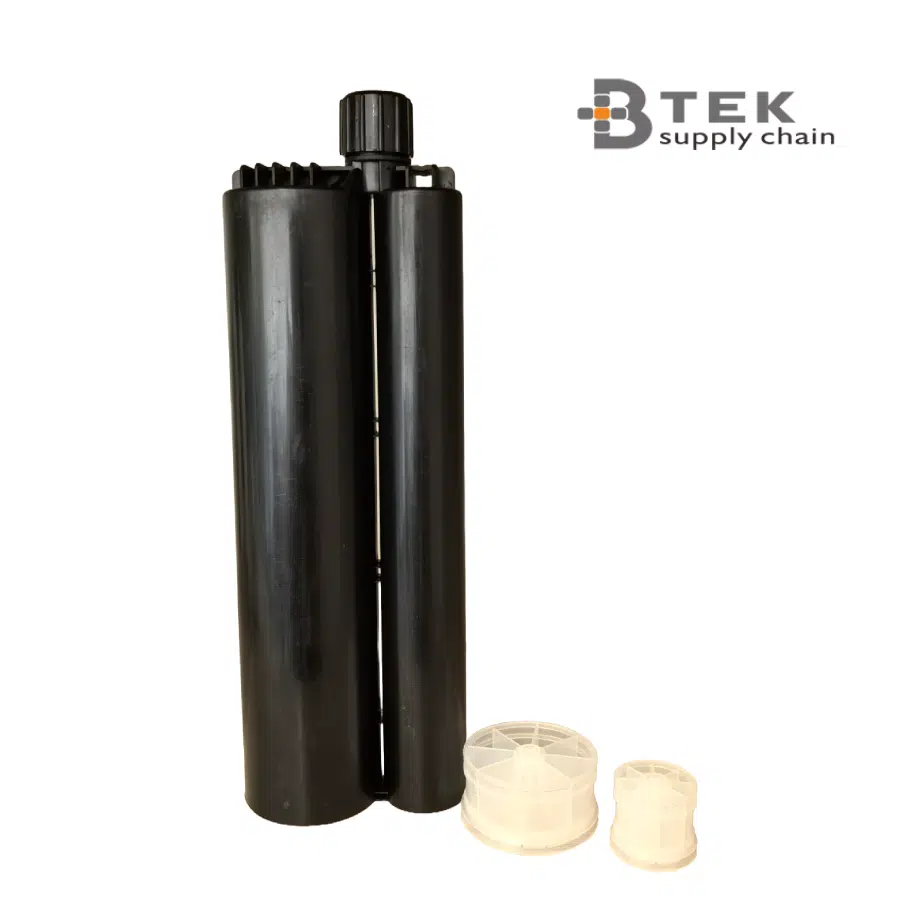
To ensure dimensional consistency and structural stability, our dual cartridges are manufactured using a controlled injection molding process, which strictly controls the cartridge geometry, material rigidity, and piston performance.

  • Multiple Capacities & Mix Ratios: Our dual cartridges are available from 50 ml to 1500 ml, and offer common mixing ratios of 1:1, 2:1, and 4:1, as well as special ratios such as 3:1, 5:1, and 10:1.
  • Three Material Options Based on Use Conditions: PP provides chemical resistance and cost efficiency. PA offers higher mechanical strength and heat resistance. PBT delivers improved dimensional stability for consistent piston alignment and sealing.
  • Vented and Non-Vented Piston Options: Vented pistons support rear filling by releasing trapped air, while non-vented pistons provide a fully sealed structure after filling.
  • Sealing Ring and Low-Friction Piston Designs: Pistons are available with sealing rings to reduce leakage, or without sealing rings to minimize friction for smoother dispensing of low-viscosity materials.

Product Models & Technical Specifications

Below is a selection of our most popular Dual Cartridge models. As a leading manufacturer, Btektech offers an extensive range of specifications and configurations beyond what is listed here. For a comprehensive overview of all our dispensing consumables, please contact us or download the product catalog.
Read More
Item No. Ratio Capacity Exhausting Material Cartridge Material Plungers High(mm) Dia.A(mm) Dia.B(mm)
E1 1 : 1 50ml Y PP PE 118 21.67 21.67
E2 1 : 1 50ml N PP PE 118 21.67 21.67
E3 2 : 1 50ml Y PP PE 116 24.9 17.85
E4 2 : 1 50ml N PP PE 116 24.9 17.8
E5 10:1 50ml Y PBT PE 122 22 7
E6 10:1 75ml Y PBT PE 153.8 30 10.9
E7 1 : 1 400ml Y PE PE 220 44.5 44.5
E8 4 : 1 50ml Y PP PE 114 25 13.6
E11 2 : 1 400ml Y PP PE
ABNS1 1:1 5ml N PP PE 82.6 8.9 8.9
ABNS2 1:1 24ml / PP PE 81.7 18.2 18.2
ABNS3 1:1 590ml Y PP PE 216 48 48
ABNS4 1:1 600ml Y PP PE 207 50 50
ABNS5 2:1 450ml Y PE PE 208 50 37
ABNS6 2:1 900ml N PP PE 214 70 50
ABNS7 3:1 385ml Y PP PE 159.2 55.7 33.7
ABNS8 3:1 390ml N PP PE 212 47.7 29
ABNS9 5:1 360ml Y PP PE 212 47.7 23
ABNS10 10:1 250ml Y PBT PE 145.5 54.7 19.4
ABNS11 10:1 345ml Y PP PE 219 49.5 18.7
ABNS12 10:1 380ml N PP PE 187.4 64 23.2
ABNS13 10:1 490ml Y PBT PE 183 66 23
ABNS14 1:1 1500ml N PP PE 218 77.6 77.6
ABNS15 4 : 1 5ml N PP PE 82.6 11.05 6
ABNS16 4 : 1 375ml N PP PE 255 50 27.6
ABNS17 1:1 14ml N PP PE 81.7 13.5 13.5
ABNS19 1:1 1500ml N PP PE
ABNS20 3:1 585ml Y PP PE
New1 1:1 6ml N PP PE

Product Applications & Industries

Whether you are bonding composites on a factory floor or sealing joints on a job site, dual cartridges provide a reliable way to maintain the correct mix ratio. But every environment has its own challenges—our systems are built to handle the unique viscosity and curing requirements of these core applications:

Construction & Building

  • Structural Anchoring: For concrete and masonry bonding, our medium- or large-volume dual cartridges feature matched pistons used in conjunction with dual-rod dispensing guns that help maintain ratio accuracy, which supports predictable load performance after curing.
  • Facade & Curtain Wall: Fabrication teams typically match dual cartridges with pneumatic guns to maintain a steady feed across long bead lengths. This prevents the “stop-and-start” flow that causes uneven curing or bonding gaps in large-scale panel systems.
  • Repair & Reinforcement: For repair and reinforcement work involving higher-viscosity resins, cartridge piston sealing contributes to controlled material movement during injection or filling processes, supporting consistent flow under pressure.

Dual cartridge used for wall construction at a building site

Automotive & Transportation

  • Structural Bonding: Our dual cartridges are used for dispensing two-component structural adhesives, suitable for bonding composite materials and metal parts in automotive body and assembly applications.
  • Vibration and Dynamic Load Solutions: In applications subject to vibration or dynamic loading, controlled dispensing systems combined with dual cartridges help maintain stable flow characteristics during longer dispensing cycles.
  • Sealing & Assembly Operations: Dual cartridge packaging for two-component sealants used in underbody sealing, interior module assembly, and multi-material interfaces.

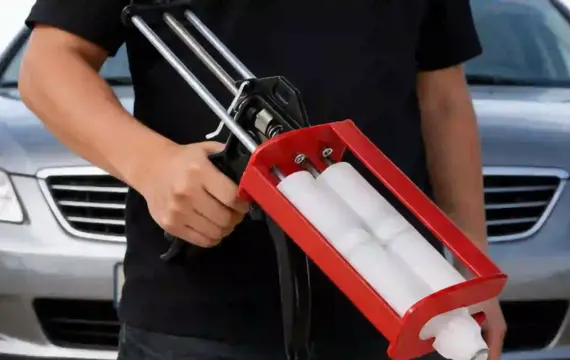
Btektech Adhesive Cartridge dispensing adhesive for automotive assembly, sealing body seams or bonding windshield on a vehicle chassis

Electronics & Electrical

  • Potting & Encapsulation: Small-capacity dual cartridges (such as 50ml or 75ml) are used to house two-part potting compounds for delicate circuit protection. When paired with manual or pneumatic applicators, these systems facilitate a steady, intended mix.
  • Thermal Management: Btektech provides cartridges that meet the volume ratio requirements of thermally conductive materials, including 1:1 and 10:1 configurations, for use with electrically insulating or thermally conductive compounds in power modules and electronic housings.
  • Connector Sealing & Strain Relief: Small to mid-capacity cartridges are also used for connector sealing and strain relief. Stable ratio control helps avoid partial cure or soft spots that could contribute to moisture ingress or long-term mechanical issues.

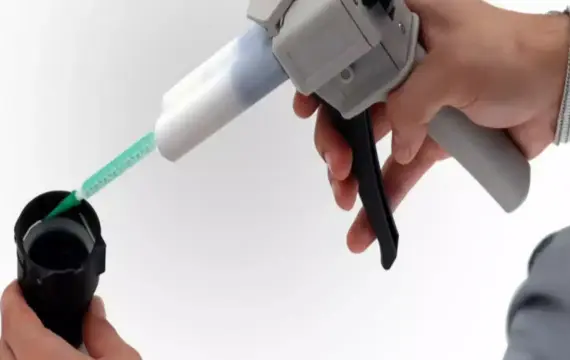
Close-up of a small dual cartridge connected to a dispensing gun and static mixer for precise mixing and dispensing

Need a Custom Solution? We’ve Got You Covered.

At Btektech, we engineer custom solutions for all products related to adhesives and fluid dispensing.

Our Customization Options Include:

  • Physical Attributes: Size, material, and color
  • Branding: Custom packaging and logo application
  • Functional Design: Modifications based on requirements

To get started, simply share your basic drawings, functional specifications, or intended usage scenarios. Our engineering team will assess feasibility and collaborate with you to develop a high-performance, reliable solution.

Partner with Btektech for Precision

From initial design to final delivery, we ensure your custom solution achieves unmatched consistency. If you have a customization need, contact us today to discuss your project.

Frequently Asked Questions (FAQ)

What capacity ranges and mix ratios are supported by dual cartridges?

Dual cartridges are built with fixed chamber volumes typically ranging from 50 ml up to 1500 ml, depending on system design and application, and defined mixing ratios of 1:1, 2:1, and 4:1, as well as special ratios such as 3:1, 5:1, and 10:1. In real production, ratio problems are more often caused by mismatches in dispensing guns, pistons, or static mixers rather than the cartridge body itself. We see this when customers change cartridge size but keep the same dispensing gun. The chambers may be correct, but unequal hand force or rod alignment creates pressure imbalance. At Btektech.com, our engineers treat the cartridge as one mechanical part of the dispensing chain. You need to check gun type, static mixer length, and material viscosity together before locking a ratio into your process.

How do PP, PA, and PBT materials affect dual cartridge performance and limitations?

PP, PA, and PBT dual cartridges behave very differently once dispensing pressure and temperature increase. PP cartridges work best when chemical resistance and cost control matter, as polypropylene resists most acids, bases, and common solvents, but you must verify compatibility with chlorinated hydrocarbons, strong oxidizers, or reactive formulations. PA cartridges are used when higher hand force or pneumatic pressure causes wall deformation in softer plastics, though PA absorbs moisture and can shift dimensions over time. PBT cartridges hold shape better under load, which helps piston alignment, but they are typically selected for specific pressure or dimensional stability requirements rather than as a universal replacement material, and they are less forgiving with impact. Material choice always trades strength, chemical risk, and process stability.

When should vented pistons be selected instead of non-vented pistons?

Vented piston dual cartridges are required when rear filling traps air and air bypass would interrupt material flow during dispensing. We usually see this problem with high-viscosity epoxies where air pockets compress, then release, causing backflow or uneven beads. The vent path allows air to escape during filling, not during use. Non-vented pistons stop moisture or oxygen ingress after filling, which matters for moisture-sensitive systems, but they will not forgive poor filling practices. You need vented pistons when filling speed, viscosity, and air evacuation matter more than long-term sealing. These cartridges are non-sterile and intended for industrial use only. They are not designed or validated for medical, pharmaceutical, or food-contact applications.

How do sealing-ring pistons compare to non-sealing pistons during dispensing?

Dual cartridges with sealing-ring pistons are used when leakage, air bypass, or pressure loss shows up under medium to high viscosity conditions. Without a sealing ring, low-viscosity materials can move smoothly with less friction, but we see material creep past the piston when pressure spikes. Sealing rings stop that, but they raise dispensing force and can increase wear if the cartridge wall is not consistent. This is a trade-off, not an upgrade. If your process uses pneumatic guns and thick materials, sealing rings reduce backflow risk. If you rely on manual guns and low hand force, non-sealing pistons may behave more predictably.

How should side-by-side and coaxial dual cartridges be chosen for applications?

Side-by-side dual cartridges are used when standard ratios like 1:1 or 2:1 match your adhesive chemistry and your dispensing equipment is already set up for parallel chambers. Problems usually appear when customers push these cartridges into higher ratios without changing gun geometry. Coaxial cartridges exist for that reason, as well as for applications where mechanical volume control, overall cartridge length, or flow stability require concentric chamber design. The risk is compatibility. Coaxial formats need matching guns and static mixers, and they limit sourcing flexibility. At Btektech.com, we see fewer failures when customers select cartridge format based on ratio first, then confirm gun, mixer, and viscosity limits before committing to production tooling.

Learn More About Dual Cartridge

Our blog is designed to help you deepen your knowledge of fluid dispensing processes, optimize your production line, and select the best components for your specific challenges. Explore articles that connect industry insights with practical solutions.

Common issues about using dispensing syringe barrel

Dispensing syringe barrels are commonly used in various industries for the precise dispensing of liquids, adhesives, sealants, and other materials. They consist of a cylindrical container with a plunger that allows for controlled dispensing of the material through a dispensing tip. Syringe barrels are available in different sizes and materials to suit various applications.

Read More →

The Everything About Dispensing Syringe Barrel

Dispensing syringe barrel is essential components in various applications, ranging from dispensing and dental to industrial and technical. They are designed to hold and dispense a specific volume of fluid, and are used in conjunction with a plunger and needle or tip. In this blog, we will discuss the different types of dispensing syringe barrels, their benefits, and how to choose the right one for your needs.

Read More →

How to mix small amounts of epoxy resin

Mixing small amounts of epoxy requires special care and attention to ensure accurate ratios, thorough blending, and proper application. In this comprehensive guide, we will explore different methods and step-by-step approaches to help you master the art of mixing small amounts of epoxy for your projects.

Read More →