
Quick answer: For a smear or drip on plain glass, soften it first, keep the surface wet, and scrape at a very shallow angle to keep scratch risk low. For a full caulk line around a window frame, follow the usual score-soften-scrape process, but confirm first whether you’re working with plain glass, coated or tinted glass, acrylic, or polycarbonate, since they don’t all respond the same way to a blade or a solvent.
Smear on the Glass, or a Full Caulk Line Around the Frame? Two Different Jobs
Before you grab a tool, it’s worth figuring out which situation you’re actually in, because the right approach is different for each:
- If you’ve got a smear, drip, or small patch of silicone that got on the glass by accident, maybe from installing a new pane, a shower door, or a glass tabletop, you’re not removing a structural seal, you’re cleaning a surface. The glass itself isn’t going anywhere, so the priority is getting it off without a scratch.
- If you’re dealing with an old, failing caulk line that runs around the perimeter of a window frame, where the glass or sash meets the frame, that’s a real removal job, and you’ll likely be resealing it once it’s out. That’s closer to what the tub-and-shower removal process looks like, just applied to a window instead.
Both are covered below. If you’re just cleaning up a smear, you can skip ahead. If you’re stripping a full frame, the material notes further down matter more than they might seem to at first glance.
Quick Recap: The Basic Removal Method
The general process for any old caulk, score both edges, soften if it’s stubborn, scrape, clean the residue, is the same one covered in our general removal walkthrough. What’s different on glass is almost entirely about technique and pressure control, since glass has very little tolerance for the kind of aggressive scraping that works fine on tile or trim.
Removing Silicone Smears from Glass Without Scratching It
Plain glass is actually harder than most people assume, it’s tougher than acrylic, for instance, but a dry blade, a bit of trapped grit, or the wrong angle can still leave a mark. Coated, tinted, filmed, or treated glass is a different story and needs more caution than plain glass does.
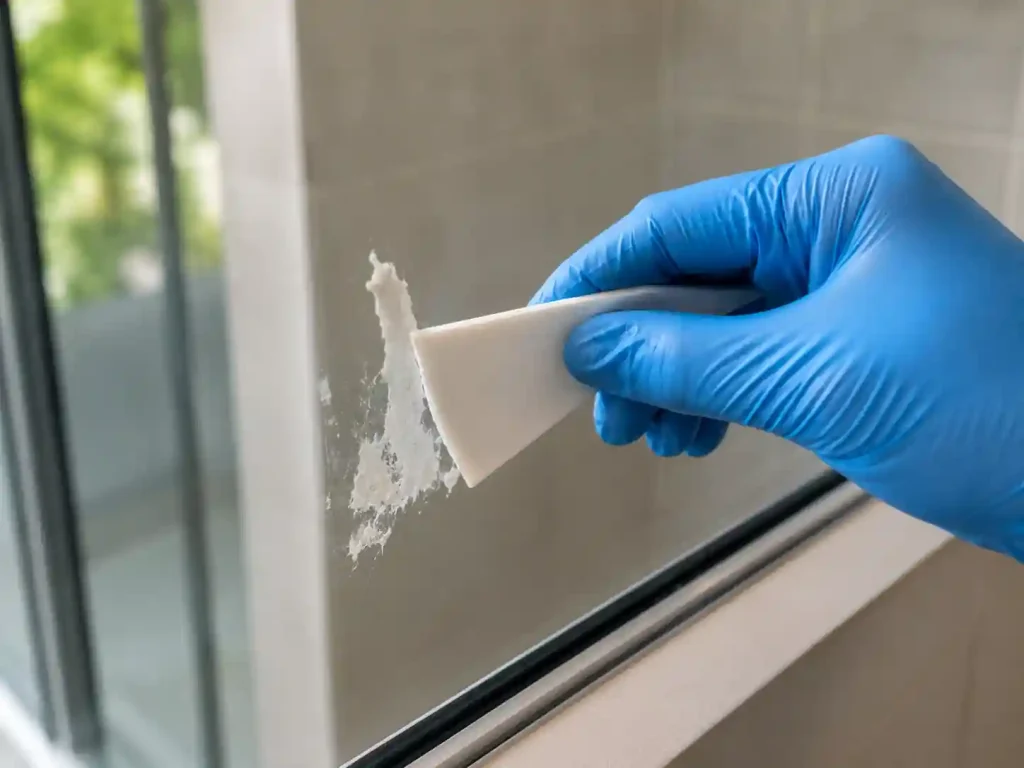
Step 1. Check what you’re working with.
If the glass has a tint film, privacy film, a Low-E coating, or any other treated surface, avoid scraping the coated side directly unless you’ve confirmed it’s safe, that coating layer is usually much softer than the glass underneath it and scratches far more easily.
Step 2. Wipe away dust, grit, or loose debris first.
Trapped particles under the blade are one of the easiest ways to scratch glass, and it takes a lot less time to wipe the area than to buff out a scratch afterward.
Step 3. Soften it, don’t scrape it dry.
Apply a dedicated silicone remover gel (give it the dwell time listed on the product label, this varies quite a bit between products) or warm it gently with a hair dryer until it turns pliable.
Step 4. Scrape it wet, flat, and in one direction.
Keep the glass wet with a bit of soapy water while you work, it acts as a lubricant so the blade glides instead of catching. Hold the blade nearly flat against the glass, closer to a 10 to 20 degree angle than the steeper angle you’d use on wood or tile, and push in one direction only rather than sawing back and forth. Dry, steep, or back-and-forth scraping is where most scratches actually happen, all at once.
Step 5. Peel what you can by hand once it’s soft.
Pull it back over itself at roughly a 90-degree angle rather than trying to scrape every last bit. It comes away cleaner in strips than in scraped fragments.
If you’ve got several spots, it’s worth a quick pass over the whole pane first to spot every patch before you start, silicone can be hard to see at certain angles until the light catches it, and it’s easy to miss a small drip and only notice it later.
Removing Old Caulk from Around a Window Frame
Once you’re working the full perimeter of a window rather than a single smear, the same score-soften-scrape method from the general guide applies, but the material question gets more important here than it does almost anywhere else.
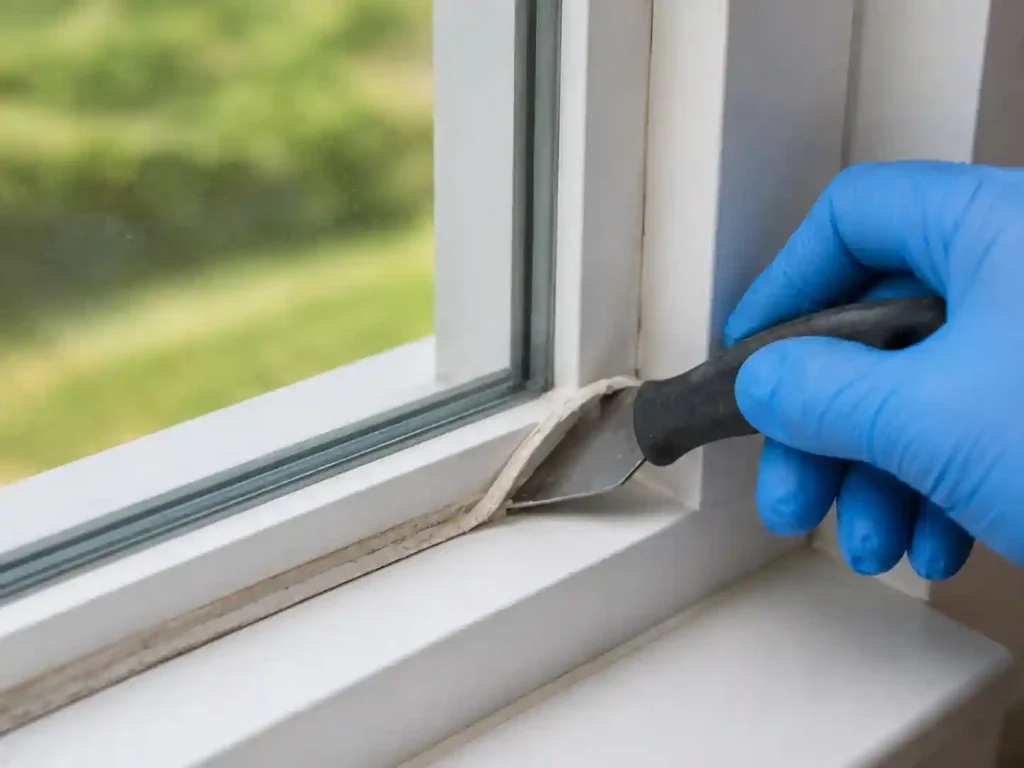
Not everything that looks like glass in a window is actually glass. Older storm windows, some replacement sashes, and a fair number of skylights use acrylic or polycarbonate panes instead. Alcohol- and ammonia-based cleaners are usually fine on plain glass, but they can cloud acrylic or polycarbonate permanently, and they may also affect tint films, coatings, or other treated surfaces. If you’re not certain what you’re working with, don’t default to any particular solvent as the “safe” option, test on a small, inconspicuous corner first and start with the mildest option recommended on the product label.
The frame material matters too. PVC and vinyl frames may tolerate mild cleaners, but solvents should still be tested first, and a plastic scraper is the safer default because metal blades can scratch the surface. Bare aluminum can handle careful scraping better than softer frame materials, but anodized or painted aluminum can still scratch or show marks. Painted wood sashes behave like painted trim anywhere else in the house, light scoring, test the solvent first, and don’t linger in one spot with anything that softens paint.
Getting a Streak-Free, Invisible Finish
Glass shows every trace of leftover residue in a way most other surfaces don’t, a smudge that would be invisible on tile is obvious the moment light hits a window at the wrong angle. Once the bulk of the silicone is off, go over the area again with isopropyl alcohol or a dedicated glass cleaner and a lint-free cloth, a coffee filter or microfiber cloth works better here than paper towels, which tend to leave fibers behind. Check the glass from a couple of different angles and in different light before calling it done, residue that’s invisible straight-on often shows up clearly at a glancing angle.
Before You Reseal
If you’re removing a full window-frame bead rather than cleaning up a small surface smear, once the frame is clean, dry, and free of residue, you’re ready to run a new bead. For technique on getting a clean, even line down, our technique guide for laying down a clean silicone bead covers that, and if you’re deciding what to reach for, take a look at our caulking gun options for precise window sealant application.
FAQs About Removing Silicone from Glass and Windows
How do you remove silicone from glass without scratching it?
Soften it first rather than scraping it dry, keep the glass wet with soapy water while you work to reduce friction, and hold the blade at a very shallow angle, closer to flat than upright. Push in one direction only instead of sawing back and forth, and peel off what you can by hand once it’s soft enough.
How do you remove old caulk from around a window frame?
Score both edges, soften if it’s hardened, and scrape it loose the same way you would on any surface. The main thing to check first is whether the pane is plain glass or an acrylic or polycarbonate material, since some solvents that are fine on glass can cloud those materials permanently.
What’s the best way to remove a silicone smear from glass?
Soften the smear with a silicone remover gel or a hair dryer rather than scraping it dry, then work it loose at a shallow angle while keeping the surface wet. For a small smear, peeling it off by hand once it’s soft is often cleaner than scraping it into fragments.
Can I use a razor blade on all window glass?
Not automatically. A razor blade can work on plain, uncoated glass when used wet and at a shallow angle, but it can damage tint film, Low-E coatings, privacy film, acrylic, or polycarbonate. If you’re not sure what you’re working with, test in a hidden corner first or start with a plastic scraper instead of a blade.
Can I use alcohol to clean silicone off a window?
On plain glass, isopropyl alcohol is usually fine for the final residue pass. On acrylic, polycarbonate, tint film, Low-E coatings, or other treated surfaces, alcohol or ammonia-based cleaners can cloud or damage them, so test on a hidden spot first if you’re not sure what you’re working with.
How do you get glass completely streak-free after removing silicone?
Go over it a second time with isopropyl alcohol or glass cleaner and a lint-free cloth after the bulk of the silicone is gone, and check it from a few angles in different light. Residue that’s invisible looking straight at the glass often shows up clearly at a glancing angle.