
Introduction
This article explains how a two-component cartridge system works from an operational perspective, covering independent component storage, material extrusion, and static mixing.
It also explains why ratio accuracy matters, outlines the basic workflow, and highlights the practical benefits that this mechanism can offer in dispensing operations.
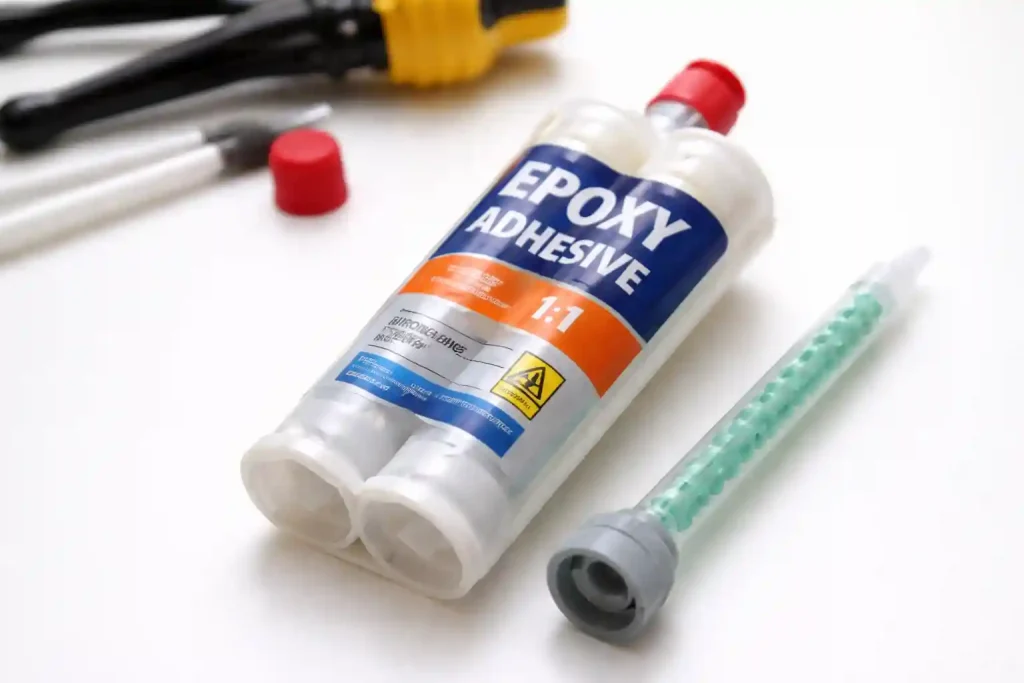
How the Two Components Are Stored Separately
Before use, the two components are stored separately inside isolated chambers within the cartridge, with no contact between them. The outlet remains sealed, and the pistons at the rear stay in their initial positions. This separated storage state prevents premature reaction and allows the material to remain ready for later dispensing.
How the Material Is Extruded
When the cartridge is installed in a dispensing tool and operation begins, external force is applied simultaneously to the pistons at the rear of the two chambers. The pistons move forward in sync under the driving force, applying pressure to the material inside the cartridge. The material is pushed forward toward the outlet under pressure.
For each equal distance the pistons move, the volume ratio of material discharged from the two chambers corresponds to the ratio defined by the chamber design. As long as the pistons move synchronously, the system delivers the intended proportion of the two components.
How to Mix
The two components meet at the entrance to the static mixing nozzle. As the material passes through the mixer under pressure, the internal elements repeatedly divide, redirect, and recombine the flow. After passing through a sufficient number of elements, the components become more uniformly distributed at the outlet.
Workflow Overview of a Cartridge System
The workflow of the adhesive cartridge system can be summarized in the following steps:
Installation: Insert the two-component cartridge into the corresponding dispensing tool (manual caulking gun or pneumatic equipment), ensuring the two plungers are aligned with the pistons at the rear of the two chambers.
Activation: Remove the seal or closure structure at the front of the chambers, and screw or snap the static mixer onto the cartridge outlet.
Priming: During the initial actuation, a small amount of material is pushed into the static mixer. Once both components appear simultaneously at the mixer outlet, the mixing channel is fully primed.
Squeezing and Mixing: Continue actuating the dispensing tool. The two pistons move forward synchronously, and the two components are extruded into the static mixer at a ratio equal to the cross-sectional area ratio of the chambers. As the fluid passes through the mixing elements inside the static mixer, it is continuously divided, redirected, and recombined, achieving mixing at the outlet.
Dispensing: Apply the mixed material directly to the target location.
Pause or Replacement: If the job is interrupted, the static mixer may remain attached to the cartridge for a limited period, while the material inside the cartridge chambers remains separated. When resuming, if the material inside the static mixer has partially cured, a new mixer should be installed before continuing.
The Importance of Ratio Accuracy
Predictable Mixing Results
Correct ratio makes the mixing result more predictable and reduces the risk of under-cured or improperly mixed material. When using a dispensing tool matched to the cartridge, and under normal conditions without damage or other anomalies, the actual extruded volume ratio remains consistent with expectations. When ratio accuracy is maintained, the mixing state of the material becomes predictable, resulting in relatively uniform mixing and complete curing.
Stable Application Process
When ratio accuracy is maintained, you can schedule application according to the working time specified on the material technical data sheet, reducing the need to adjust application rhythm on the fly due to ratio fluctuations. You need only pay attention to the synchronization of the dispensing tool, rather than repeatedly verifying the volume relationship between the two components.
Operational Benefits of a Cartridge System
Enhanced Dispensing Consistency
During continuous application, the cartridge system helps keep dispensing volume and mixing behavior relatively stable. For scenarios that require uniform bead application or continuous potting, this can support more consistent material output throughout the job.
Improved Application Efficiency
The system is ready to use with no need to pre-mix a batch of material, avoiding waste caused by over-mixing. After the job is completed, cleanup requires only replacing the static mixer, while the remaining material inside the chambers can be kept for next use. This reduces time spent on process transitions and equipment cleaning.
Reduced Operational Complexity
Because ratio control and mixing are built into the system structure, operators do not need to manually proportion or batch-mix the material before use. The basic operational tasks are to install the cartridge correctly, confirm tool alignment, and replace the static mixer when needed. This can reduce training demands and make dispensing procedures easier to standardize.
Conclusion
The working mechanism of the two-component cartridge system can be summarized in three core steps: the two components are stored separately in isolated chambers, remaining separated until use; the two pistons are driven forward simultaneously by a dispensing tool, squeezing the components at a ratio equal to the cross-sectional area ratio of the cartridge; the components pass through a static mixer, where mixing elements divide and redirect the flow until uniform mixing is achieved at the outlet.
Based on this working mechanism, this blog post can help you understand the advantages of cartridge system, the importance of ratio accuracy, and the workflow, enabling you to perform standardized dispensing operations.
FAQs about Cartridge System
Can the unused material in the cartridge be reused after an interruption?
Yes. The unused material remains isolated between the two chambers and will not react. To reuse it, simply replace the static mixing tube before resuming operation. If the interruption lasts too long, inspect the material condition to confirm it can still be used.
Will the material automatically flow out after removing the front sealing structure?
No. After the front sealing structure is removed, the material remains inside the cartridge and will not flow out on its own under normal conditions. The material moves toward the outlet only when the drive tool applies pressure and advances the pistons.
What happens if the two pistons do not advance synchronously?
If the two pistons do not advance synchronously, the actual volume ratio of the two components will deviate from the intended design value. This can lead to uneven mixing, incomplete curing, or reduced final performance. Before operation, make sure the dispensing tool engages both pistons evenly and advances them together.