

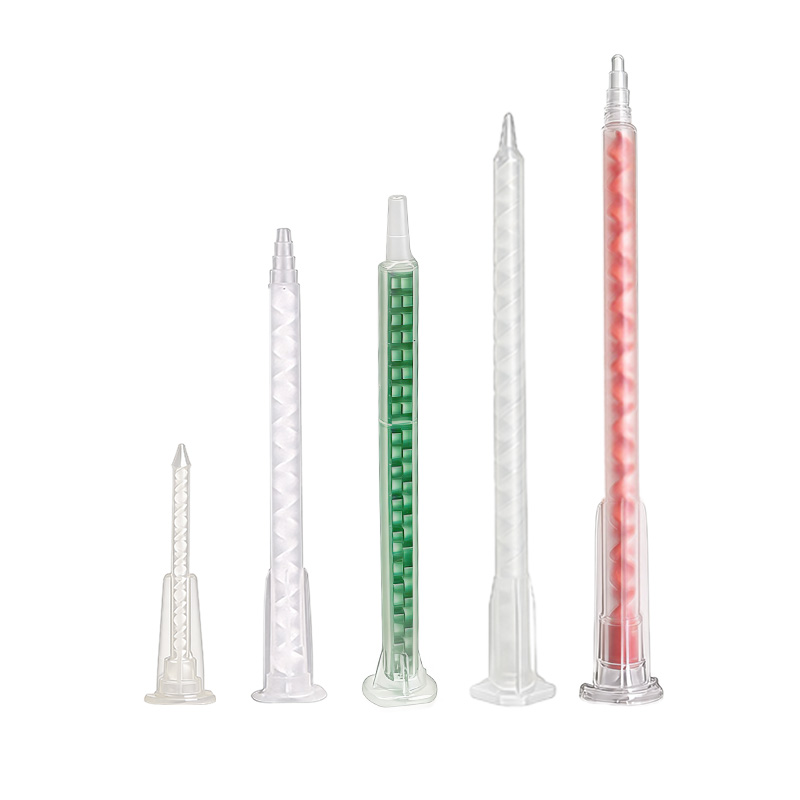

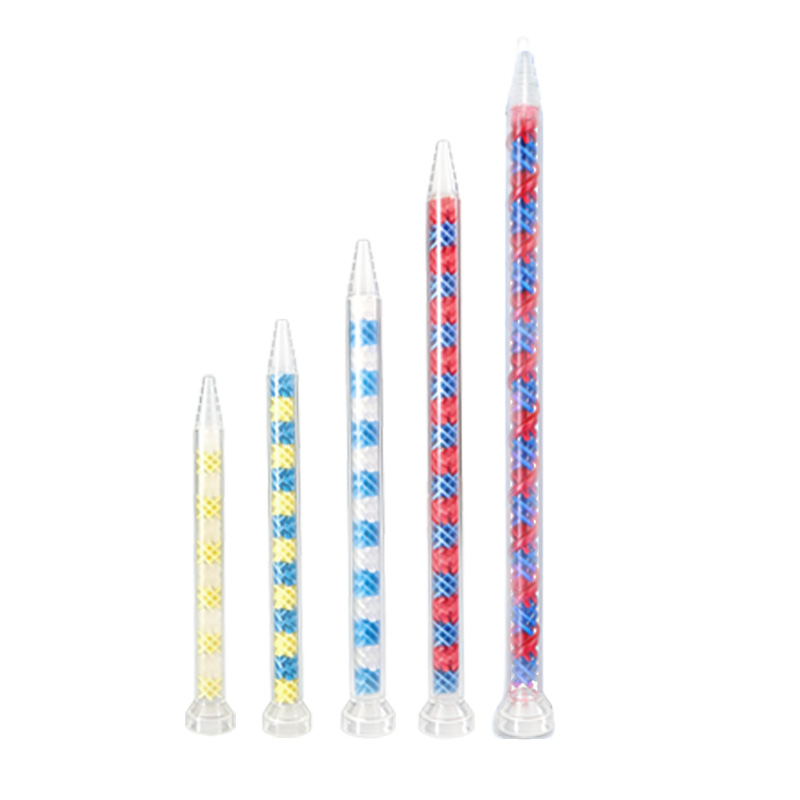

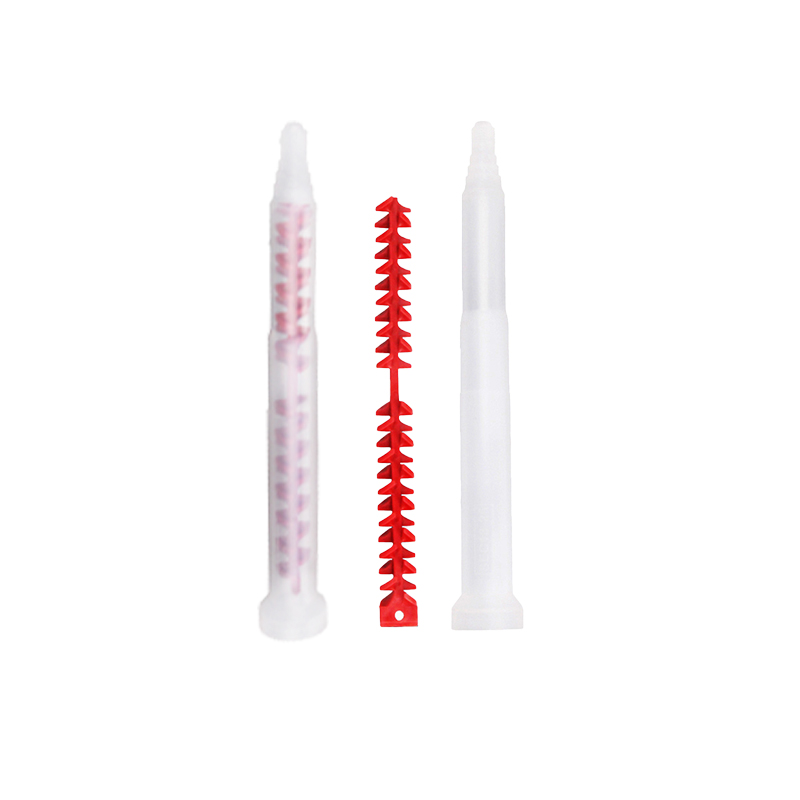
Epoxy mixing nozzles are typically selected based on dispensing system type, adhesive viscosity, and required flow rate. Dual cartridge systems commonly use static mixing nozzles for manual or semi-automatic dispensing. Automated meter-mix equipment often requires dynamic mixing nozzles to maintain stable mixing under higher flow and continuous production.
Designed for dual-cartridge dispensing systems where adhesive components mix through fixed internal elements before reaching the outlet.
Learn More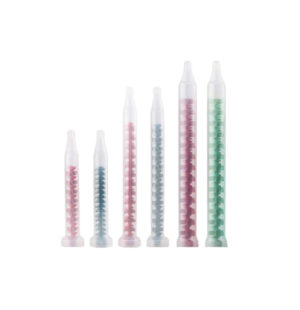
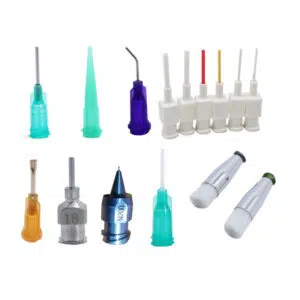
Used in automated meter-mix-dispense systems where rotating elements actively blend high-viscosity adhesives during continuous production.
Learn MoreStable mixing performance depends on consistent internal geometry, material stability, and secure system connection.

Mixing elements are molded with repeatable geometry so adhesive streams split and recombine consistently under dispensing pressure.

Housing and elements use polymers selected for epoxy compatibility, reducing swelling or deformation during chemical exposure.

Bayonet, bell and threaded interfaces are dimensionally controlled so cartridge remain sealed under dispensing pressure.

Tapered outlet geometry helps reduce dead volume near the nozzle tip during replacement and restart.
We control molding dimensions to maintain repeatable internal geometry, dimensional tolerances for adhesive mixing nozzles are typically held at ±0.2 mm in length and ±0.1 mm in outer diameter, though specific limits depend on product type and size range. Dimensional inspection, pressure testing, and drop testing are performed as part of routine quality checks. These tests help detect leakage risk, structural weakness, or molding defects before shipment. If you require labeling with batch number, part number, and production date, we can provide that to support your process control and traceability requirements.


For OEM and ODM projects, our engineering team reviews adhesive data such as viscosity at application temperature, A/B ratio, and expected flow rate. These parameters help determine suitable element count, internal diameter, and nozzle housing material. If your dispensing equipment uses a non-standard cartridge or proprietary valve interface, we can modify the inlet geometry to match the connection structure. Structural adjustments such as extended mixing sections may be recommended for high-viscosity or difficult-to-mix adhesive systems.
Detailed specifications, element counts, dimensional references, and material options for all mixing nozzle configurations.
DownloadComplete range of dispensing components, covering tips, mixing nozzles, cartridges, guns, and system accessories.
DownloadTechnical articles covering dispensing principles, selection guidance, and process considerations for stable performance.
DownloadBtektech epoxy mixing nozzles operate in both cartridge-based dispensing systems and automated meter-mix-dispense production lines. The cases below show how correct nozzle configuration improved adhesive mixing stability under real manufacturing conditions.

A manufacturer assembling aluminum housings dispenses two-component epoxy using a dual cartridge gun at a semi-automated workstation. Static mixing nozzles sourced from Btektech are installed on the cartridge outlet. Cycle time is typically around 20–30 seconds per part, where stable mixing length helps maintain consistent adhesive blending.

An electronics manufacturer dispenses two-component adhesive into protective housings using an automated meter-mix-dispense system. The line operates in continuous shifts with frequent dispensing cycles. Under higher flow conditions, sufficient mixing energy is required to prevent streaking or incomplete blending inside the dispensed material.


Because this final mixing step happens immediately before dispensing, the epoxy mixing nozzle often becomes the last point in the process where material consistency can be controlled.
In practice curing consistency depends on both stages. Even when the metering system maintains a precise ratio, insufficient mixing inside the nozzle can still produce streaks or weak regions in the bond line.
You can think of the mixing nozzle for epoxy as a functional element of the dispensing process rather than a simple disposable accessory.
Dynamic mixing nozzles operate differently. Rotating components actively blend the adhesive streams, which becomes relevant when viscosity is too high for static geometry alone or when continuous production demands more consistent output.
Material compatibility plays an important role in long production runs. Many adhesive mixing nozzles use polypropylene (PP) or nylon (PA) because these materials tolerate chemical exposure and maintain dimensional stability during dispensing.
Connection design deserves attention as well. If the cartridge interface does not seal correctly, part of the material flow may bypass the mixing section before reaching the outlet.
Adhesive viscosity determines the required mixing length, while flow rate affects system pressure. An undersized nozzle can raise backpressure and reduce dispensing stability, so nozzle geometry needs to be matched to both variables together.
When dispensing equipment type, adhesive viscosity, and flow rate are all accounted for, the mixing nozzle stops being a consumable and starts functioning as a reliable part of a repeatable dispensing process.
An epoxy mixing nozzle usually fails to mix properly when the mixing length is too short for the adhesive viscosity. When epoxy viscosity approaches roughly 40,000–60,000 cps, the material resists recombination inside short static mixers and streaks may appear in the bead. Selecting a longer epoxy mixing nozzle with more mixing elements normally improves blending. Flow rate adjustments can also help, but this option depends on whether the dispensing equipment allows stable pressure control.
Epoxy mixing nozzles usually become blocked when mixed adhesive begins curing inside the internal mixer stages. This typically occurs when dispensing pauses exceed the adhesive pot life or when partially cured residue remains inside the nozzle. Many two-part epoxies have working times between 5 and 30 minutes. If blockage occurs after this period, the nozzle should be replaced rather than forced open because cured material inside the mixer cannot return to normal flow.
Epoxy mixing nozzles work with many cartridge systems, but the inlet geometry must match the cartridge size and mix ratio. Standard dual cartridges usually range from 50 ml to 600 ml and commonly use ratios such as 1:1, 2:1, 4:1, or 10:1. If the inlet does not match the cartridge outlet design, adhesive components may enter unevenly and reduce mixing efficiency. Always confirm cartridge interface type and mix ratio compatibility before selecting an epoxy mixing nozzle.
Static epoxy mixing nozzles are generally treated as disposable components in cartridge dispensing systems. Once resin and hardener combine inside the mixer, curing begins within the internal elements according to the adhesive pot life. If dispensing stops longer than the working time, partially cured adhesive can restrict the internal flow path. Dynamic mixers may allow cleaning and reuse depending on the equipment design, but static mixers are normally replaced when production pauses exceed the adhesive working time.
Custom epoxy mixing nozzles can be designed by adjusting structural parameters that directly affect mixing behavior. Btektech engineers modify mixing element configuration, nozzle length, inner diameter, outer diameter, and connection interface to match adhesive viscosity, flow rate, and dispensing equipment. Housing materials such as PP or PA may also be selected based on epoxy chemistry to maintain dimensional stability and chemical resistance. These design adjustments allow the epoxy mixing nozzle to deliver stable mixing performance under specific production conditions.