
Quick answer: Cut the tip with a sharp utility knife at a 45° angle, sized to match the gap you’re filling. Start smaller than you think you need since you can always cut more, but you can’t undo an oversized opening. One clean pass, no sawing back and forth.
Introduction
Knowing how to cut a caulk tip correctly is the one step most people rush through, and the one that decides whether your bead lays flat or turns into a mess you’ll be scraping off and redoing. The cut controls three things at once: opening size, bead shape, and the angle at which the nozzle meets the joint.
Get it right, and the caulk flows cleanly into the seam on the first pass. Below, you’ll find the tools to use, the different cut shapes and angles, the most common mistakes, and a short video showing how to cut a V-notch tip for wide, shallow joints.
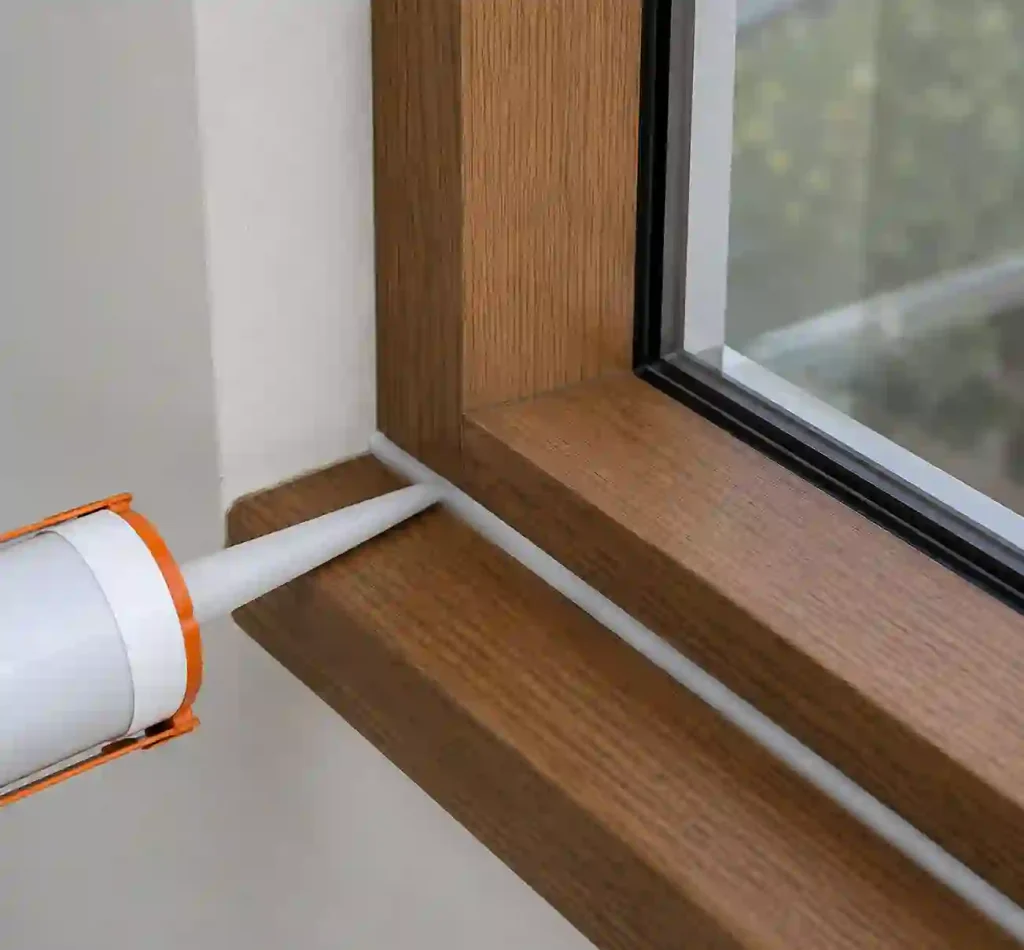
What You’ll Need to Cut a Caulk Tip
The tip is usually made of soft plastic, so it cuts cleanly with a sharp utility knife or suitable sharp blade. What matters is that the cut is made in one controlled stroke, not sawed back and forth, so the opening stays smooth and even.
- A sharp utility knife: The most common choice, and the best for precise angle control. A dull blade drags and compresses the tip before it cuts, producing a ragged oval instead of a clean opening. Snap off a segment if the edge has seen any use.
- Scissors: A beginner-friendly backup for straight or shallow-angle cuts. More on their limits in the FAQ below.
- A caulking gun: You’ll need a caulking gun to hold the cartridge and apply steady trigger pressure after the tip is cut. The cutting step should still be done with a separate sharp utility knife or scissors for better control.
Sharpness matters more than tool type. Test any blade on scrap plastic or cardboard first. If it tears rather than slices, replace it before you touch the actual tube.
Safety note: Always cut away from your hand and body, keep the cartridge stable, and replace dull blades instead of forcing the cut.
How to Cut a Caulk Tip: Step-by-Step
Before you touch the blade to the tip, decide on two things: where you cut, which sets the opening size, and at what angle, which sets the cut shape. Settle on both first, because once the plastic is removed, it’s gone.
1. Mark your cut line
Use a marker or your thumbnail to score a reference line around the tip where you intend to cut. This keeps the blade from wandering mid-stroke.
2. Hold the tip firmly
Hold the tip firmly on a stable surface, with the cutting direction away from your hand and body. If the nozzle is already attached to the cartridge, keep the tube steady and make sure your non-cutting hand stays behind the blade path. The tip must not flex during the cut.
3. Set the blade angle
Rest the blade against the tip at your chosen angle, typically 30°, 45°, or 60° relative to the tip’s centerline. Make sure the blade contacts the plastic cleanly before applying pressure.
4. Cut in one stroke
Apply steady downward pressure and draw the blade through in a single, confident pass. Don’t saw. Sawing creates a serrated edge that disrupts bead flow.
5. Inspect the opening
Look at the cut face straight on. It should be smooth-edged and symmetrical. Trim any burr or plastic tag with one more light pass. Always cut closer to the tip than you think you need. You can enlarge it, but you can’t shrink it.
Shapes of Caulk Tip Cuts
A cut caulk tip can take several distinct profiles. Each one changes how the caulk flows and what bead shape it lays down.
Straight Across
The blade goes straight through the tip, perpendicular to its centerline, producing a perfectly round opening. This is the simplest cut, but the least useful. A round opening has no directional bias, so it’s hard to steer into a narrow joint and hard to tool flush. Caulk tends to mound rather than fill. It’s mostly used to check diameter before committing to the final angled cut.
Angled Cut
The standard cut for most caulking work. One pass at an angle produces an oval opening, longer on one side (the heel) than the other, which gives the bead a direction instead of letting it flow straight down. Keep the heel facing the direction you pull the gun. It drags material forward into the joint instead of piling it up behind the nozzle, and you’ll get a cleaner, more consistent line.
V-Cut Caulk Tip
A V-cut is an optional method for wide, shallow joints. It can help create a wider, flatter bead, but it requires extra care because the nozzle may need to be softened and reshaped. If you are not comfortable using heat near plastic, skip this method and use a wider angled cut instead.
To shape and cut a V-notch:
- Cut off about 1 cm from the very tip of the nozzle. This first cut is mostly about clearing enough opening to work with. How far back you cut here also sets your baseline flow, so cut less for a finer bead and more if you want a heavier flow.
- If you choose to heat-shape the nozzle, work in a well-ventilated area and keep the flame moving at a safe distance from the plastic. Warm the thicker side only until it becomes slightly pliable. You’re softening the plastic, not melting it. A few seconds of even heat is enough. Do not melt, burn, or char the nozzle.
- While the nozzle is still warm, press it flat with the back of a pair of scissors or another flat edge. Hold it in place until it cools and keeps the flattened shape.
- Cut into the flattened tip at roughly a 30° downward angle with a sharp blade.
- Open the V by gently working the corners apart. Test the flow on scrap cardboard. Done right, you should see a wider, flatter bead with better control than a simple oversized round opening.
What Angle Should You Cut a Caulk Tip?
- 45° is the default for most jobs: It gives a balanced oval opening, the gun holds comfortably at a natural working angle, and the bead exits in a clean line. It works for tub surrounds, baseboard, door casing, and most straight interior seams.
- Shallower angle (closer to 30°) or a V-cut: better for wide, shallow gaps where you need a flat ribbon rather than a rounded bead.
- Steeper angle (closer to 60°): concentrates material into deep, narrow gaps.
If you’re not sure, start at 45°. It’s the angle that works across the widest range of joints, and it’s the easiest to adjust from if the first cut isn’t quite right.
Opening Size & Bead Width
The position of the cut along the tip, not the angle, controls how wide the opening is. Cut closer to the very tip for a small hole. Cut lower toward the base, where the tip is wider, for a larger one.
| Opening Diameter | Approx. Bead Width | Typical Joint |
| 3 mm | 3–6 mm | Hairline cracks, fine trim gaps |
| 5 mm | 6–10 mm | Baseboard, door casing |
| 6 mm | 10–13 mm | Tub surround, wide wall joints |
| 9 mm+ | 13 mm+ | Large exterior gaps, concrete joints |
As a rule of thumb, aim for an opening slightly wider than the gap you’re filling. That small overfill gives you enough material to tool the bead flush without gaps. Cut it exactly to size, and you’ll often come up short once it’s smoothed down.
How to Cut a Silicone Sealant Nozzle (Same Method, Different Name)
Searching for how to cut a silicone sealant nozzle instead of a caulk tip? You’re in the right place. Silicone comes in the same style of cartridge with a plastic nozzle, and the method above applies directly: mark, hold steady, one clean angled cut.
The real difference is that silicone is tackier than standard acrylic caulk and grabs a dull blade more easily, so it can drag instead of slice. Wipe the blade clean between tubes.
For thick, high-viscosity silicone, start with a smaller opening and consider a slightly steeper angle, around 55–60°, if you need to direct the bead into a narrower joint. A suitable caulking gun for silicone sealant cartridges can also help keep dispensing pressure steadier after the nozzle is cut.
If the tube’s been opened before, check for a dried plug at the tip and cut past it rather than through it.
Common Cutting Mistakes
Cutting Straight Across Without an Angle
A blunt 90° cut creates a round opening with no directional bias. The bead has no “heel” to orient toward the joint, so it mounds rather than fills and is hard to tool into corners. Almost every practical cut should have some angle.
Sawing Instead of One Clean Stroke
A hesitant back-and-forth motion, common with a dull blade, creates a ragged, serrated edge that interrupts caulk flow and makes the bead stutter and vary in width. Commit to a single firm pass. Replace the blade if it won’t cut cleanly in one stroke.
Cutting the Tip Too Big
An oversized opening is hard to control. Caulk floods out with minimal trigger pressure and overfills the joint before you can tool it. Once the plastic is gone, you can’t put it back, so there’s no real undo.
The best fix is prevention. Cut closer to the tip than you think you need, then trim a little more if the bead runs thin. Going bigger is easy, but undoing “too big” is not. If you’ve already overcut it, the best option is to replace the nozzle if the cartridge allows it. As a temporary workaround, you can wrap tape tightly around the nozzle to reduce the effective opening, but this may not give a clean or consistent bead.
Skipping the Inner Seal
Cutting the tip is only half the job on a caulking gun cartridge. Many cartridges also have a foil or plastic seal just inside the nozzle that needs to be punctured before anything will flow. Skip it, and you’ll squeeze the trigger against a sealed tube, wondering why nothing’s coming out.
After cutting the nozzle, puncture the inner seal carefully with a separate long nail, seal puncture tool, screwdriver, or other suitable pointed tool. Make sure the tool reaches the seal inside the cartridge before loading the tube into the caulking gun.
Conclusion
Learning how to cut a caulk tip the right way takes less than a minute once you understand the logic behind it: match the opening to the gap, choose an angled cut over a straight one, and commit to a single clean stroke with a sharp blade. After the tip is cut and the inner seal is punctured, load the tube into the caulking gun and you’re ready to go.
A well-cut tip paired with steady trigger control is what separates a clean, professional-looking bead from one that needs scraping and redoing. Take the extra thirty seconds on the cut. It pays off on every inch of the bead.
Need caulking guns for cartridge sealants, silicone, or construction adhesives? Contact Btektech to discuss suitable models based on cartridge size, material viscosity, and application requirements.
FAQs About Cutting a Caulk Tip
Can you cut a caulk tip with scissors?
Yes. Sharp household or heavy-duty scissors work well for straight cuts and shallow angles, and they’re forgiving for beginners. However, the scissor geometry makes it hard to hold a consistent bevel on a tapered nozzle, so they’re not ideal for steep V-cuts or very precise angles on small tips.
How do I know if I cut the caulk tip too big?
If the bead is noticeably wider than the joint, or caulk floods out with minimal trigger pressure, the opening is too large. A properly sized opening produces a bead that slightly overfills the joint without material mounding on the surface.
Can I recut a caulk tip if I made the first cut wrong?
Yes, within limits. If your first cut used too shallow an angle, you can make a second cut to correct the bevel. If the opening is too small, cut a little lower down the taper toward the base. The one mistake you can’t reverse is cutting too large. Once the plastic is removed, it’s gone. Always start closer to the tip than you think you need.
What angle should you cut a caulk tip?
45° is the standard default and works for most interior and exterior joints. Use a shallower angle (or a V-cut) for wide, shallow gaps, and a steeper angle for deep, narrow ones. If you’re unsure, 45° is the safest starting point.
Is cutting a silicone sealant nozzle different from cutting a caulk tip?
No. The method is identical: mark, hold steady, one clean angled cut, inspect. The only practical difference is that silicone is tackier, so you’ll want to keep the blade a little cleaner and sharper to avoid dragging instead of slicing.
How do you keep a cut caulk tip from drying out?
Wipe excess caulk from the nozzle, cover the opening with a nozzle cap, plastic wrap, or tape, and store the cartridge according to the sealant manufacturer’s instructions. For best results, use opened cartridges as soon as possible because cured material can block the nozzle over time.
Do I need a special caulking gun to cut a caulk tip?
No. You can cut a caulk tip with a separate sharp utility knife or scissors before loading the cartridge into the gun. The caulking gun is mainly used to hold the cartridge and control the dispensing pressure. For a cleaner bead, focus on the cut angle, opening size, and steady trigger control rather than relying on a built-in cutting feature.