
Introduction
In modern industrial dispensing — from adhesives and coatings to sealants and lubricants — selecting the right dispensing tip plays a critical role in achieving consistent flow control, bead accuracy, and process stability. Among the many tip styles, the two most commonly compared categories are plastic and stainless steel dispensing tips. Each material type offers distinct advantages depending on your fluid viscosity, chemical compatibility, substrate sensitivity, temperature requirements, and automation level.
This guide provides a clear comparison between the two materials to help you choose the best option for your dispensing application. Whether you’re dispensing low-viscosity UV adhesives or high-viscosity epoxies and greases, understanding their differences will improve precision, efficiency, and overall production quality.
➡ At Btektech, we provide a wide range of dispensing tips designed for diverse industrial applications, along with customizable options for specialized processes. If you are unsure which type is best for your adhesive or production needs, please contact us. Our Btektech experts are ready to help you determine the optimal solution.
Plastic Dispensing Tips
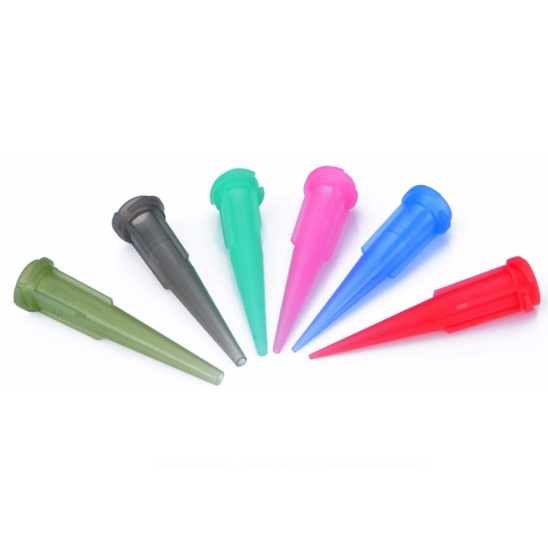
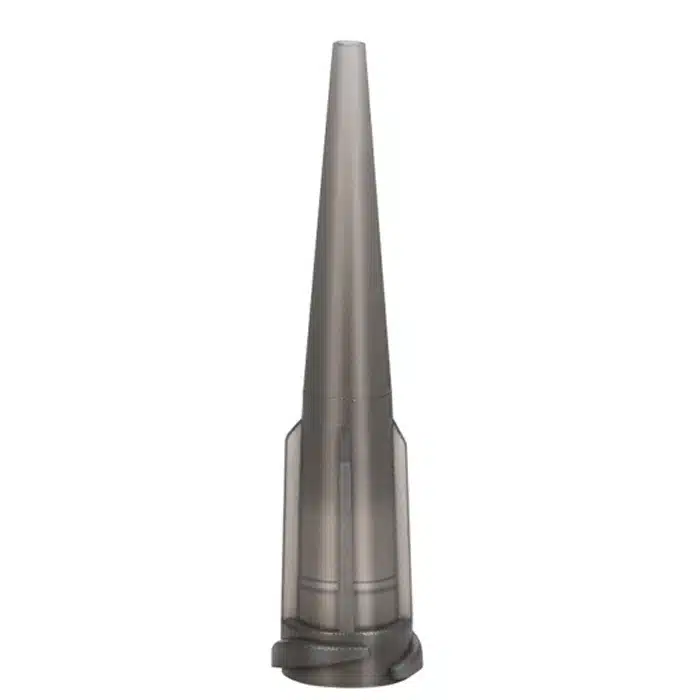
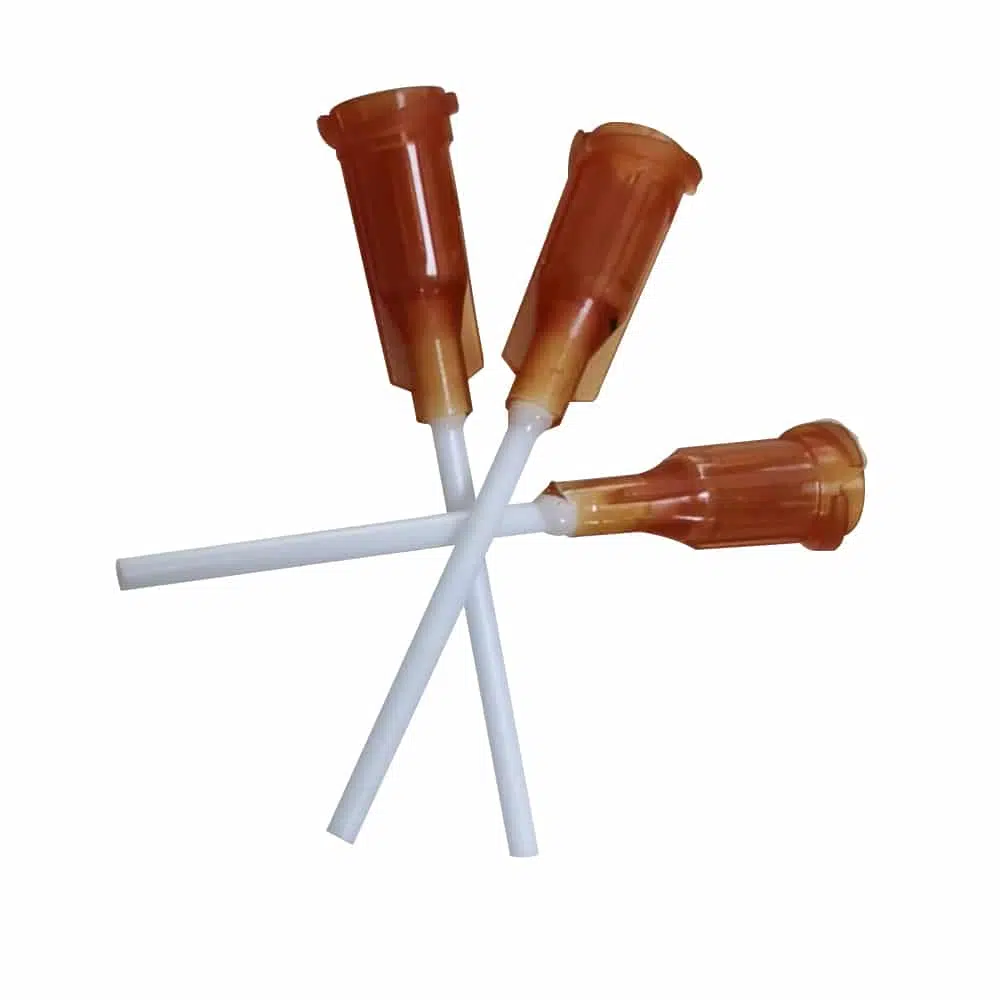
Plastic dispensing tips — commonly molded from polypropylene (PP) or other polymers — are widely used in applications requiring gentle handling, adaptable flow paths, and cost-efficient, disposable components. While different options exist, they share several defining characteristics that influence their performance across modern industrial processes.
Advantages of Plastic Dispensing Tips
Cost-Effectiveness and Disposability
Plastic materials are generally more affordable than metal materials. Their disposable design also supports workflows where cross-contamination control is critical. By eliminating the need for cleaning, plastic tips help reduce process downtime, avoid residue carryover, and lower validation and maintenance costs — making them ideal for high-volume production or single-use environments.
Superior Flexibility and Adaptability
One of the most defining strengths of plastic tips is their inherent flexibility, especially in Flexible Dispensing Tips. These tips can bend without breaking and can even be trimmed to custom lengths, allowing operators to reach complex geometries and confined spaces with ease. This flexibility ensures scratch-free performance on sensitive components, reducing the risk of damage during close-proximity application.
Excellent Chemical Resistance
The one-piece molded Flexible Tips (P-Series) are specially engineered to deliver enhanced resistance to aggressive chemicals and reactive fluids. Their seamless construction eliminates potential weak points, providing reliable performance when dispensing solvents, certain adhesives, and other challenging fluids.
Specialized Features for Enhanced Performance
Tapered Tips can be manufactured using anti-static (ESD-safe) materials, ensuring safer operation in sensitive electronics assembly. Additionally, black PP versions are available to block UV light, preventing premature curing of light-sensitive adhesives such as UV glues. These specialized features give them unique advantages where material stability and environmental control are essential.
Disadvantages of Plastic Dispensing Tips
Limited Durability and Temperature Tolerance
They are not designed for high-abuse, high-temperature, or long-term repetitive environments. They have a lower heat tolerance and may warp, soften, or degrade when exposed to elevated temperatures or mechanical stress, making them unsuitable for applications requiring repeated sterilization or high thermal exposure.
Lower Pressure Resistance
Compared to metal alternatives, plastic components offer reduced mechanical strength. They may not withstand the high application pressures required for very high-viscosity materials or for certain automated high-pressure systems, potentially leading to inconsistent flow or tip deformation under load.
Variable Chemical Resistance
Chemical resistance varies depending on the specific design. For instance, glue-bonded Flexible Tips offer a cost-effective solution but have lower chemical resistance than the one-piece P-Series models. It is essential to verify fluid compatibility in solvent-heavy or chemically aggressive applications to avoid swelling, softening, or performance degradation.
Stainless Steel Dispensing Tips
Advantages of Stainless Steel Dispensing Tips
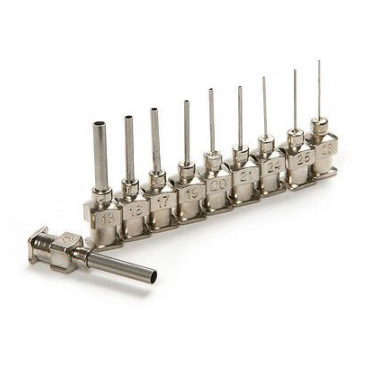
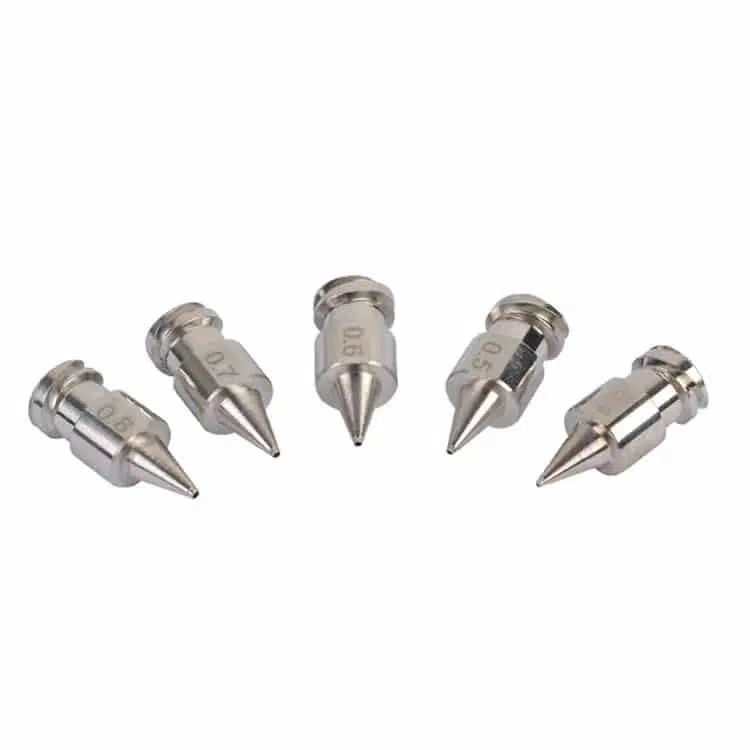
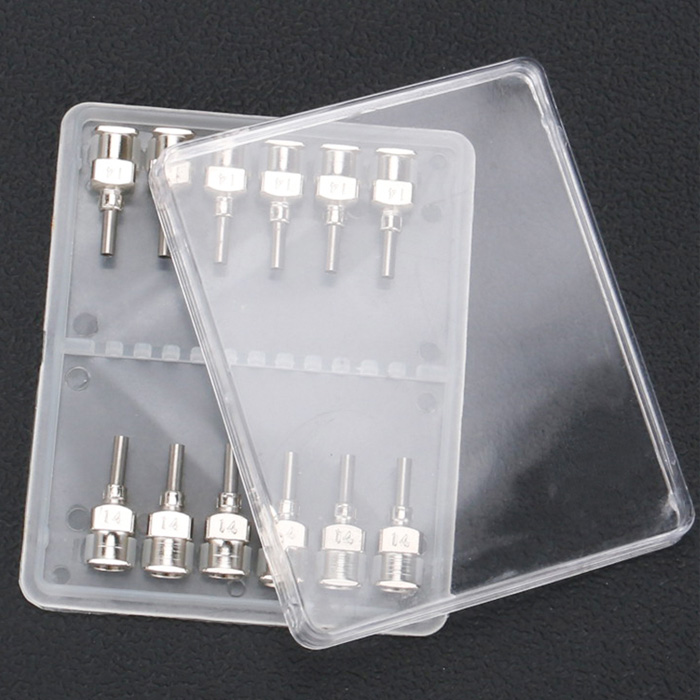
Stainless steel dispensing tips — including traditional dispensing needles and advanced precision nozzles — are designed for applications that require strict dimensional accuracy, high mechanical stability, and consistent flow performance. They excel in environments where adhesive behavior is difficult to control or where automated processes demand repeatable, micro-scale precision.
Exceptional Durability and Longevity
Stainless steel tips are built for high-duty operation. They tolerate frequent use, high pressures, and abrasive or filled materials without wearing out. In particular, our Stainless Steel Dispensing Tips use a riveted connection between the stainless tube and the nickel-plated brass hub, delivering outstanding structural integrity and ensuring stable performance during continuous production.
Reliable Performance in High-Temperature Environments
These metal nozzles excel in high-temperature environments. Their inherent thermal stability allows them to maintain structural integrity and consistent flow performance when applying heated materials or operating under elevated ambient temperatures. This makes them the robust choice for applications involving high-temperature adhesives, thermally conductive pastes, or any process where reliable heat resistance is critical to maintaining application accuracy and long-term reliability.
Unmatched Precision in Micro-Fluid Control
To address the challenges of micro-dispensing, the stainless steel precision nozzles deliver exceptional accuracy and repeatability. Key features such as tapered internal geometries and mirror-finished flow paths ensure smooth, clog-free performance. With the option for split-type replaceable tips, they also offer enhanced flexibility and cost-efficiency, supporting complex applications from void-free underfill to ultra-narrow line patterns with reliable results.
Disadvantages of Stainless Steel Dispensing Tips
Higher Cost Compared to Plastic Options
Metal tips require more complex machining, polishing, and quality control, resulting in a higher unit cost than plastic tips. In workflows with frequent tip changes or strict consumable budgets, this cost factor may influence the decision — despite the superior performance advantages of stainless steel.
Increased Risk of Surface Scratching
The rigidity and hardness of the material introduce a higher risk of scratching delicate substrates. When working near coated, polished, or fragile surfaces, operators must take extra care to avoid accidental damage. In such cases, plastic dispensing tips offer safer surface contact.
Requires Cleaning and Maintenance for Reuse
Unlike single-use plastic alternatives, stainless steel components are designed for multiple production cycles, which necessitates a regular cleaning regimen. This commitment to maintenance is essential to prevent cross-contamination and residual clogging, ensuring consistent performance. While this adds a step to your operational workflow, it is the key to achieving the long-term cost-saving advantage and sustainable value that this material is known for.
Conclusion
The decision between plastic and stainless steel is not about which material is universally better, but which is better for your specific application.