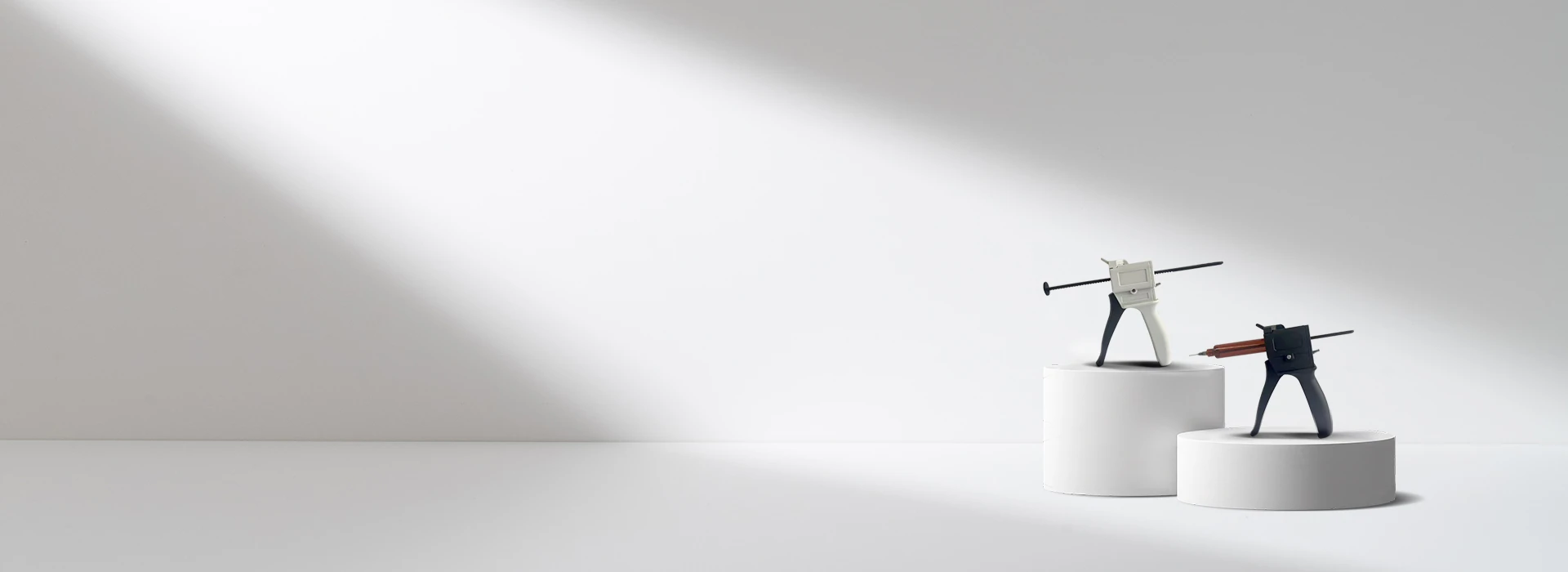
Banner

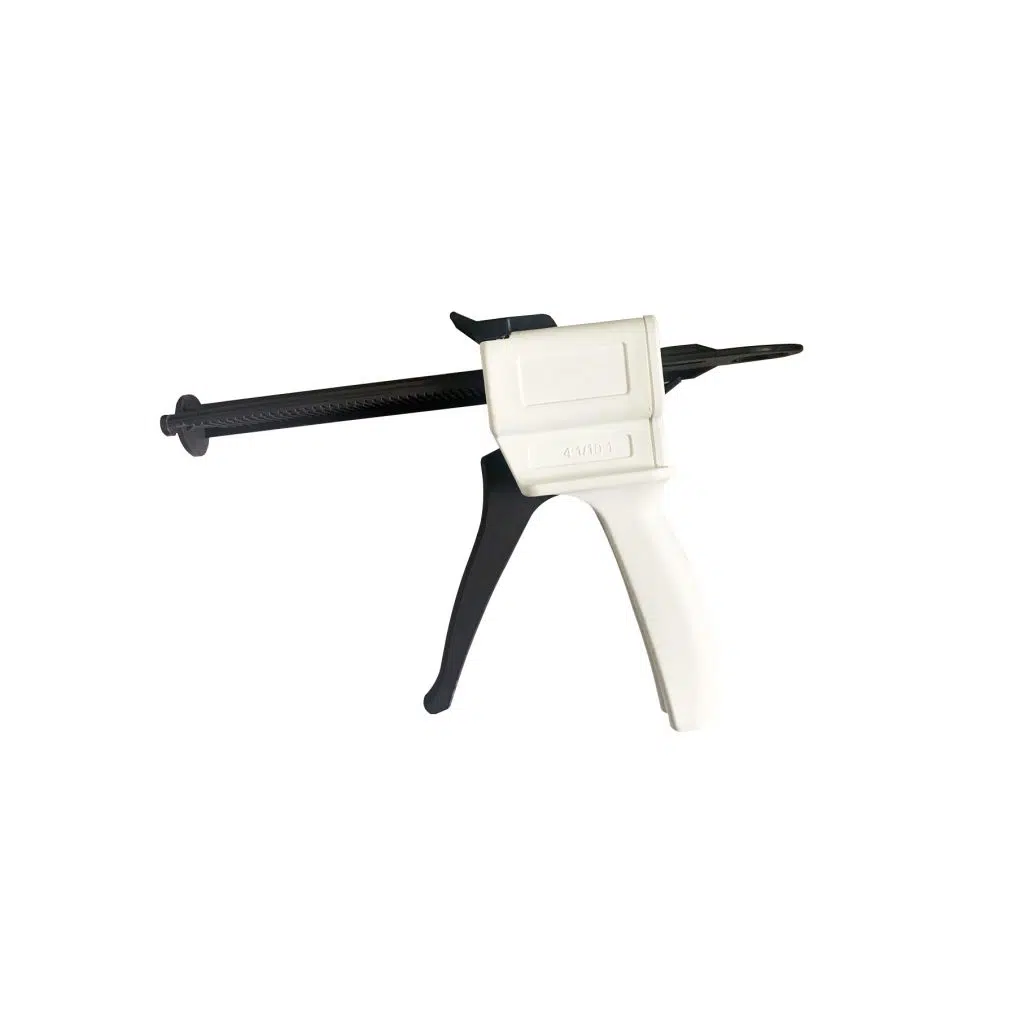
Manual Syringe Gun

Precision hand-powered applicators for controlled, low-volume fluid delivery

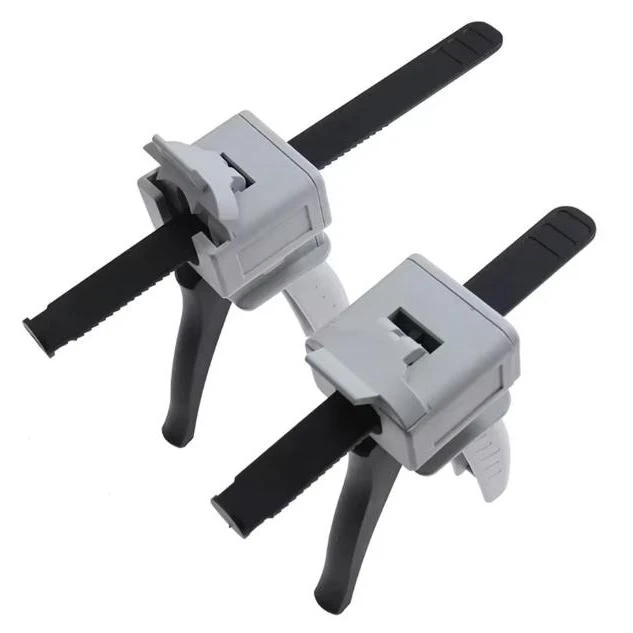
As a professional manufacturer, Btektech offers a "plug-and-play" solution for single-component fluids application through its manual syringe guns. Designed for assembly support and field repairs, they provide tactile control while minimizing air entrapment through smooth, consistent plunger advancement.

Product Advantages & Technical Features

Thumb
Thumb
Thumb
Thumb
The engineering philosophy behind Btektech’s Manual Syringe Guns focuses on stripping away unnecessary complexity while reinforcing the critical contact points.

  • Instant Setup: Our “drop-in” design allows operators to swap pre-filled syringes in seconds. Simply clip the barrel into the housing, attach your dispensing needle, and you are ready to resume.
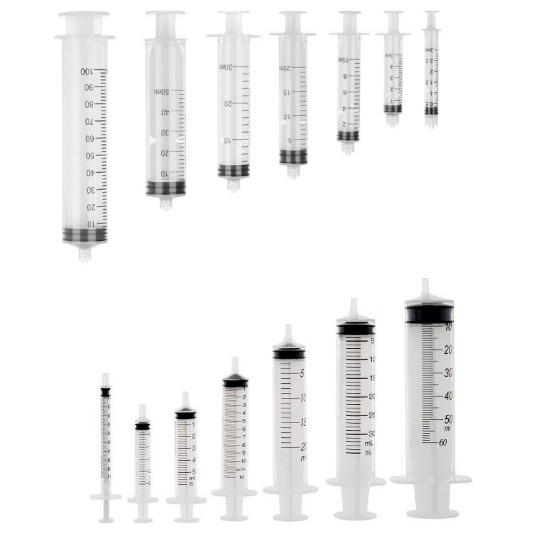
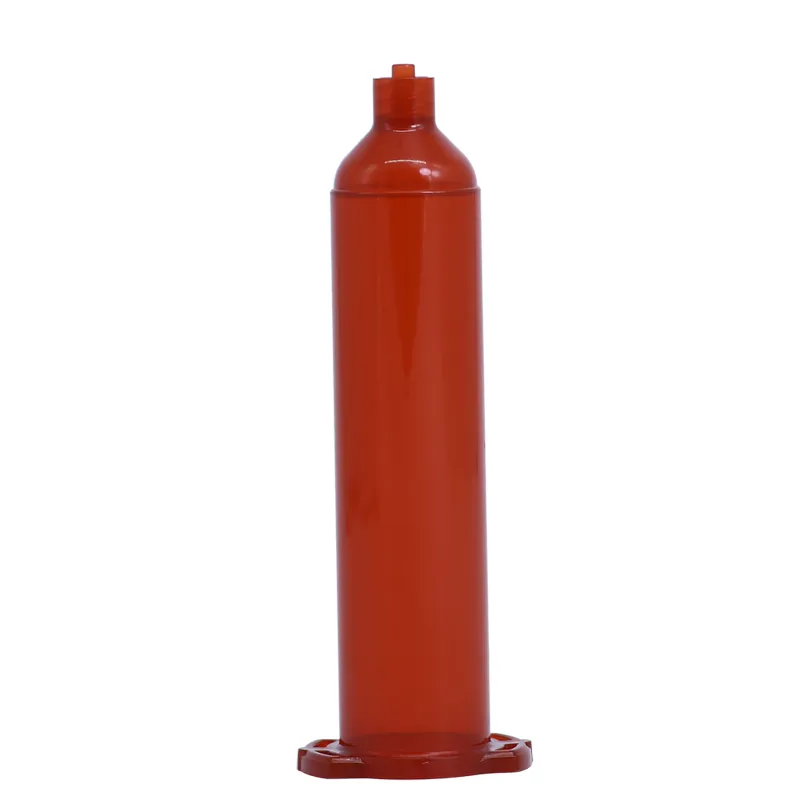
  • Universal Versatility: We offer a variety of product compatible with syringes ranging from 10cc to 55cc.
  • Lightweight yet Rugged: Utilizing high-grade PP and PA ensures the tool remains light enough for all-day use without hand fatigue, while also being sufficiently durable.
  • Smooth-Drive Ratchet: We’ve refined the internal linkage to minimize the “jerky” movement common in cheap dispensers, ensuring a steadier advance of the plunger.

How to Choose the Right Manual Syringe Gun

Choosing the right manual syringe gun isn't just about picking a size; it’s about reducing the risk of operator fatigue and inconsistent bead formation. Btektech advises our clients to evaluate these critical factors:
Read More
  • Fluid Capacity & Handling: Most industrial tasks use 10cc to 55cc syringes. While larger barrels mean fewer refills, they also shift the tool’s center of gravity, making the gun “back-heavy”. You must balance the material volume with the ergonomic comfort needed for fine-point accuracy.
  • The Viscosity Challenge: Manual syringe guns are “brawny” but have limits. For water-thin fluxes, control is easy. But for thick pastes or greases, you’ll need a gun with a high-leverage ratchet to avoid “stuttering” flow or hand strain during long shifts.
  • Material Compatibility: The environment defines the tool. In workshops where aggressive solvents, UV-curable resins, or industrial-grade epoxies are present, the gun body must be made from chemically resistant materials such as Nylon (PA) or impact-resistant PP.
  • Precision vs. Speed: They are the gold standard for “visual placement” and low-volume rework. If your SOP allows the operator to visually verify each dot, manual is the most cost-effective path. However, If you need precise and repeatable, it might be time to look at pneumatic assist.

Product Models & Technical Specifications

Below is a selection of our most popular Manual Syringe Gun models. As a leading manufacturer, Btektech offers an extensive range of specifications and configurations beyond what is listed here. For a comprehensive overview of all our dispensing consumables, please contact us or download the product catalog.
Read More
Item No. Ratio Color Material
Body Plungers
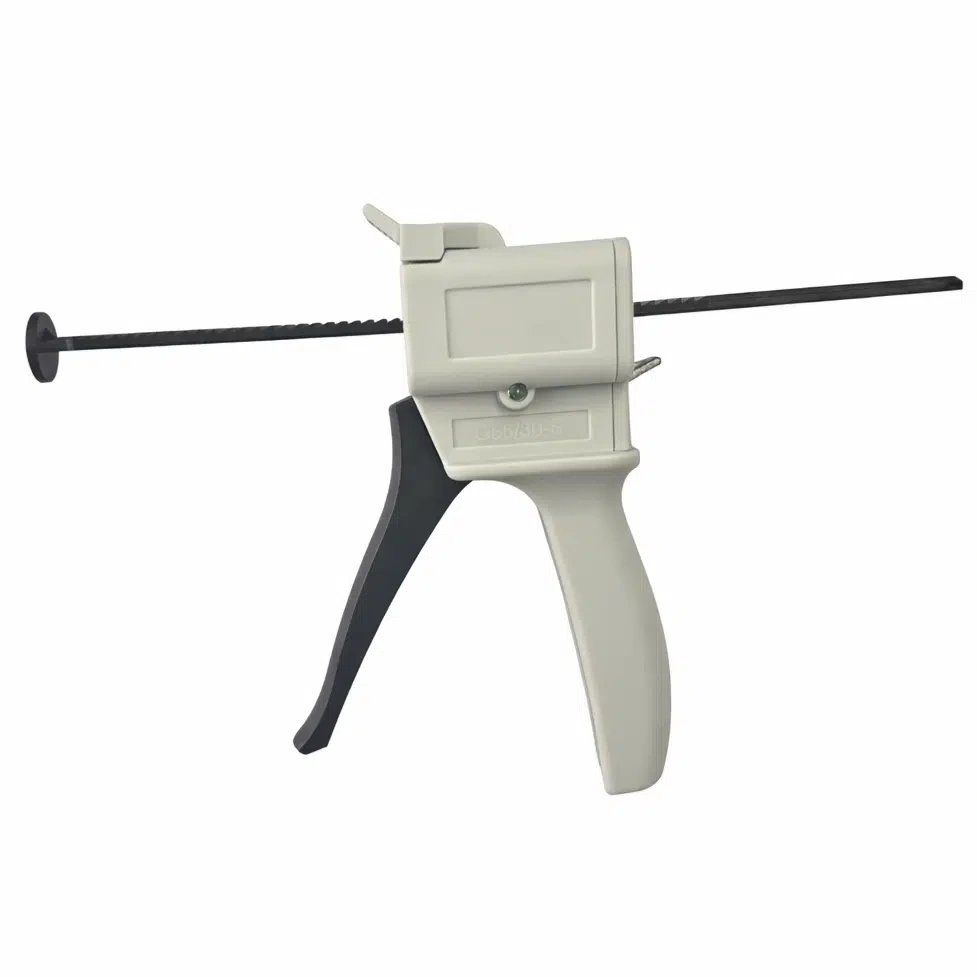
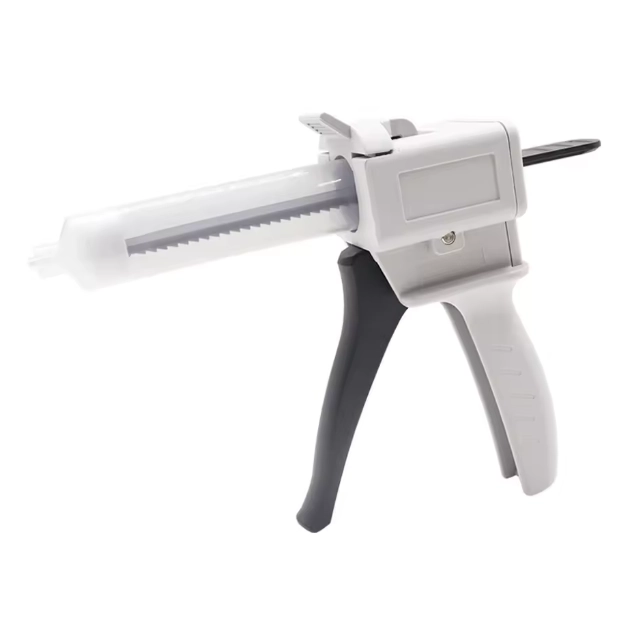
FT30 / Offwhite PP+PA Nylon
FT55 / Offwhite PP+PA Nylon
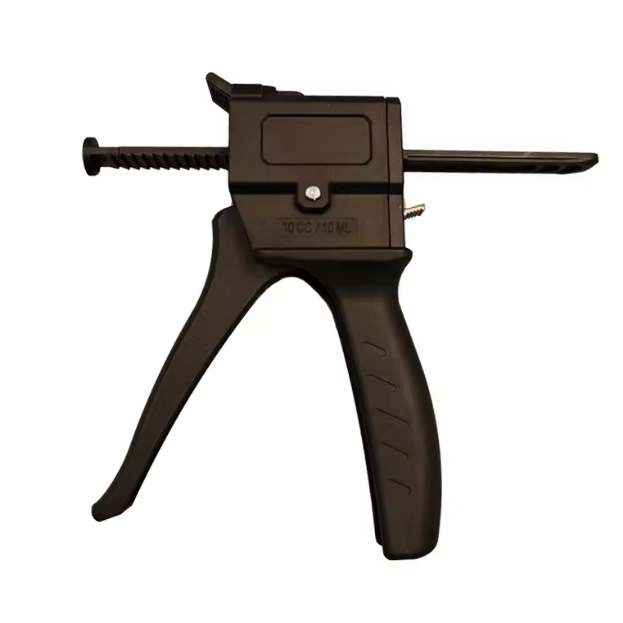
BTK-DL10 / Black PA Nylon

How Btektech Manual Syringe Guns Work

At its heart, manual syringe guns are a leverage game. When you squeeze the trigger, the mechanical linkage drives a push-rod forward. This rod engages the syringe stopper, creating internal pressure that forces the fluid through the dispensing tip.
Read More
The secret to a clean finish is the “tactile feedback.” The operator can feel the back-pressure of the adhesive, adjusting their hand-force in real-time to maintain a steady bead. Because the displacement is purely mechanical, the flow stops almost the instant you release the pressure, though thicker materials may require a slight “pull-back” to prevent a final drip.

Product Applications & Industries

Manual Syringe Guns are indispensable in environments where portability and "operator-in-the-loop" control are more valuable than raw speed. They strike a balance between ease of use and precision, and our products can help you improve work efficiency in applications ranging from electronics assembly to industrial maintenance.

Assembly & Localized Bonding

  • Precision Tacking: Ideal for placing micro-dots of UV-cure adhesive to secure delicate wiring or SMD components. This helps parts remain seated before they enter the reflow oven or move to the next station.
  • Gap Filling & Sealing: The compact profile of a handheld gun allows technicians to navigate tight corners or complex geometries where a bulky, gantry-mounted automated head simply cannot reach.
  • RTV Application: Provides controlled dispensing of silicone for gasket repairs or weather-sealing during low-volume production runs, helping maintain a consistent bead profile with better control than open-hand squeezing.

Use a manual syringe gun

Electronics Assembly & Rework

  • Component Potting: Facilitates the addition of small, controlled amounts of epoxy to reinforce connector pins. This localized potting protects sensitive joints from high-vibration environments and mechanical stress.
  • Thermal Management: Applying Thermal Interface Materials (TIM) to heatsinks requires a specific touch. The tactile “feel” of a manual syringe gun allows the technician to spread thermal grease evenly, minimizing air entrapment for optimal heat dissipation.
  • Solder Paste Dispensing: An excellent alternative for manual PCB rework where a stencil is not feasible. It allows for precise, joint-by-joint application of solder paste or flux during the repair of high-value boards.

Manual gun for electronics

Industrial Maintenance & Validation

  • On-Site Lubrication: A portable solution for delivering precise amounts of grease to bearings, gears, or actuators in hard-to-reach machinery where air lines are unavailable.
  • Prototyping & Proof-of-Concept: Validating adhesive performance during the R&D phase. It allows engineers to test bond strength and material behavior before committing to a high-capital automated dispensing system.
  • Material Screening: Quickly evaluate how a new resin or viscosity reacts to different nozzle diameters. Manual syringe guns allow for rapid testing without the downtime associated with cleaning and recalibrating a full-scale pumping system.

Manual guns for lubrication

Need a Custom Solution? We’ve Got You Covered.

At Btektech, we engineer custom solutions for all products related to adhesives and fluid dispensing.

Our Customization Options Include:

  • Physical Attributes: Size, material, and color
  • Branding: Custom packaging and logo application
  • Functional Design: Modifications based on requirements

To get started, simply share your basic drawings, functional specifications, or intended usage scenarios. Our engineering team will assess feasibility and collaborate with you to develop a high-performance, reliable solution.

Partner with Btektech for Precision

From initial design to final delivery, we ensure your custom solution achieves unmatched consistency. If you have a customization need, contact us today to discuss your project.

Frequently Asked Questions (FAQ)

Is a manual syringe gun suitable for all industrial adhesive viscosities?

They are best suited for fluids ranging from water-thin liquids to medium-high viscosity pastes like RTV silicone and thermal greases. While they handle thicker materials through mechanical leverage, the fluid must be capable of flowing under hand-applied pressure without causing excessive operator strain. For extremely dense materials or high-fill epoxies, we recommend a trial to ensure the flow remains steady, as manual dispensing depends on the operator's ability to maintain a consistent squeeze throughout the task.

How do I determine whether a manual syringe gun fits my production process?

A manual syringe gun is an ideal choice for non-continuous assembly tasks, rework stations, and field repairs involving shot volumes up to 55cc. It excels in environments where portability and rapid material changeover are prioritized over high-speed throughput. If your SOP demands high-precision volumetric repeatability or involves more than several hundred cycles per shift, we recommend evaluating the consistency of pneumatic systems versus the inherent variability of manual application.

Are manual syringe guns compatible with standard industrial syringe barrels and tips?

Btektech manual syringe guns are specifically designed to accommodate industry-standard 10cc, 30cc, 50cc, and 55cc syringe barrels. Dispensing tip compatibility depends on whether the syringe connector has a Luer lock. Our design is compatible with most industry-standard, ensures you can integrate our tools into your existing consumable supply chain without being forced into a proprietary brand’s ecosystem or specialized hardware. However, we still recommend that you verify the flange dimensions of your current consumables, as some proprietary "branded" barrels may require minor housing adjustments to ensure a secure, slip-free fit during high-pressure dispensing.

What are the main risks of incorrect manual syringe gun selection?

The primary risks of selecting an incompatible manual syringe gun include premature operator fatigue, material tailing, and inconsistent bead profiles. If a gun is used for materials that are too thick for manual operation, the resulting "jerky" plunger movement can lead to air entrapment or uneven application. Conversely, using a larger 55cc gun for micro-precision tasks reduces tactile feedback, making it difficult for the technician to maintain the fine-point accuracy required for delicate electronics or localized bonding.

Can manual syringe guns be used for testing, samples, or process development work?

They are highly effective for R&D prototyping and material screening because they allow for immediate setup and fast material changes with zero calibration. They enable engineers to quickly evaluate how a new resin or adhesive behaves with different nozzle diameters before committing to a larger production setup. However, it's important to note that the tactile results achieved manually should be re-validated when transitioning to automated systems to account for the difference between mechanical and pneumatic drive forces.

Learn More About Precision Dispensing

Our blog is designed to help you deepen your knowledge of fluid dispensing processes, optimize your production line, and select the best components for your specific challenges. Explore articles that connect industry insights with practical solutions.

Everything You Need to Know About Epoxy Guns

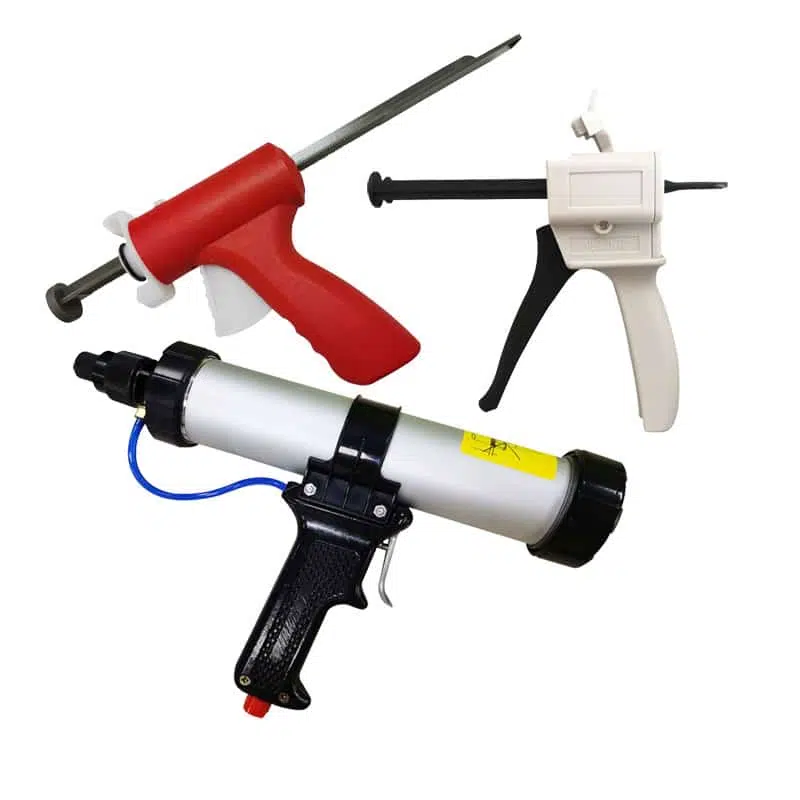
The epoxy gun, also known as a dispensing gun or caulking gun, is a handheld tool designed to dispense epoxy resins in a controlled manner. It consists of a trigger mechanism, a barrel to hold the epoxy cartridge, and a plunger to push the resin out.

Read More →

Manual Caulking Gun vs. Pneumatic Caulking Gun

When it comes to applying sealants, adhesives, or caulk, choosing the right caulking gun can make a significant difference in both the quality of your work and the ease with which you can complete a task. Among the most popular types are manual caulking guns and pneumatic caulking guns. Each has its own set of advantages and drawbacks, making them suitable for different applications and user needs. In this blog, we will delve into the features, benefits, and limitations of both types, helping you make an informed decision on which caulking gun is right for you.

Read More →
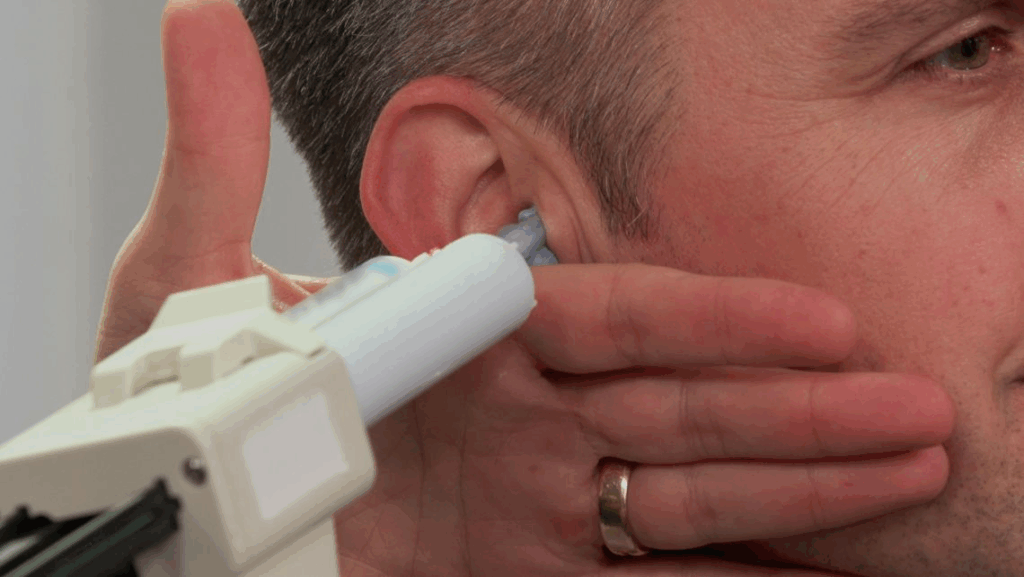
Impression Gun in Ear Impressions: Why It’s a Must-Have for Audiology Professionals

The foundation of a successful custom hearing aid fitting lies in the accuracy of the ear impression—a precise three-dimensional replica of the ear canal and pinna. In audiology practice, this process involves injecting a pliable silicone material to capture the ear’s unique anatomy, ensuring optimal acoustic sealing, comfort, and performance for devices such as behind-the-ear (BTE) aids, receiver-in-the-canal (RIC) instruments, earmolds, and protective solutions.

Read More →