
The static mixing nozzle is a specialized device used in various industries to mix and dispense two components, such as adhesives, sealants, or coatings, without the need for manual mixing. It consists of a housing with internal mixing elements that create turbulence and shear forces to thoroughly mix the components as they pass through the nozzle. The mixed material is then dispensed through a nozzle for application.
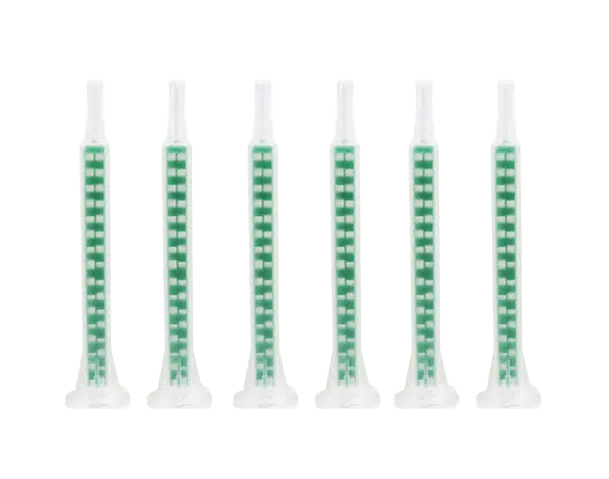
Square Static Mixing Nozzles
Custom static mixing nozzles are needed when standard off-the-shelf nozzles do not meet the specific requirements of an application. Here are some reasons why custom static mixing nozzles may be necessary:
Specialized Materials: Custom static mixing nozzles may be needed for materials with unique viscosity, curing time, or other properties that require a specialized mixing and dispensing solution.
Application-Specific Designs: Certain applications demand custom dimensions, configurations, or materials in the nozzle design to ensure proper integration with existing equipment or to meet space constraints. Tailored solutions can help achieve the perfect fit for your process.
Improved Performance: Custom static mixing nozzles can be designed to improve mixing efficiency, reduce material waste, and enhance overall process performance.These nozzles are specifically crafted to outperform standard options, ensuring higher consistency and reliability.
Compatibility: Custom static mixing nozzles can be tailored to be compatible with a wide range of materials, including those that are abrasive, corrosive, or sensitive to contamination.This customization allows for better performance across diverse industrial applications.
Cost-Effectiveness: While custom static mixing nozzles may have a higher initial cost, they can provide long-term cost savings by increasing process efficiency, reducing material waste, and minimizing downtime.
Benefits of Using Custom Static Mixing Nozzles
Custom static mixing nozzles offer several key advantages over standard off-the-shelf nozzles, making them a valuable choice for many applications. Here are some of the benefits of using custom static mixing nozzles:
Optimized Performance: Custom static mixing nozzles are engineered based on the exact process requirements, such as material behavior and dispensing conditions, helping achieve consistent and reliable mixing performance.
Tailored to Application Needs: Custom static mixing nozzles can be tailored to meet the unique needs of each application, including factors such as material viscosity, flow rate, and mixing ratio. This ensures that the nozzle performs optimally in the intended application.
Cost-Effectiveness: While custom static mixing nozzles may have a higher upfront cost compared to standard nozzles, they can offer long-term cost savings by improving efficiency and reducing material waste.
Improved Process Efficiency: By eliminating manual mixing and reducing mixing time, custom static mixing nozzles help streamline dispensing processes and improve overall production efficiency.
Enhanced Product Quality: By ensuring thorough and consistent mixing, custom static mixing nozzles can help improve the quality and performance of the end product. This is particularly important in applications where product consistency is critical.
Versatility: Custom static mixing nozzles can be designed to work with a wide range of materials, including adhesives, sealants, and coatings. This makes them a versatile solution for many different applications.
Reduced Downtime: Custom static mixing nozzles are typically more reliable than standard nozzles, leading to reduced downtime for maintenance and repairs. This can result in increased production uptime and efficiency.
Environmental Benefits: By improving material utilization and process efficiency, custom static mixing nozzles can also help reduce waste and lower the environmental impact of manufacturing operations.
Customization Options for Static Mixing Nozzles
Custom static mixing nozzles offer a wide range of customization options to address the specific mixing, dispensing, and integration requirements of different applications. Here are some common customization options available for static mixing nozzles:
Size and Length: Custom static mixing nozzles can be manufactured in various sizes and lengths to accommodate different dispensing requirements. This allows for precise control over the dispensing volume and flow rate.
Mixing Elements: The number, shape, and configuration of the mixing elements in a static mixing nozzle can be customized to achieve the desired level of mixing for a particular material. Different mixing element designs are suitable for different viscosities and flow rates.
Material Compatibility: Static mixing nozzles can be made from a variety of materials to ensure compatibility with different types of adhesives, sealants, and coatings. Common materials include polypropylene, polyethylene, and stainless steel.
Thread Size and Type: Custom static mixing nozzles can be designed with different thread sizes and types to fit various dispensing equipment, ensuring compatibility and ease of installation.
Color: Nozzles can be produced in different colors to support visual identification, material segregation, or process control, particularly in multi-material or high-volume production environments.
Packaging: Custom static mixing nozzles can be packaged in different quantities and configurations to meet the specific needs of the end user, such as bulk packaging for high-volume applications or individual packaging for convenience.
By offering these customization options, we can tailor static mixing nozzles to meet the unique requirements of each application, ensuring optimal performance and efficiency.
Applications of Custom Static Mixing Nozzles
Custom static mixing nozzles are used in a wide range of industries and applications where precise mixing and dispensing of materials are required. Here are some common applications of custom static mixing nozzles:
Adhesives and Sealants: Custom static mixing nozzles are widely used in the bonding and sealing of various materials, including metals, plastics, and composites.
Coatings and Paints: Custom static mixing nozzles are used in the application of coatings and paints to ensure uniform mixing and dispensing. They are used in automotive, aerospace, and industrial painting applications.
Construction and Civil Engineering: Custom static mixing nozzles are used in construction and civil engineering applications for the dispensing of grouts, mortars, and concrete repair materials. They ensure proper mixing for optimal performance.
Electronics Manufacturing: Custom static mixing nozzles are used in electronics manufacturing for the dispensing of adhesives, encapsulants, and conformal coatings. They ensure precise mixing and dispensing for reliable electronic assemblies.
Dental :Custom static mixing nozzles are used in dental and medical applications for the dispensing of dental materials, such as impression materials and dental adhesives. They ensure accurate mixing and dispensing for quality dental restorations.
Packaging and Labeling: Custom static mixing nozzles are used in packaging and labeling applications for the dispensing of adhesives, sealants, and coatings.
Automotive and Aerospace: Custom static mixing nozzles are used in the automotive and aerospace industries for the dispensing of adhesives, sealants, and coatings. They ensure strong and durable bonds for critical components.
Design Considerations for Custom Static Mixing Nozzles
Designing custom static mixing nozzles requires careful consideration of several factors to ensure optimal performance and efficiency. Here are some key design considerations for custom static mixing nozzles:
Flow Rate and Dispensing Volume: The design of the static mixing nozzle should be optimized to achieve the desired flow rate and dispensing volume for the specific application. This involves selecting the appropriate nozzle size, length, and mixing element configuration.
Material Viscosity: The viscosity of the material being dispensed is a crucial factor in nozzle design. The mixing elements must be designed to effectively mix materials with different viscosities, ensuring thorough and consistent mixing.
Temperature and Pressure: The operating temperature and pressure of the material being dispensed should be considered in the design of the static mixing nozzle. The nozzle should be able to withstand the expected temperature and pressure conditions without deforming or failing.
Nozzle Configuration: The configuration of the static mixing nozzle, including the number and arrangement of mixing elements, can affect mixing efficiency. The nozzle should be designed to provide thorough mixing while minimizing pressure drop.
Ease of Installation and Use: The static mixing nozzle should be designed for easy installation and use. This includes considerations such as compatibility with dispensing equipment and ergonomic design for comfortable operation.
By carefully considering these design factors, manufacturers can develop custom static mixing nozzles that meet the specific requirements of each application, ensuring optimal mixing performance and efficiency.
Quality Assurance for Custom Static Mixing Nozzles
Ensuring the quality and performance of custom static mixing nozzles is essential to their successful application in various industries. Here are some key aspects of quality assurance for custom static mixing nozzles:
Material Selection: Choosing high-quality materials that are compatible with the chemicals being mixed is crucial. Materials should be selected for their durability, resistance to chemical degradation, and ability to maintain dimensional stability under operating conditions.
Manufacturing Process: Employing precision manufacturing processes is essential to produce custom static mixing nozzles that meet tight tolerances and specifications. This includes techniques such as injection molding, CNC machining, and quality control measures to ensure consistency and accuracy.
Testing and Validation: Conducting rigorous testing and validation procedures on custom static mixing nozzles is necessary to ensure their performance meets the required standards. This includes testing for flow rate, mixing efficiency, and compatibility with different materials.
Quality Control: Implementing robust quality control measures throughout the manufacturing process is essential. This includes regular inspections, audits, and process controls to identify and rectify any deviations from the desired specifications.
Certifications and Compliance: Ensuring that custom static mixing nozzles meet industry standards and regulatory requirements is critical. Obtaining certifications and compliance with standards such as ISO, RoHS, and REACH demonstrates the quality and reliability of the nozzles.
Customer Feedback and Support: Providing excellent customer support and seeking feedback from customers can help identify areas for improvement and ensure customer satisfaction. This includes offering technical assistance, product training, and troubleshooting support.